
Last updated November 15, 2026
 Wrought iron
 Wood & steel frame
 Farm & ranch
 Sliding driveway gates
 LiftMaster operators
Free on-site gate assessment - hinges, posts, and your LiftMaster or Nice gate operator checked before anything is quoted
The assessment is free and the quote is the invoice.
Get your free estimateGate Repair Maintenance Schedule: What to Do and When
The most expensive gate repair we do is always the one that was preventable – usually a seized drive chain or a corroded connection that a 10-minute check every 90 days would have caught years earlier. Most homeowners treat gate maintenance as one annual chore, something to squeeze in whenever they remember. In Sunrise Manor’s climate, that approach quietly shortens the life of every moving part on your system. Desert heat, wind-driven dust, and sharp seasonal swings attack different components on different timelines, so the work that matters in June isn’t the work that matters in January. This guide lays out a real schedule for Sunrise Manor gates, built around monthly checks and seasonal deep service, so you know exactly what to do and when.
Quick Answer
A workable gate maintenance schedule means a short inspection every 30 days, a hardware lubrication and tightening pass every 90 days, and deeper seasonal service before summer heat and after monsoon season. In Sunrise Manor, the two dates that matter most are late spring (before the heat spikes) and early fall (after the dust has settled), with a battery and control-board check in between. Follow that rotation and you prevent most of the emergency calls we see.
Styles & brands we work with
- Wrought iron
- Wood & steel frame
- Farm & ranch
- Sliding driveway gates
- LiftMaster operators
Table of Contents
- Why a Maintenance Schedule Beats a Single Annual Service
- The Month-by-Month Gate Calendar for Sunrise Manor
- Lubrication Intervals in a Desert Climate
- The Three Connections That Oxidize Fastest in Nevada Heat
- Logging Cycle Counts to Predict Part Replacement
- Before and After Monsoon Season
- The 10-Minute Monthly Check
- What a Deeper Seasonal Service Includes
Why a Maintenance Schedule Beats a Single Annual Service
A gate that gets one annual service ages unevenly. Systems fail on their own schedule, and wear doesn’t pause between visits. A single yearly appointment catches problems that were already months old by the time a technician arrived. Rotating checks catch them while they’re still cheap to fix.
Think about how a gate actually wears. In Sunrise Manor, the summer heat expands metal, dries out grease, and stresses every electrical contact. Then monsoon dust works into hinge points, guide tracks, and sensor lenses. Then winter temperature swings cause contraction and condensation. Each of these stressors hits a different part of the system, and each has a window where treatment prevents damage. A single annual appointment can’t hit every window.
A proper schedule separates three kinds of work:
- Quick checks you can do yourself in 10 minutes, catching obvious problems: a dragging gate, a warning light that doesn’t fire, a strange noise.
- Lubrication and tightening passes every 90 days, keeping moving parts from wearing against each other.
- Electrical and seasonal service by a trained technician, focused on the parts that fail quietly.
We’ve found that gates with a structured schedule rarely fail mid-cycle. They wear out on a predictable curve, so you can plan repair work instead of reacting to it. That’s the whole point of a schedule. It moves you from emergencies to predictable planning. If you don’t want to build the calendar yourself, a proper round of gate repair starts with a full inspection, and that inspection sets the schedule going forward.
The Month-by-Month Gate Calendar for Sunrise Manor
Most generic maintenance calendars are written for temperate climates where the worst problem is a wet spring. Sunrise Manor’s cycle is different. Here’s how we’d structure a year for a residential or commercial gate in the area.
The Sunrise Manor Gate Calendar
- January: Post-winter inspection. Look for condensation damage to the control board, check that limits still stop the gate precisely, and confirm the battery in any keypad or remote backup holds charge.
- February: Lubrication pass. Grease chain or track, oil hinges and rollers. Tighten every bolt on the gate leaf and frame.
- March: Full system test. Run the operator through 5 full cycles each direction and note any slowdown. Check safeties and reversing edges.
- April: Pre-summer electrical inspection. Look at every exposed connection point for oxidation. Clear sensor lenses of dust.
- May: Heavy lubrication before the heat arrives. This is the most important pass of the year in the desert. Pre-summer service appointment with a technician.
- June through August: Monthly quick checks only. Heat is high, so treat the gate gently and note any new noises, sticking, or slow responses.
- September: Post-monsoon full service. Clean out dust intrusion, inspect circuit board and sensor housings, replace any dried weatherstripping.
- October: Lubrication pass. Mild temperatures make this an ideal time to catch anything the summer dried out.
- November: Cycle count check and parts prediction. Replace anything nearing its expected lifespan before winter.
- December: Battery check on all remotes, keypads, and safety backup systems. Clean sensor lenses again. Prepare for the winter swing.
You’ll notice this schedule has a heavier emphasis on heat and dust than a typical national template. If you’ve been told “check your gate twice a year,” that advice was probably written for a mild zone. Sunrise Manor needs four touch points at minimum, and the two seasonal deep services.
Lubrication Intervals in a Desert Climate
Manufacturers usually recommend lubricating gate hardware every 6 to 12 months. In the desert, halve that. Heat and airborne dust are the enemies of grease, and both are present most of the year in Sunrise Manor.
The reason is straightforward. Grease is a suspension. As temperatures climb, the base oil in the grease thins and migrates. On a metal-on-metal surface, a thin film is easy for dust to displace because it’s no longer thick enough to resist particles. Once dust gets between two moving surfaces, it acts like sandpaper on every cycle. The right interval depends on how much your gate runs, but for most residential gates in Sunrise Manor we recommend a lubrication pass every 90 days and a heavier re-grease before and after summer.
What to lubricate, and with what:
- Drive chain (slide and swing operators): a purpose-made chain and cable lubricant. Not motor oil, not WD-40 as a substitute.
- Hinges: a heavy lithium- or moly-based grease that stays put under heat.
- Rollers and guide tracks: a dry silicone spray on the track, grease on the roller bearings.
- Sliding gate v-track: a light smear of graphite or silicone paste, worked in by a few cycles.
- Latch and strike hardware: a few drops of light oil worked into the pivots.
What not to do: don’t over-grease. Excess grease traps dust and hardens into a paste that binds moving parts. Wipe away anything that beads up outside the working surface. Also skip solvent sprays that strip old grease without replacing it. If a technician has recently serviced the gate, ask what they used so you can stay on the same product. The wrong grease on an operator drive is more harmful than none. Our technicians have up to 14 years of experience matching lubricants to specific operator types, and the difference in wear between the right and wrong product is quite visible after a summer.
The Three Connections That Oxidize Fastest in Nevada Heat
Heat is hard on electrical connections, and Nevada’s summer temperatures push oxidation rates up sharply. The trouble is that failing connections don’t look like failures. They cause intermittent faults, so a gate that “randomly” fails to open is often the sign of a weakening contact. Before you start opening anything, know that gate operators contain live high-voltage wiring and a backup battery system. Checking the outside of a housing is fine. Opening panels to touch wiring is work for a trained technician. What you can do safely is inspect for signs.
Three connection points to watch:
- The low-voltage control wiring terminals at the operator’s control board. The low-voltage side runs a small current, so any resistance is significant. Look for a light green or white crust around the terminal. If you see corrosion, don’t clean it yourself. Photograph it and note the cycle count, then get it looked at.
- The battery leads in any backup battery housing. Heat dries out lead-acid batteries and speeds the corrosion on their terminals. From the outside, look for terminal caps that look swollen or terminals with white powder on them. A technician can test and replace the battery during a service call.
- The safety edge and photo-eye wire connections at the gate frame. These wires are exposed to weather. The outdoor ends can oxidize and cause the gate to stop reversing correctly or trip the safety. Look at the connection block on the outside of the frame after the summer, and if it’s crusted, have it examined.
We’ve seen all three fail during the same hot stretch in Sunrise Manor, and the reason is the same: dry, heated air attacks exposed connections year-round. Building a routine check into your calendar is more useful than trying to clean them yourself. If you do open the operator housing, check the warranty first. On many operators, opening the sealed enclosure or touching the board voids the manufacturer’s warranty. That’s a big reason to let a technician handle the internal inspection, especially on electronic brands like electric gate repair.
Logging Cycle Counts to Predict Part Replacement
Most gate operators track cycle counts internally. A cycle count is the number of times the gate has opened and closed. It’s the single most useful number in gate maintenance because it tells you exactly how heavily the gate has been used, and it translates directly to expected part life.
Every part on a gate has a wear window. Hinges, rollers, limit switches, and the operator’s motor brushes all wear out. The cycle count tells you when a part is likely near the end. If you don’t track cycles, you’re guessing. Here’s how to build a simple log:
- Find the cycle count. Most modern operators, including Elite and DoorKing models, display or offer a way to read the count. Ask your technician to record the number on each service visit.
- Convert to cycles per month. Note the date and the count at each visit. Subtract the previous number from the new one to get cycles since the last visit. Divide by the number of days between visits, then multiply by 30.
- Set a replacement reminder for each wear part. A standard residential operator’s limit switches often last through millions of cycles, but desert rules reduce that. Ask your technician what to expect for your specific model, then map it against your monthly average.
- Note noise and behavior changes. Even when the count is below expected life, a part that’s started to creak or slip is worth a closer look.
- Review the log every six months. If usage has spiked, shorten the interval. If it’s dropped, keep it anyway. A gate that sits unused still weathers.
For commercial gates in Sunrise Manor, cycle counts matter even more because a gate at a small shopping center or a multifamily property can cycle hundreds of times per day. In those settings, a $40 part caught early is a lot cheaper than a broken gate during a busy hour. Brand-agnostic diagnostics help here. Technicians who work across multiple platforms, from LiftMaster to Mighty Mule, see many operator types and can interpret a cycle-to-wear curve quickly.
Before and After Monsoon Season
Monsoon season is the annual wild card for Sunrise Manor gates. It brings wind-driven dust, sudden downpours, and violent temperature drops. The dust is usually the greater problem. Fine particles get into sensor lenses, weatherstripping folds, and enclosure vents, and once they settle they don’t leave on their own.
Before the season
- Clean sensor lenses (photo eyes) with a lint-free cloth. Dust on the lens is the most common cause of a gate that stops mid-cycle for no obvious reason.
- Check every gasket and weatherstrip on the operator housing. A dried or cracked seal lets dust into the control board enclosure.
- Look at the bottom of the gate for dirt piles that might interfere with operation. Clear any buildup from the track or the gate’s travel path.
- Confirm the safety edges and reversal systems are working before a storm makes them critical.
- Have a technician check the control board and its corrosion protection. A pre-monsoon service call catches the small issues before they become real ones.
After the season
- Blow out dust from the operator housing vents, the tracks, and hinges using low-pressure air, not a hose.
- Inspect the sensor lenses again. Run the gate through full cycles and confirm the safeties still function.
- Check the battery. Dust and heat combined can shorten battery life, and any backup system is only useful if the battery is healthy.
- Look at the weatherstripping. If it’s crumbled or peeling, it needs to be replaced.
- Test the whole gate. If it hesitates, strains, or stops short, get it looked at before the cooler weather hardens any small problem into a bigger one.
Walking around the gate once before and once after the season doesn’t take long, and it catches the most common monsoon-related failures early. If a gate already has an issue after a storm, offering Sunrise Manor area homeowners prompt repair help is exactly what we do.
The 10-Minute Monthly Check
A monthly check is the cheapest insurance you can put on a gate. Ten minutes, once a month, catches most issues while they’re still minor. Here’s what to look at:
- Walk the gate through its full travel. Open and close it by hand, if safe. Feel for drag, catching, or noise. A smooth glide is the goal.
- Listen to the operator. Run a full cycle and listen for grinding, clicking, or a strained motor sound. New noises mean new wear.
- Look at the moving surfaces. Hinges, rollers, chains, and slide tracks. Any bare metal shining through is a sign of wear.
- Clean the sensor lenses. One pass with a lint-free cloth each month keeps them clear.
- Test the safety reversing. Wave an arm or object through the safety beam to confirm the gate reverses. This one is worth doing every month without fail.
- Check the ground. Look for piles of dirt, debris, or water that could interfere with the gate’s travel. Clear them.
- Feel for loose hardware. Gently rock the gate leaf. Any wobble means the frame bolts or hinge pins need attention.
Log what you find. A short note each month builds a useful history. Over time it tells you when the gate started acting differently, which speeds up any diagnosis. On a monthly basis, a repair call is almost never needed. The whole point is to catch the need early. If you ever open the control box and the terminals look crusted or corroded, don’t clean them with a brush. That work belongs with a trained technician, and it’s usually a quick job with the right tools.
What a Deeper Seasonal Service Includes
Twice a year, a proper seasonal service goes deeper than the monthly check. That’s when we check the things a homeowner can’t easily see. What a full seasonal service includes:
- Operator inspection. Opening the housing, checking the control board, motor, and gearbox for wear, dust intrusion, and corrosion. This is where sealed enclosures make the difference. A single hardened seal can let in enough dust to cost a control board.
- Full electrical assessment. Testing every connection point for resistance and oxidation. Confirming the safety circuits work as designed.
- Cycle count reading. Recording the count and projecting when each high-wear part will need replacement.
- Lubrication and hardware pass. Chain, tracks, hinges, and bolts.
- Alignment check. A gate that’s drifted out of alignment places extra strain on the operator. A technician can re-align it without replacing parts.
- Battery test. Load testing any backup battery, not just checking that it holds a charge.
What it doesn’t include, and shouldn’t: anything you can do in 10 minutes. A rough seasonal service still lowers the frequency of emergency calls, and it lets you plan replacement parts around real wear rather than failure. When the right seasonal service is applied to a residential system with mixed manual and automated components, the result is a plan you can rely on through the year. We work on manual and automated systems alike, and every seasonal service on a gate-only schedule gives you a clear next step.
Common Mistakes to Avoid
- Greasing too much, too rarely. A single heavy application once a year, then nothing until the next one: this traps dust and hardens. Regular light passes beat one heavy one. Sunrise Manor dust gets into everything, so use less and more often.
- Ignoring wheel drag in summer. The heat makes metal expand, and a dragging gate feels normal until something breaks. Check for extra load on the operator and rollers any time you notice the gate slowing down in hot weather.
- Cleaning sensor lenses with a sprayed cleaner. Household spray cleaners can leave a residue that holds dust. Use a dry, lint-free cloth instead.
- Skipping the battery. Backup batteries are easy to forget and often fail without warning, when you most need them. Test them twice a year.
- Adjusting limits to hide a symptom. If the gate stops short, the right answer is diagnosing why, not loosening the limit switch until it “works.” You’re hiding a mechanical issue that will get worse.
- Ignoring the manufacturer’s enclosure seal. A cracked gasket lets in dust and heat, and that’s how control boards fail. Check seal condition at each seasonal service.
- Using a general handyman for gate work. Gates, especially electric gates, need someone who works on them routinely. A generalist may miss warning signs that a specialist would catch in the first 10 minutes.
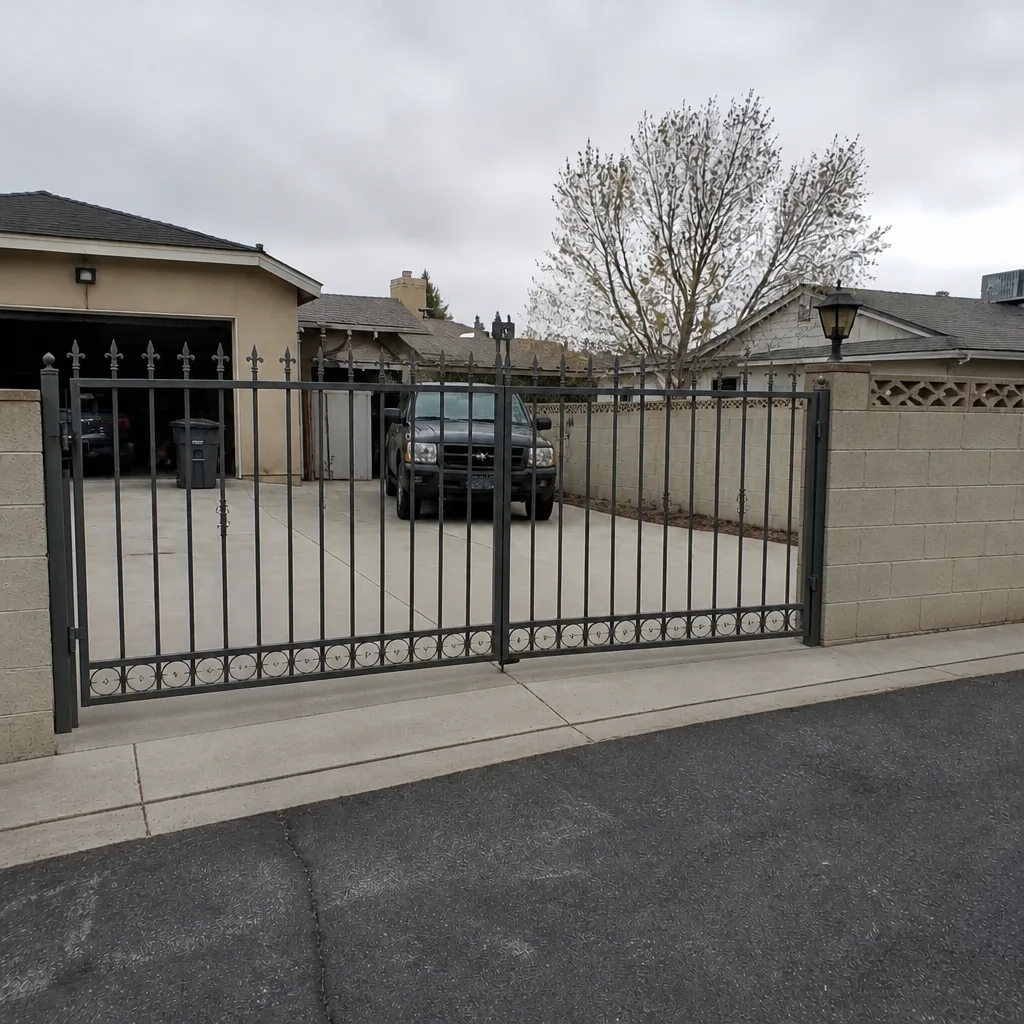
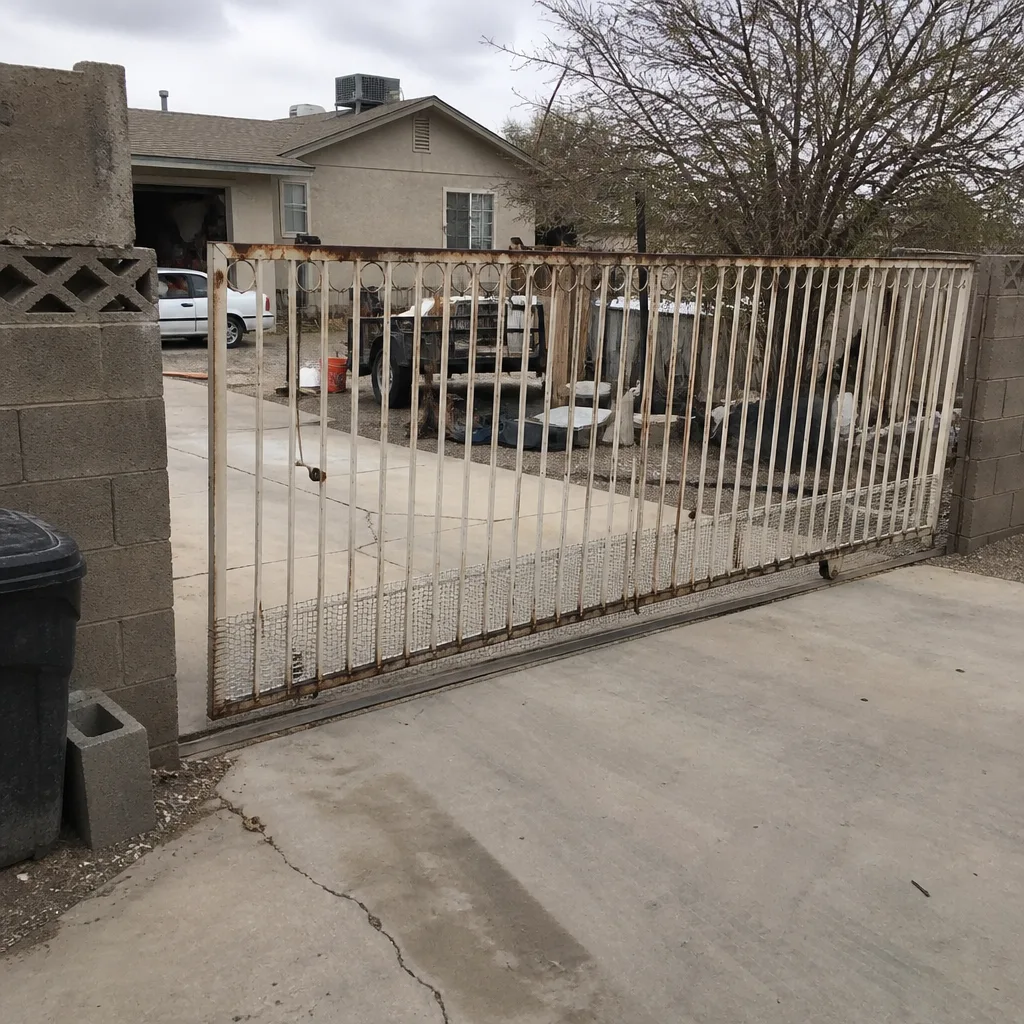
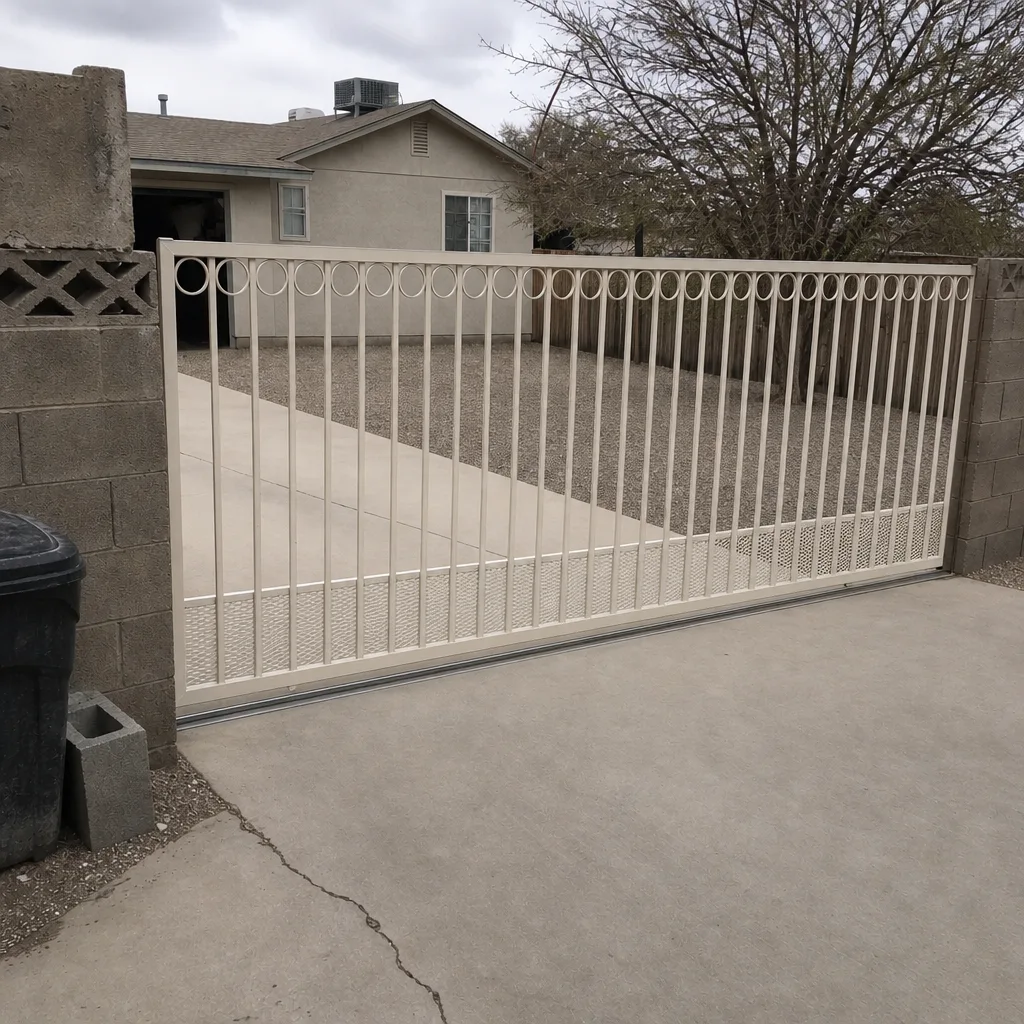
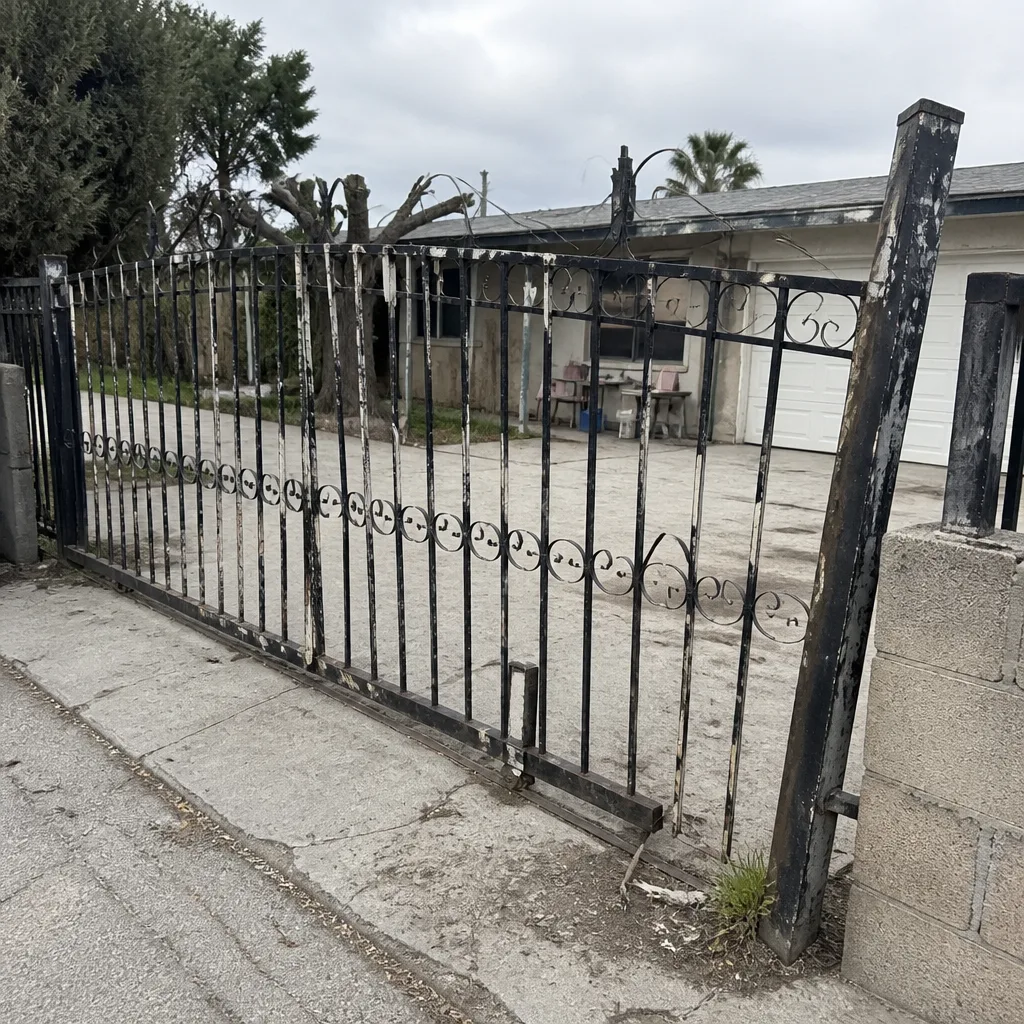
See the difference
 Before
 After
 Before
 After
 Before
 After
When to Call a Professional
Some problems are simple maintenance. Others need a trained eye. Call a professional if any of these are true:
- The gate reverses without anything in its path.
- The operator makes grinding, clicking, or straining sounds.
- The gate stops short, doesn’t fully close, or resets on its own.
- You see green or white crust around control board or safety edge wire connections.
- The gate starts to wobble or rock noticeably.
- A backup battery has failed or won’t hold charge.
- A gate has been through a monsoon without a service and shows any new behavior.
Gate Repair Sunrise Manor offers free estimates in Sunrise Manor. Call (844) 435-3018. We answer 24/7. Fast dispatch from 7am to 7pm, Sunday through Friday.
Frequently Asked Questions
A short inspection every 30 days, a lubrication and tightening pass every 90 days, and a deeper seasonal service twice a year – before summer heat and after monsoon season. That schedule accounts for the two stressors that matter most here: heat and dust. Call (844) 435-3018 for an exact quote on a seasonal service – estimates are free.
Yes. Heat and airborne dust break down standard greases faster than in temperate climates, so halve the manufacturer’s recommended interval. A light pass every 90 days beats a heavy annual application. The wrong lubrication can damage moving parts, so ask a technician to confirm the right product for your gate. Call (844) 435-3018 for an exact quote.
Clean the sensor lenses, inspect every gasket and weatherstrip on the operator housing, clear dirt from the gate’s travel path, and confirm safety reversal systems work. Dust intrusion is the main monsoon risk for controls and sensors. Those steps address the most common failure points. Call (844) 435-3018 for an exact quote on a pre-monsoon service – estimates are free.
Most operators display a cycle count, and the exact method varies by brand, so check your operator’s manual or ask a technician. The count tells you how many full opens and closes the gate has done. That number lets you predict when limit switches, rollers, and hinge hardware are likely to need replacement. Log it at each service visit. Call (844) 435-3018 for an exact quote.
The low-voltage control terminals at the control board, the backup battery leads, and the safety edge wiring on the gate frame. Look for green or white crust around them and a swelling on the battery caps. Don’t try to clean inside the operator yourself; opening the housing can void the manufacturer’s warranty. Call (844) 435-3018 for an exact quote.
In Sunrise Manor, twice is a better fit. Summer heat and monsoon dust hit the system differently, so each seasonal service catches what the other would miss. A single annual visit misses the monsoon window. Call (844) 435-3018 for an exact quote on a seasonal service – estimates are free.
The Bottom Line
Gate maintenance in Sunrise Manor isn’t a single annual task. It’s a rotation: a 10-minute monthly check, lubrication every 90 days, and a deeper seasonal service before summer heat and after monsoon dust. The schedule does more to prevent emergency calls than any repair can. Keep a cycle-count log, watch for oxidation at the three electrical points we flagged, and don’t over-grease. If you’re not sure where to start, we’ll do a free estimate on your gate and build the schedule with you from there. Our technicians have up to 14 years of experience across brands like Viking, Ghost Controls, DoorKing, and Elite, and our team works on manual and automated systems alike.
Call (844) 435-3018. We answer 24/7. Fast dispatch from 7am to 7pm, Sunday through Friday.
Written by the team at Gate Repair Sunrise Manor.