
Last updated November 15, 2026
 Wrought iron
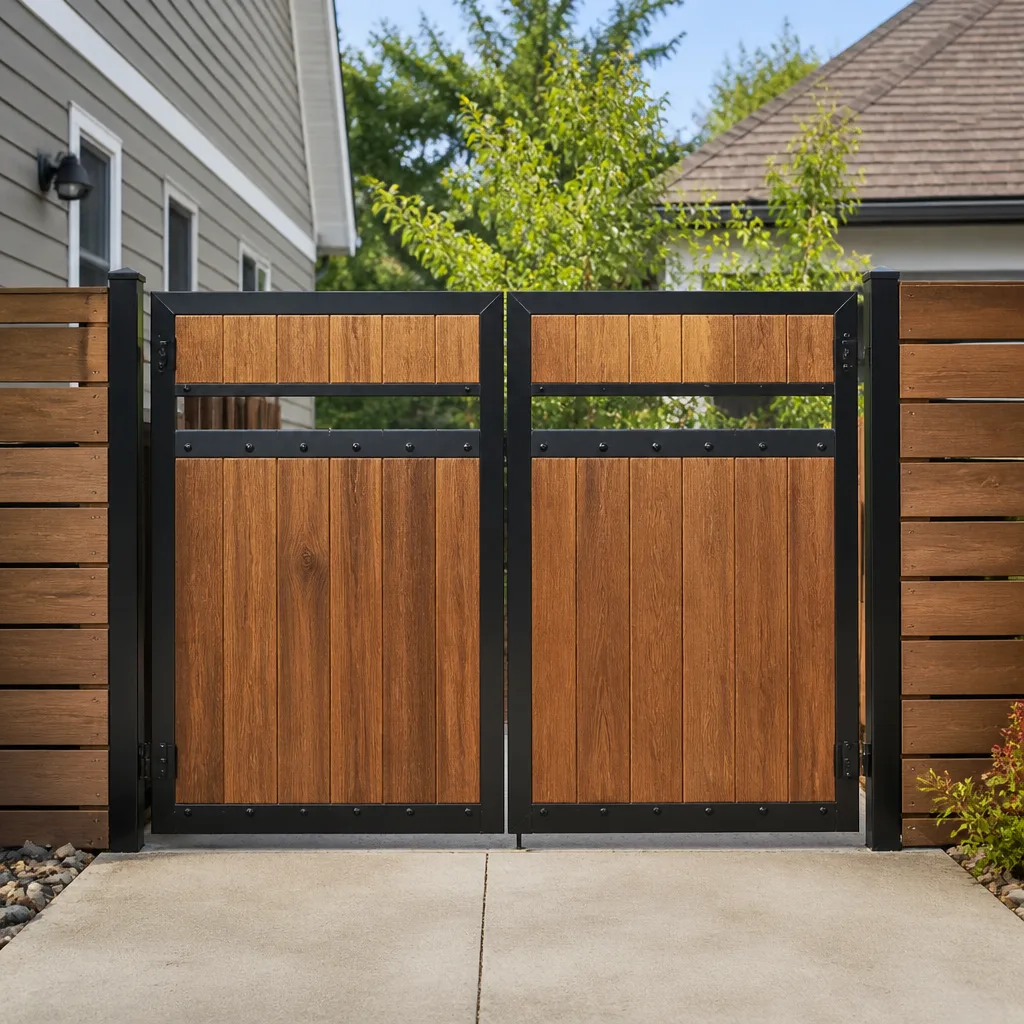 Wood & steel frame
 Farm & ranch
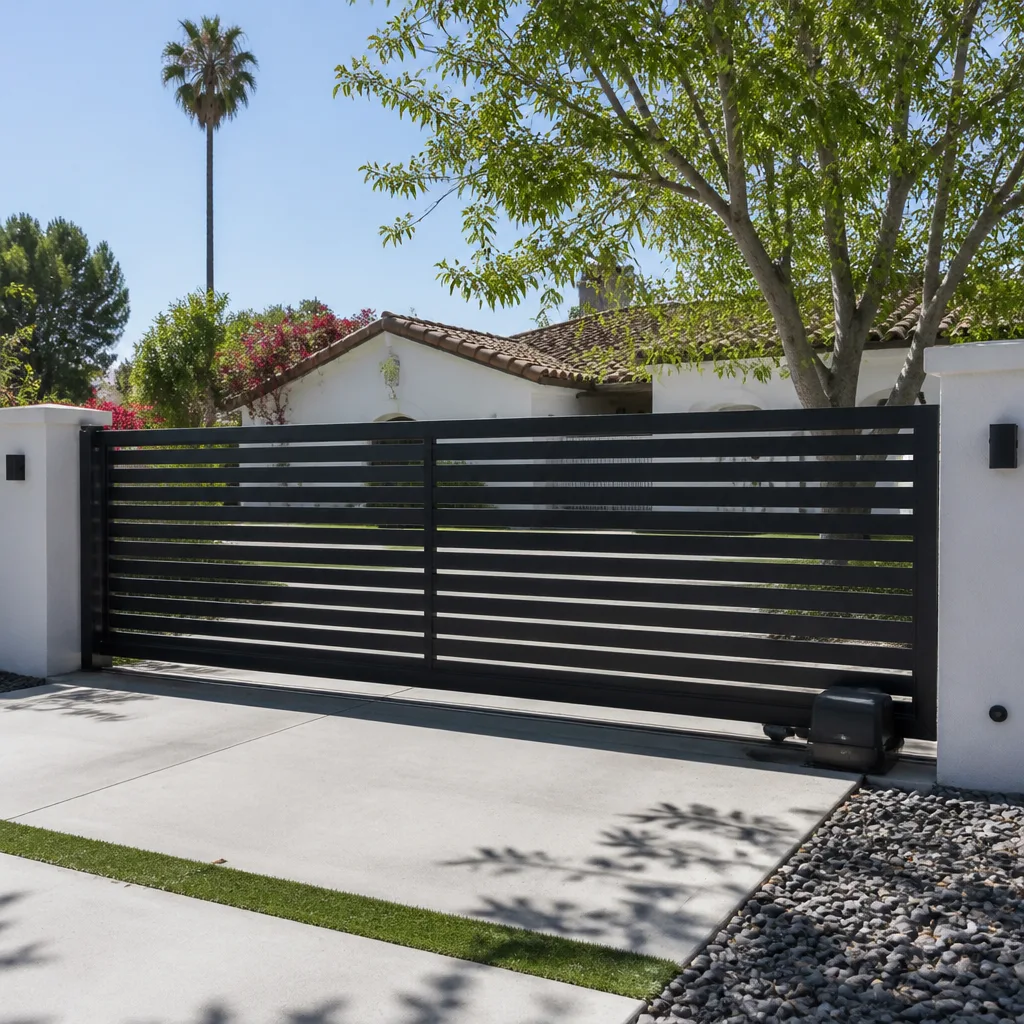 Sliding driveway gates
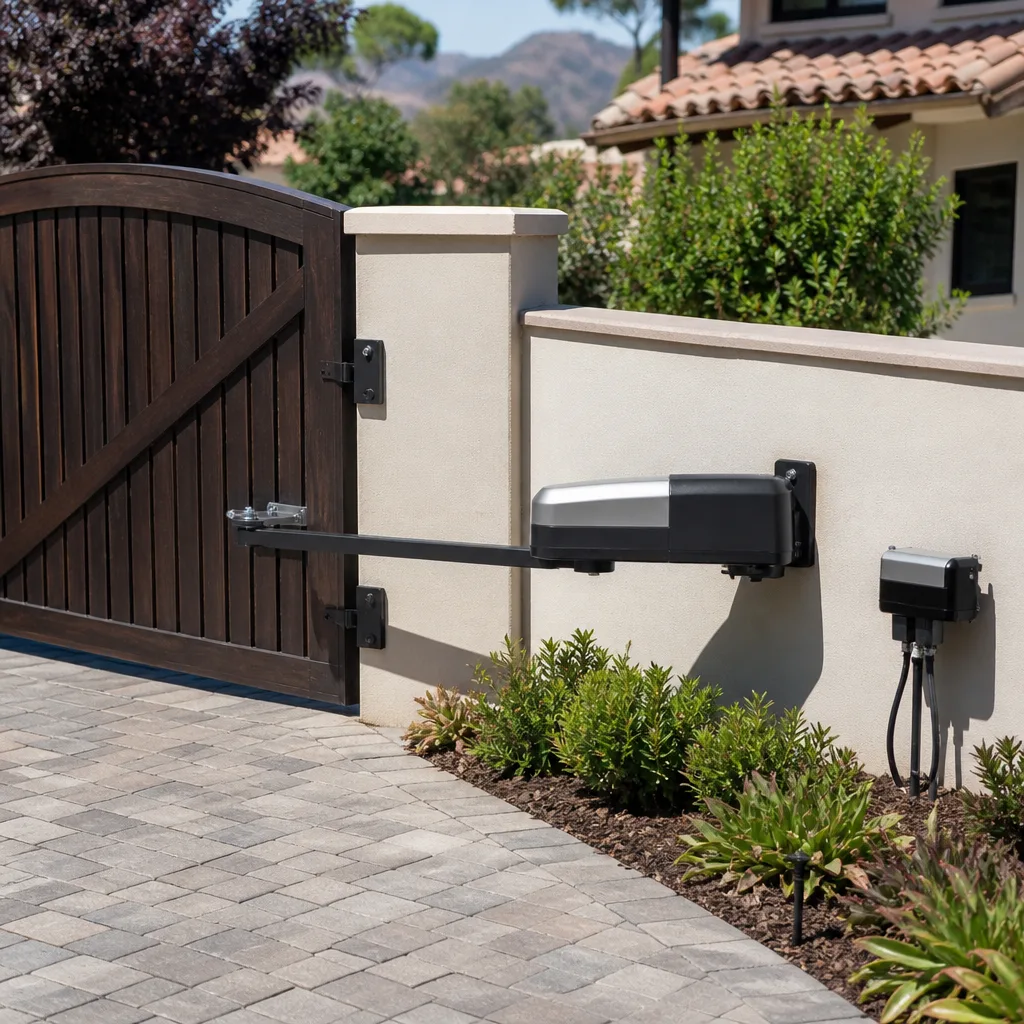 LiftMaster operators
Free on-site gate assessment - hinges, posts, and your LiftMaster or Nice gate operator checked before anything is quoted
The assessment is free and the quote is the invoice.
Get your free estimateGate Repair Troubleshooting in Sunrise Manor: Common Problems and How to Fix Them
A gate that won’t open is rarely a broken gate. In our experience, most of the failures we get called out for in Sunrise Manor trace back to something small: a dead backup battery, a tripped breaker, a photo-eye caked in desert dust, a hinge that finally gave up after years of alkaline soil working at it. The gate mechanism itself is usually fine. What that means for you is you can often figure out what’s wrong before anyone shows up, and knowing the difference between a twelve-dollar part and a failed motor changes how you handle the call. This guide walks through the five root causes behind most gate failures, how to test each one with a multimeter and your eyes, and when it’s genuinely time to bring in a technician.
Quick Answer
Most electric gate failures in Sunrise Manor come down to one of five causes: power supply problems, a blocked or misaligned safety sensor, a dead battery, a wiring fault, or a worn mechanical component like a hinge or roller. You can isolate which category you’re dealing with in about fifteen minutes using a multimeter, a visual inspection, and the operator’s error codes. If the problem is power, sensor alignment, or a battery, it’s often a fix you can handle yourself. Motor, control board, and heavy mechanical failures are technician work.
Styles & brands we work with
- Wrought iron
- Wood & steel frame
- Farm & ranch
- Sliding driveway gates
- LiftMaster operators
Table of Contents
- The Five Root Causes Behind Nearly Every Gate Failure
- How to Diagnose Your Gate: A Step-by-Step Test Sequence
- Why Sunrise Manor’s Soil and Dust Eat Hinges Alive
- Reading Error Codes on LiftMaster, DoorKing, and FAAC Operators
- How Vegas Heat Affects Hydraulic vs. Electromechanical Operators
- Fix It Yourself or Call a Technician? An Honest Decision Tree
- Manual Gate Problems: Hinges, Tracks, and Latches
- What to Have Ready Before You Call
The Five Root Causes Behind Nearly Every Gate Failure
When a gate stops working, the symptom tells you less than you’d think. “Gate won’t open” sounds like one problem but could be any of five very different ones, and they range from free to fix to several hundred dollars. Sorting your failure into the right category is the single most useful thing you can do before picking up the phone.
Here are the five categories and how to recognize each:
- Power supply failure. The gate is completely dead, no lights on the operator, no sound. Check the breaker at the panel first. A tripped breaker or a blown low-voltage fuse accounts for a surprising share of “dead gate” calls.
- Safety sensor blockage or misalignment. The gate starts to close, stops, and reverses. On swing gates this is usually the photo-eye; on slide gates it can be the safety edge or a loop detector. Dust, cobwebs, and shifted posts are common culprits in Sunrise Manor.
- Battery failure. The gate works on AC power but won’t run during a brief outage, or cycles weakly. Backup batteries in solar and battery-backup operators have a service life, and heat shortens it considerably.
- Wiring fault. Intermittent operation, a gate that works sometimes, or a control board that resets on its own. Rodent damage, corroded connections at the terminal strip, and moisture intrusion in conduit all show up as wiring faults.
- Mechanical wear. The motor runs but the gate barely moves, or moves with a grinding sound, or the arm binds. Worn hinges, sagging posts, worn rollers, and misaligned tracks live here.
The good news is that four of the five are diagnosable in a short session with basic tools. If you’re searching for gate repair in Sunrise Manor because you’ve already narrowed it down to motor or board failure, skip ahead to the decision tree. If you haven’t, start with the test sequence below.
How to Diagnose Your Gate: A Step-by-Step Test Sequence
A multimeter and a visual sweep will isolate the cause in most cases. Work through these steps in order, and stop when you find the failure. Do this during daylight while the gate is in a safe position. Never put your hands near the gate’s travel path or reach into the operator housing while power is connected, and never attempt to adjust or replace the operator’s internal wiring or a slide gate’s track and rollers yourself. Those parts can crush. We’re describing what to check, not how to service the mechanism.
- Confirm the operator has power. Open the control box (breaker off first) and look for the status LED. No LED means no power reaching the board. Check the breaker, the disconnect switch, and any inline fuse. Restore power and retry.
- Read the error code. Most modern operators flash a code on the board or display. Write it down. The next section maps common codes to plain-language meanings.
- Test the safety sensors. Wave your hand through the photo-eye beam. If the operator’s LED doesn’t change state, the sensor isn’t seeing the beam. Wipe both lenses with a dry cloth, check that the two units face each other squarely, and look for a cracked or sun-bleached lens.
- Test the battery. With the meter on DC volts, check the backup battery terminals. A battery that reads well below its rated voltage under load is done. Heat is the main killer in this climate.
- Inspect the wiring. Look for chewed insulation, green corrosion at the terminal strip, and loose spade connectors. A gentle tug on each wire confirms it’s seated.
- Check the mechanics by hand. With the operator disengaged (use the manual release), push the gate through its full travel. It should move smoothly with modest effort. Binding, grinding, or a gate that drifts to one side points to hinge, roller, or post problems.
If the gate passes all six checks and still won’t run, you’re likely looking at the control board or the motor itself. That’s technician territory, and the next sections explain how to tell which one.
Why Sunrise Manor’s Soil and Dust Eat Hinges Alive
Sunrise Manor sits on desert ground with a high alkaline content, and that combination does a specific kind of damage to gate hardware. The soil itself is mineral-rich and dusty, and wind carries that dust into every hinge, roller, and pivot point on your gate. Add the summer heat and the picture gets worse: dust sticks to whatever lubricant is there, forms a gritty paste, and slowly grinds away the bearing surfaces.
The early signs are easy to miss, which is exactly why early-stage hinge failure turns into a seized gate. Watch for these:
- Chalky white or green buildup around hinge pins and pivot cups. That’s the alkaline dust reacting with moisture and old lubricant.
- A slight sag at the free end of a swing gate. A gate that used to clear the ground by an inch now scrapes.
- Stiffness at the start of travel. The gate moves fine once it’s going but resists the first few inches. That’s a dry or contaminated hinge pin.
- Noise that wasn’t there before. A creak or squeal at a specific point in the swing usually points to one hinge, not all of them.
- Roller flat spots on slide gates. In dusty conditions, rollers wear unevenly and start to thump.
Cleaning and re-lubricating hinges with a dry-film or graphite product made for dusty environments is the single best defense, and it’s a job most homeowners can handle. A pressure wash followed by a proper lubricant beats a wet oil that attracts more grit. If a hinge pin is already seized or the gate post has shifted, though, the fix is mechanical and worth doing right the first time. Our technicians have up to 14 years of experience with exactly this kind of wear, and we’ve learned that a gate caught early rarely needs more than hardware and alignment.
Reading Error Codes on LiftMaster, DoorKing, and FAAC Operators
Error codes are the operator telling you where to look. They don’t always tell you exactly what’s broken, but they narrow the field fast. Here’s what the common codes mean on the brands we work with most in Sunrise Manor. If you have an Elite, Mighty Mule, Linear, Viking, Ghost Controls, BFT, or any other operator, the pattern is similar: a few flashes followed by a pause, repeated.
LiftMaster operators use a flash count on the diagnostic LED. One or two flashes typically indicate a sensor or safety-device problem (check the photo-eye alignment and wiring first). Three or four flashes usually point to a limit or travel-setting issue. Five or more tend to relate to the motor or control board. The exact mapping varies by model, so grab the manual or look up the model number before assuming.
DoorKing units often display numeric codes on a digital readout. Codes in the low single digits frequently mean a loop detector or safety sensor isn’t detecting properly. Higher codes often indicate motor overload or a board fault. Because DoorKing operators are common on commercial and multi-unit gates, a loop detector that’s been damaged or a gate that’s been forced are frequent causes.
FAAC operators, especially the hydraulic swing models, use LED sequences. A rapidly flashing LED paired with a gate that won’t move often means the control board is in a fault state from a sensor or limit switch. A steady LED with a motor that hums but doesn’t move points toward a hydraulic or mechanical issue.
In every case, write down the exact flash count or code and note what the gate was doing when it happened. That single detail saves real diagnostic time on a call, and it’s the difference between a fast fix and a long visit. If the code keeps coming back after you’ve reset power and cleared the sensor path, the operator is telling you something needs a technician’s eye.
How Vegas Heat Affects Hydraulic vs. Electromechanical Operators
Extreme heat is a genuine factor for gate operators in Sunrise Manor, and the way it shows up depends on the type of operator you have. The two main categories fail differently, and knowing which one you have tells you what symptoms to watch.
Hydraulic operators (common on heavier swing gates, and the design used by FAAC and similar brands) rely on hydraulic fluid to move the gate. Sustained heat thins that fluid and stresses the seals. Expect to see:
- Sluggish or slow operation on very hot days, improving in the cooler morning.
- Fluid weeping or staining around the ram or seals.
- A gate that drifts or creeps instead of holding firmly.
- Motor running hot or the operator cutting out after several cycles.
Electromechanical operators (the more common design, including many LiftMaster and Mighty Mule units) use a motor and gear system with a control board. Heat hits them differently: control boards are temperature-sensitive, and capacitors and relays age faster in sustained high heat. Expect:
- Random resets or the gate stopping mid-cycle with no obvious cause.
- Board failure that shows up first on hot afternoons.
- Backup batteries that die well before their rated life.
- Motor thermal overload trips if the operator is working against a stiff gate.
Shade helps. So does keeping the operator housing clean and free of dust so it can dissipate heat. If your gate works fine in the morning and acts up by mid-afternoon, heat is almost certainly a factor.
Fix It Yourself or Call a Technician? An Honest Decision Tree
We’d rather tell you when you don’t need us than sell you a visit you don’t need. Use this sequence to decide, and be honest with yourself about your comfort level.
- Is it power? Tripped breaker, blown fuse, dead outlet. Reset or replace, and if the gate runs, you’re done. No call needed.
- Is it a blocked or dirty sensor? Clean the lenses, straighten the alignment, clear the path. If the gate closes again, you’re done.
- Is it a dead backup battery? A replacement battery is a straightforward swap on most operators. If you can match the battery spec, do it yourself.
- Is a hinge dry, loose, or squeaking? Clean and lubricate, tighten hardware, and monitor. This is routine homeowner maintenance.
- Is the gate binding mechanically, the post sagging, or the track misaligned? These are heavier mechanical jobs. A sagging post in particular needs proper footing work, and a track or roller problem on a slide gate can crush if it fails mid-travel. Call a technician.
- Is it a control board, motor, or hydraulic fault? That’s our job. These require testing we can’t walk you through safely, and getting it wrong can damage an expensive operator.
The general rule: if the fix is a part you can unplug and replace, and the gate moves freely by hand, try it yourself. If the gate binds, if you’re dealing with the operator’s internal wiring, or if the error code returns after a reset, bring in a specialist. A free estimate tells you which side of the line you’re on without guessing.
Manual Gate Problems: Hinges, Tracks, and Latches
Not every gate in Sunrise Manor has a motor, and manual gates have their own set of common failures. The diagnosis here is simpler because there’s no electronics to blame. It’s all about metal, alignment, and the ground under the posts.
The most common manual gate problems we see:
- Sagging swing gates. Usually a worn or loose top hinge, or a post that’s shifted. Check the hinge bolts first; if they’re tight, the post is the suspect.
- Gates that drag on the ground. A sign the gate has settled or the post has moved. Often accompanied by a scrape mark in the dirt.
- Slide gates that jump the track. Worn rollers or a track that’s out of alignment. A slide gate that comes off its track is a serious safety issue, so don’t force it.
- Latches that won’t catch. Alignment or a worn latch mechanism. Sometimes a simple adjustment, sometimes a replacement.
- Rusted or seized hinges. The alkaline dust problem again, made worse by a lack of lubrication.
Manual gates are generally more forgiving to work on yourself, but the same cautions apply when it comes to alignment and weight. A heavy gate panel can crush if it drops off a worn hinge or track, and posts that need resetting require proper footing depth to stay stable. If the gate is large or the post has clearly moved, let a technician look at it.
What to Have Ready Before You Call
The more you can tell us when you call, the faster we can point you to the right fix and the more accurate the estimate. Have these ready if you can:
- The operator brand and model number (usually a sticker inside the housing).
- The exact symptom: does it do nothing, start and reverse, run weakly, or make noise?
- Any error code or flash count you saw, and when it appeared.
- Whether the gate moves freely by hand when disengaged.
- Whether the problem is constant or intermittent, and if it’s worse in heat.
- Whether you’ve checked the breaker and cleaned the sensors.
Even if you don’t have all of it, that’s fine. We’ll walk you through it. We work on LiftMaster, FAAC, BFT, Linear, Viking, Ghost Controls, DoorKing, Elite, and Mighty Mule systems, so whatever you’re running, it’s something we see regularly. Our focus is entirely on gate systems, repair, electric service, and installation, and we do that one thing rather than treating gates as a side job.
Common Mistakes to Avoid
- Forcing a stuck gate by hand. If a gate is binding, pushing it through can bend the arm, strip the gear, or injure you. Diagnose the cause first, then move it with the operator disengaged and only after it moves freely.
- Ignoring a dirty photo-eye. In Sunrise Manor, dust on the lenses is one of the most common causes of a gate that won’t close. A dry cloth and a re-check takes a minute and costs nothing.
- Oiling hinges with a wet lubricant. In this dusty climate, wet oil attracts grit and turns into grinding paste. Use a dry-film or graphite lube meant for dusty conditions.
- Assuming a dead gate needs a new motor. A tripped breaker, a blown fuse, or a dead battery gets misdiagnosed as motor failure all the time. Check power and battery first.
- Resetting the code without reading it. The error code is the operator telling you what’s wrong. Write it down before you cycle power.
- Skipping the shade and dust cleanup on the operator housing. A dirty housing runs hotter, and heat is hard on control boards and batteries.
- Digging up a gate post without proper footing in mind. A post that isn’t set to the right depth will shift again. If the post needs work, do it right the first time.
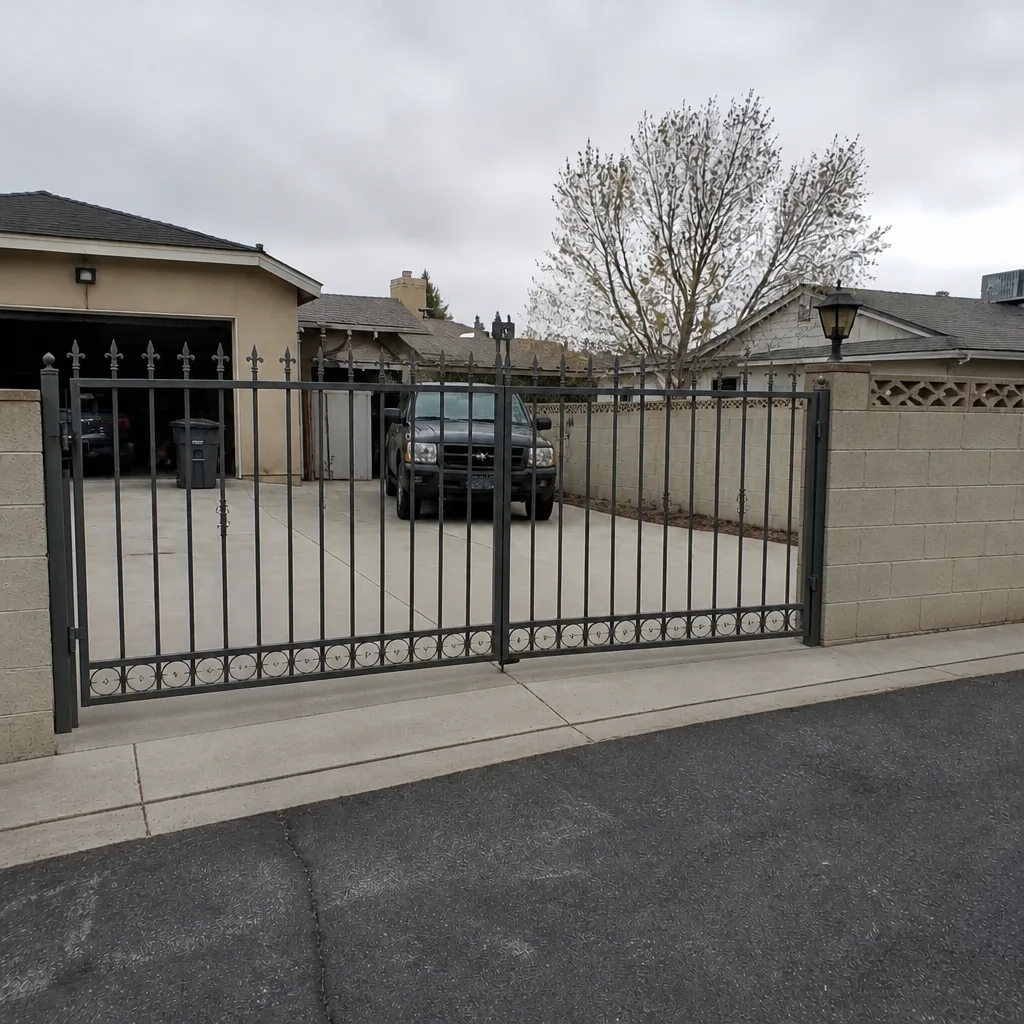
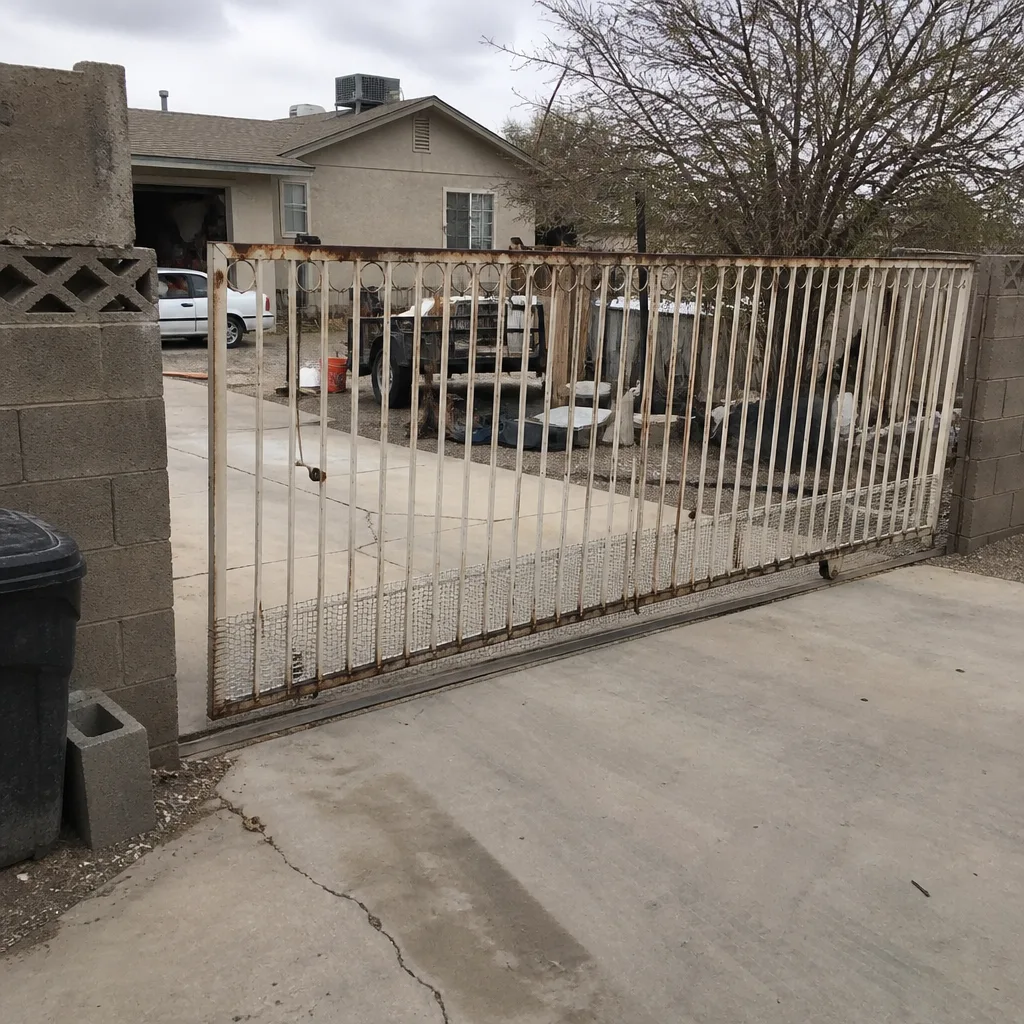
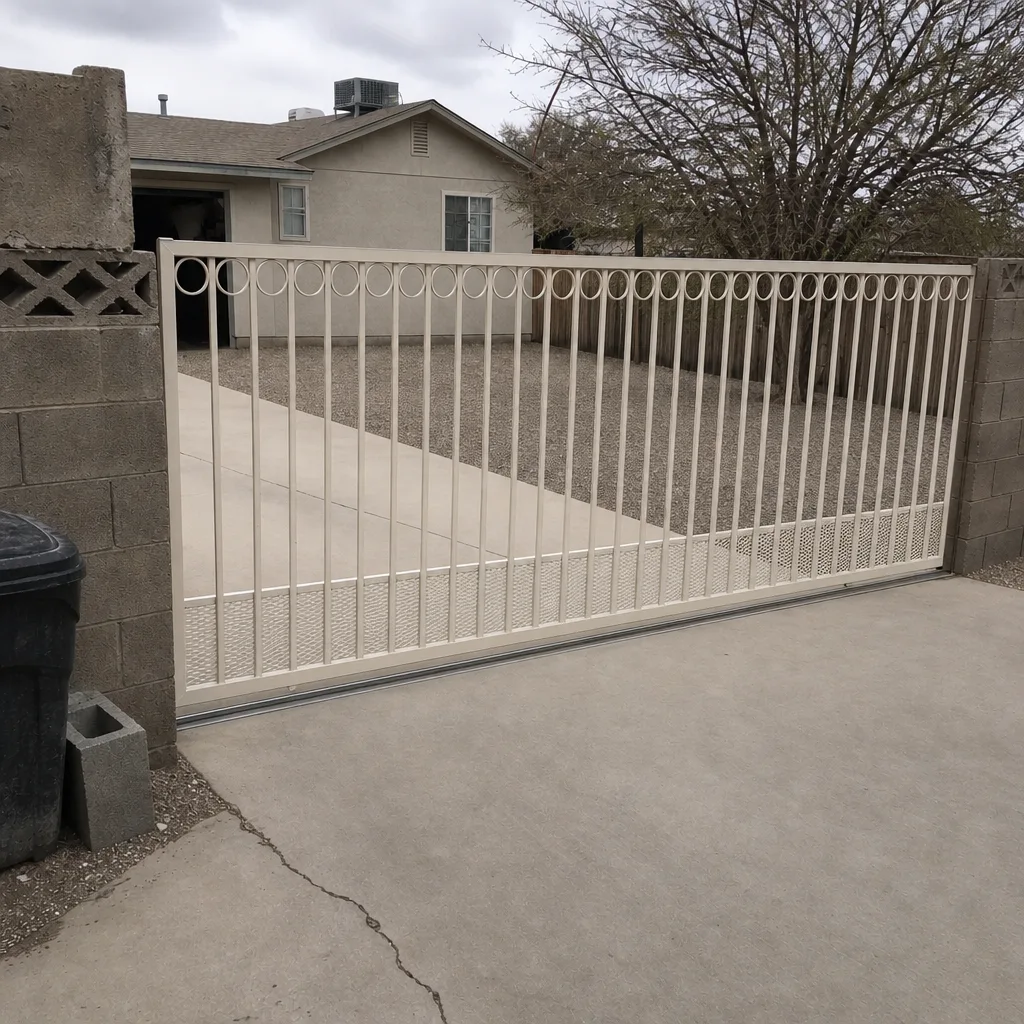
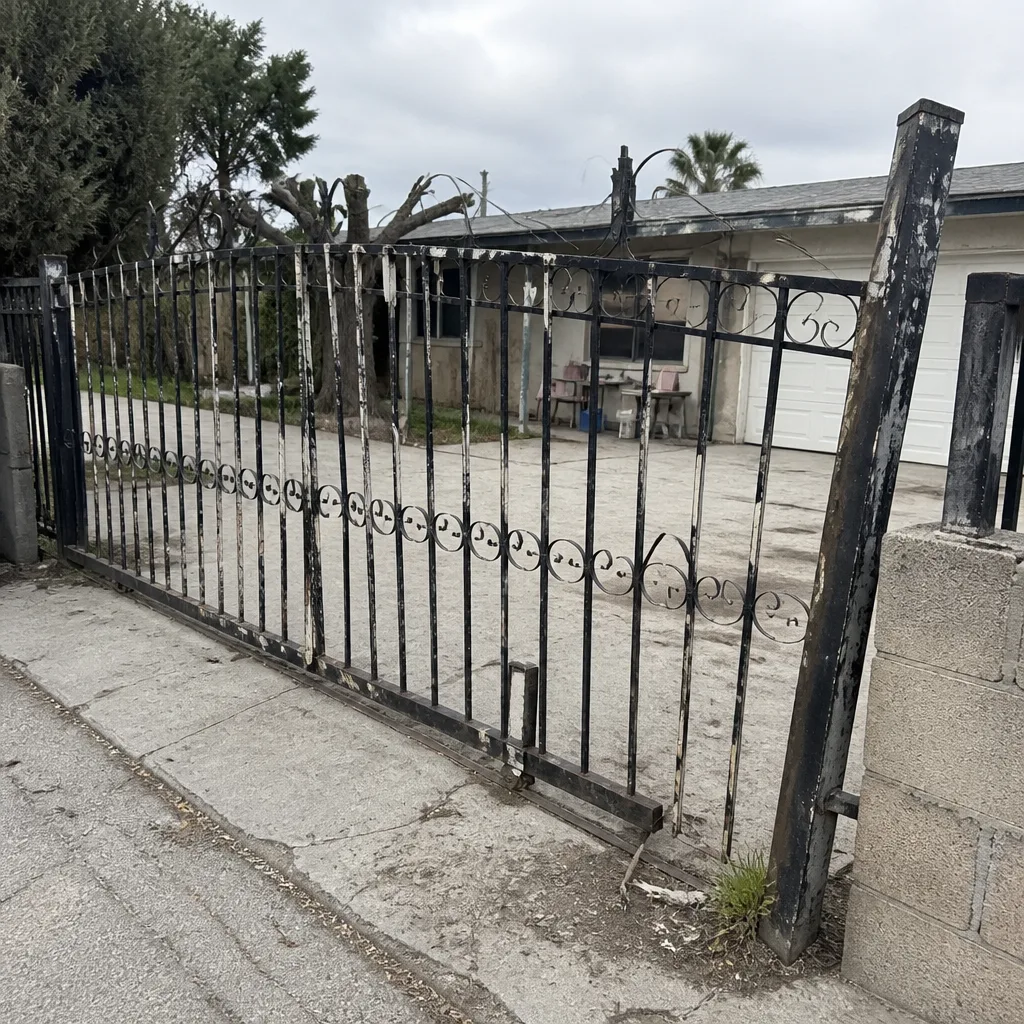
See the difference
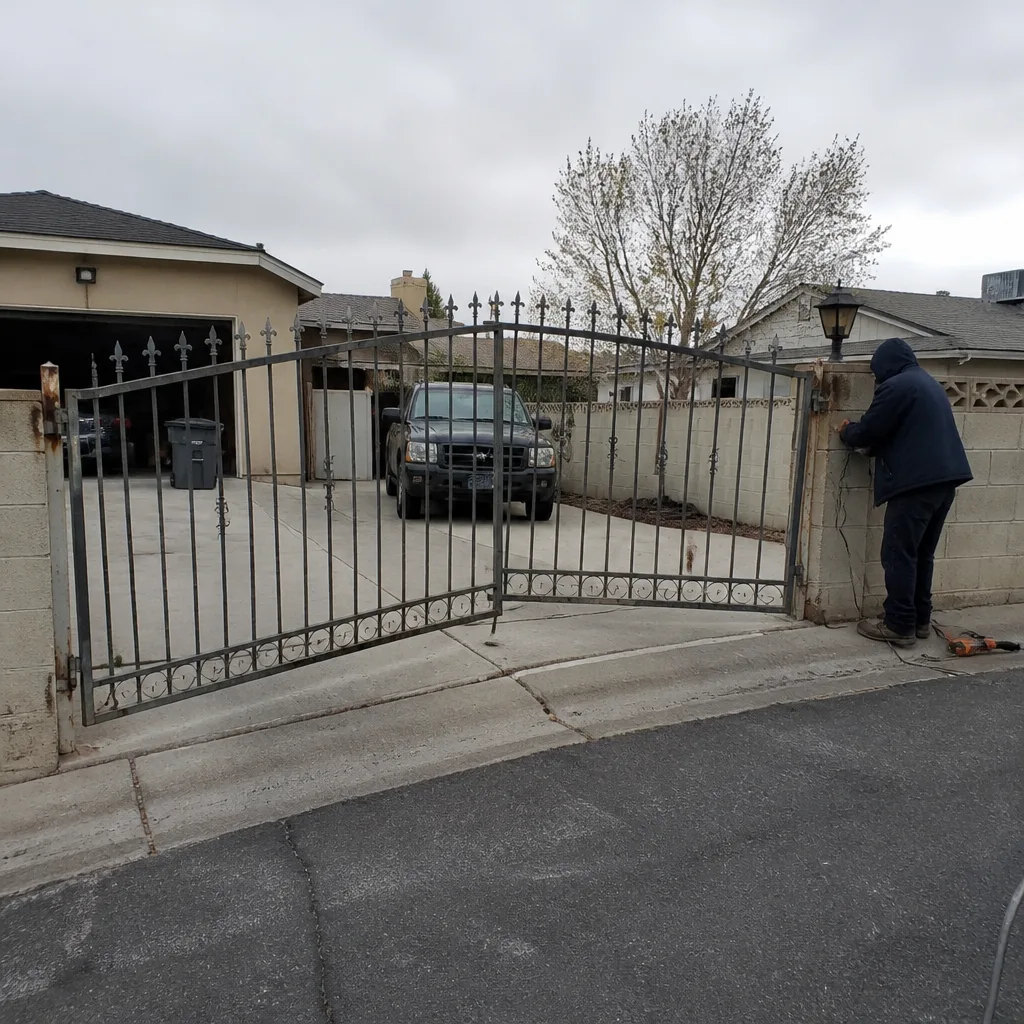 Before
 After
 Before
 After
 Before
 After
When to Call a Professional
Call a technician when the gate binds mechanically, when a post has clearly shifted, when the control board or motor is suspect, or when an error code returns after you’ve reset power and cleared the sensor path. Also call if the gate is a slide gate that’s come off its track or is rolling unevenly, since those can crush if they fail mid-travel. And call if you simply want a straight answer without spending your day at it. We offer free estimates in Sunrise Manor, and we’ll tell you honestly whether you need a repair or a replacement. Call (844) 435-3018. We answer 24/7. Fast dispatch from 7am to 7pm, Sunday through Friday. For a full look at what we handle, see our Gate Repair Sunrise Manor page.
Frequently Asked Questions
Gate repair in Sunrise Manor is priced per job, based on the written estimate you receive before any work begins. The price depends on whether the problem is a sensor alignment, a battery, a hinge, or a motor or board fault, since those are very different jobs. The estimate is free and it’s the price you agree to up front, so there are no surprises on the invoice. Call (844) 435-3018 for an exact quote.
Check the breaker and the operator’s power first. A tripped breaker, a blown fuse, or a dead backup battery causes many “dead gate” calls, and the gate itself is fine. After power, check the photo-eye for dust and alignment. If the gate still won’t run after those two checks, it’s likely a board, motor, or wiring fault worth a technician’s look. Call (844) 435-3018 for a free estimate.
In many cases, yes, once we’ve confirmed the cause and the right part is available. Same-day service is common for sensor, battery, and wiring issues. If the job needs a motor, control board, or hydraulic component, the part may need to be sourced, and we’ll tell you the timeline before any work starts. Call (844) 435-3018 and we’ll give you a realistic answer.
We work on LiftMaster, FAAC, BFT, Linear, Viking, Ghost Controls, DoorKing, Elite, and Mighty Mule, plus other operator types beyond that list. Our technicians are trained across competing manufacturer platforms, so recommendations are based on your system, not a product we’re pushing. Call (844) 435-3018 and tell us your model number.
Heat is usually the cause. In Sunrise Manor, summer afternoons stress control boards, capacitors, backup batteries, and hydraulic seals. Electromechanical operators tend to show random resets and board issues, while hydraulic operators get sluggish or weep fluid. If the pattern is consistent, note it and tell us, because it points straight to the fix. Call (844) 435-3018 for a free estimate.
Repair is worth it when the fault is a sensor, battery, wiring, or hinge, since those are inexpensive compared to a new operator. Replacement makes more sense when the motor or board has failed on an older unit and parts are hard to find. We’ll tell you which is worth it for your system, honestly, and you can decide. Call (844) 435-3018.
The Bottom Line
Most gate failures in Sunrise Manor come down to power, sensors, batteries, wiring, or mechanical wear, and four of those five can be diagnosed at home with a multimeter and a quick look. Check power and the photo-eye first, read any error code before resetting, and clear the dust that the desert sends into every hinge and lens. If the gate binds, the post has moved, or the fault comes back after a reset, that’s technician work. We specialize in gates only, across manual and electric systems, and we’ll tell you honestly whether you need a repair or a replacement. Repair or replace, we’ll tell you which is worth it. Our services include gate repair, electric gate repair, and new gate installation. If you’re in Sunrise Manor and the gate still won’t budge, call us. Call (844) 435-3018 for a free estimate. We answer 24/7. Fast dispatch from 7am to 7pm, Sunday through Friday.
Written by the team at Gate Repair Sunrise Manor.