
Last updated November 15, 2026
 Wrought iron
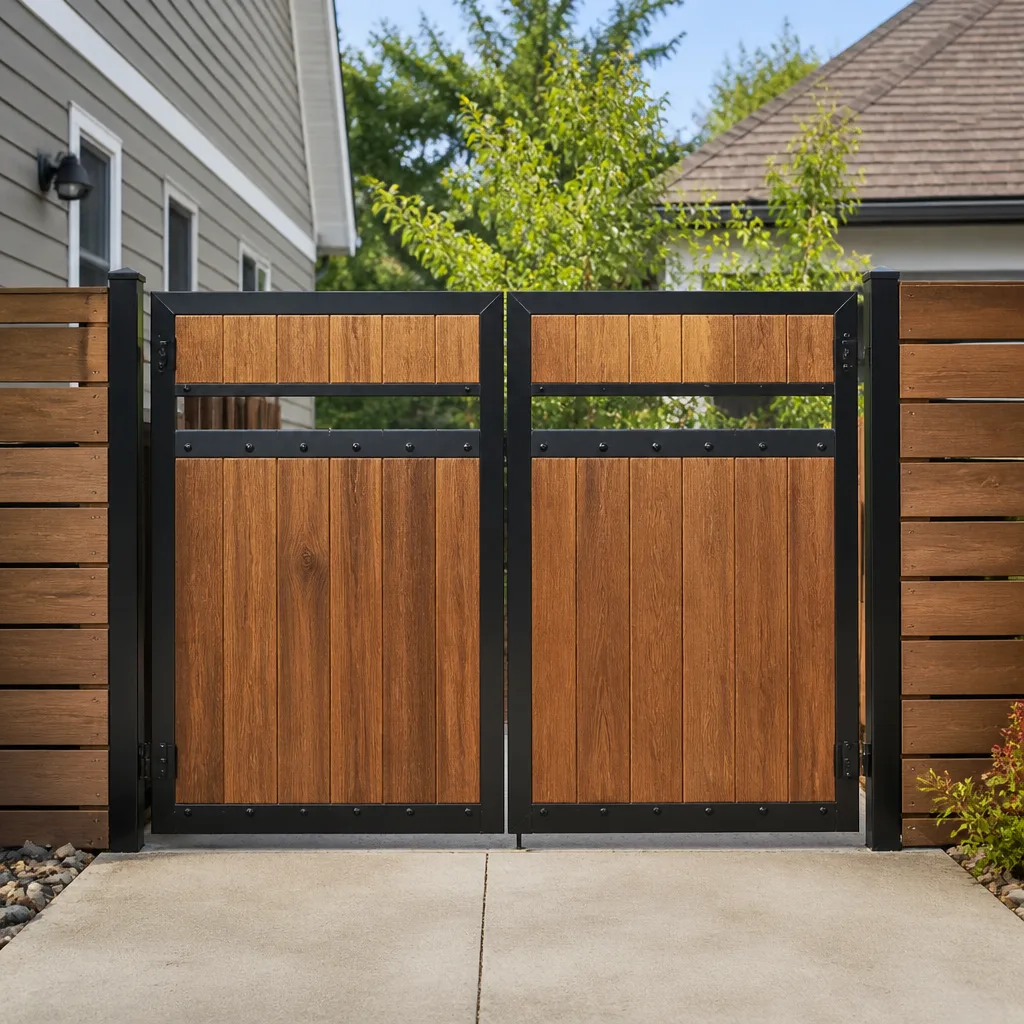 Wood & steel frame
 Farm & ranch
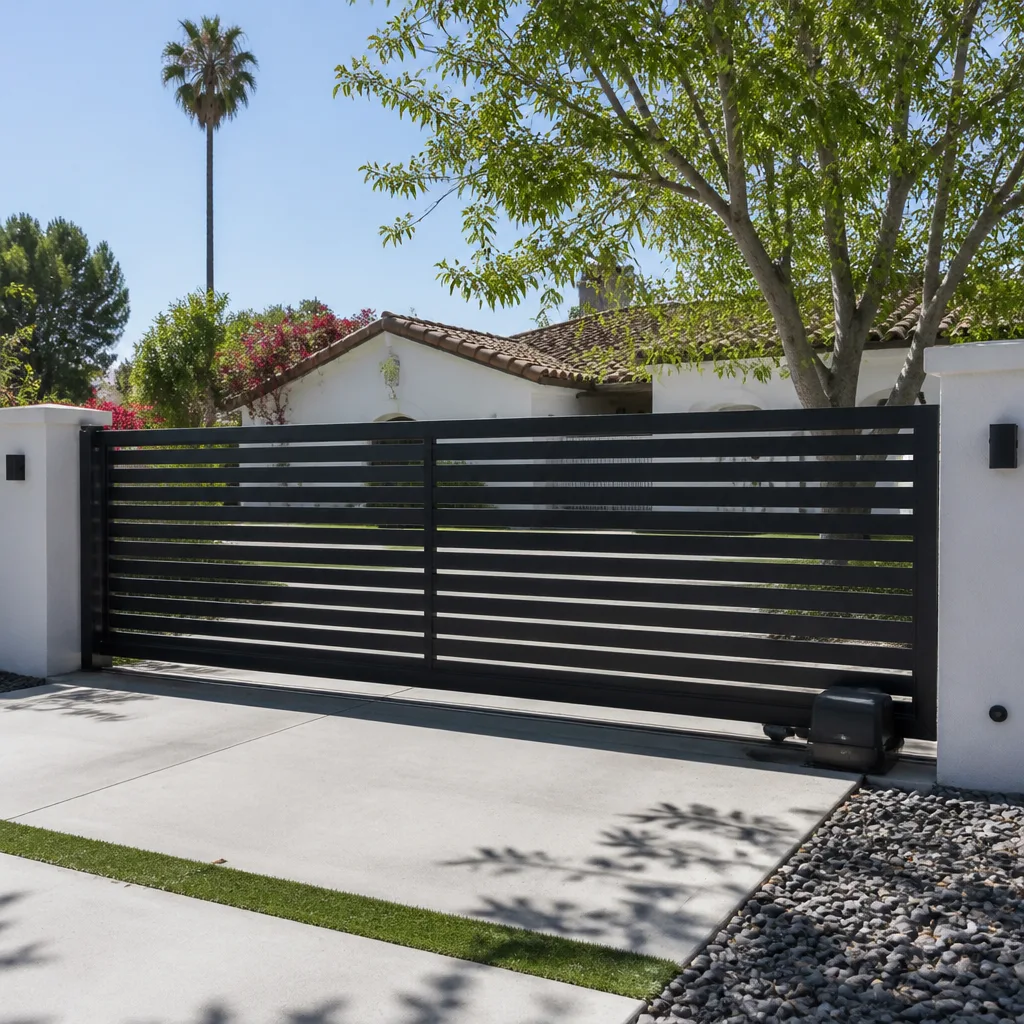 Sliding driveway gates
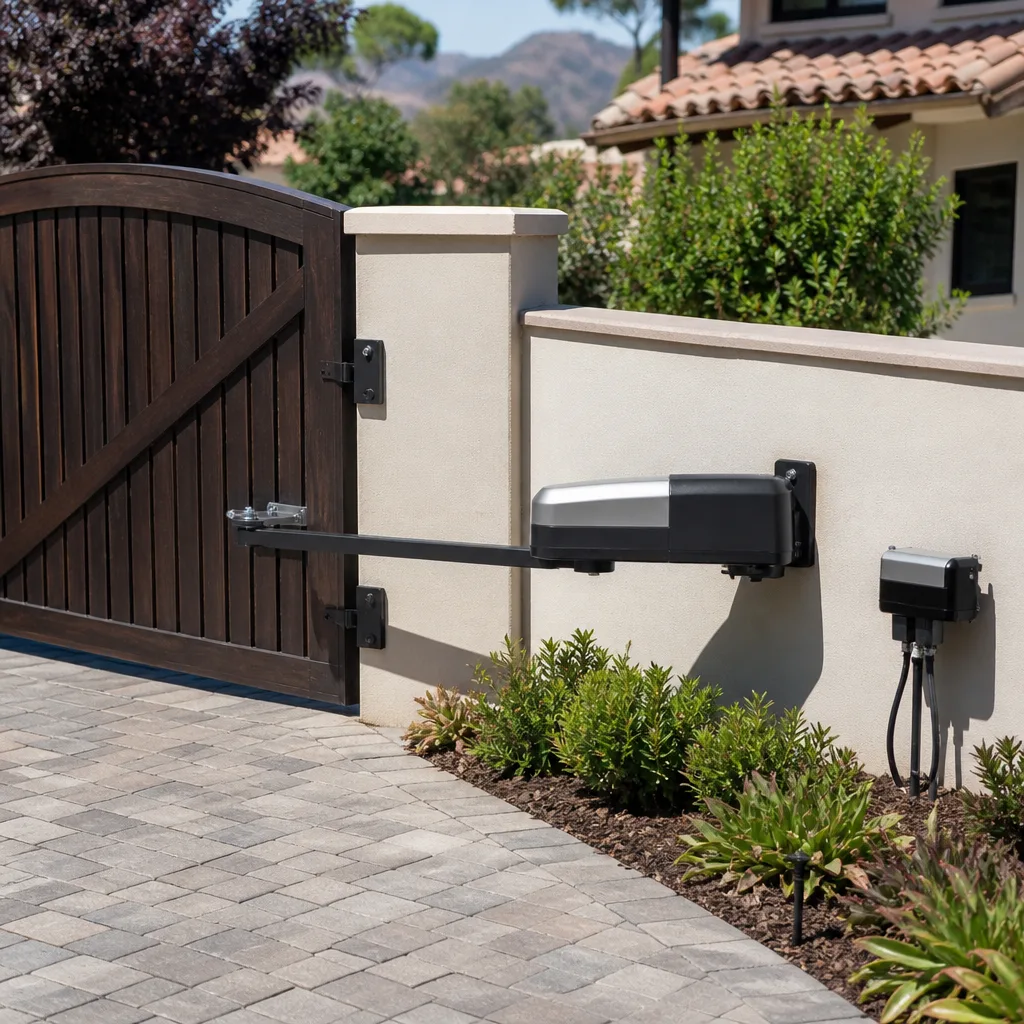 LiftMaster operators
Free on-site gate assessment - hinges, posts, and your LiftMaster or Nice gate operator checked before anything is quoted
The assessment is free and the quote is the invoice.
Get your free estimateGate Repair Warning Signs: A Sunrise Manor Homeowner’s Reference Guide
Most gates don’t fail without warning. They tell you something is wrong for weeks, sometimes months, before they stop moving altogether. The trouble is that the warnings sound harmless – a slightly slower swing, a faint grind, a remote that needs to be pressed twice. Homeowners in Sunrise Manor rationalize these away as normal wear until the gate refuses to open at midnight or traps a car in the driveway. This guide maps the symptoms you’re likely to notice to the failures they usually point to, sorts mechanical problems from electrical ones without any tools, and shows you how to log what you’re seeing so a technician can arrive already knowing where to look.
Quick Answer
The most reliable gate repair warning signs are slower movement, grinding or scraping noises, partial travel, reduced remote range, and gate drift after it stops. Each points to a specific kind of failure, and catching any of them early usually means a smaller, cheaper repair than waiting for a full breakdown. Some symptoms – erratic safety sensors, heavy panels dropping off a track, scorched wiring – are hazards, and the system should be shut off and left to a trained professional.
Styles & brands we work with
- Wrought iron
- Wood & steel frame
- Farm & ranch
- Sliding driveway gates
- LiftMaster operators
Table of Contents
- Why a Slow Gate Is a Failing Gate
- Symptom-to-Cause: What Each Warning Sign Usually Means
- Mechanical vs. Electrical: How to Tell Without Tools
- Warning Signs by Gate Type: Slide, Swing, and Overhead
- The Warning Signs That Are Safety Hazards
- How to Log and Describe Symptoms Before the Technician Arrives
- Sunrise Manor Conditions That Accelerate Wear
- Repair or Replace? How to Think About the Decision
Why a Slow Gate Is a Failing Gate
A gate that hesitates for two seconds before moving isn’t “just slow.” It’s a motor pulling extra current to overcome mechanical resistance, and that resistance doesn’t fix itself. The longer it stays in play, the more heat builds up in the operator’s motor windings and the control board, and the sooner one of them gives out. We’ve seen gates go from a two-second delay to a dead operator in a matter of weeks. That short window is why hesitation belongs at the top of any gate repair warning sign list.
The same logic applies to every other early symptom. Grinding means metal is meeting metal where it shouldn’t – usually a worn roller, a dry hinge, or a track with a burr on it. Drift after the gate stops means the braking or limit system is no longer holding position. Reduced remote range means the receiver is struggling, whether from a failing battery, a damaged antenna, or water getting into a housing. None of these are cosmetic complaints. They’re all symptoms of a system working harder than it was designed to.
In Sunrise Manor, the driving reason these symptoms show up is often climate. The desert swings between hot days and cool nights, and that daily expansion and contraction loosens fasteners, dries out lubricant faster than in milder climates, and works dust into every moving part. A gate that lives in this environment needs attention to its warning signs as a habit, not as a one-off response to a breakdown.
What we want you to take from this section is that early symptoms are reliably cheaper to fix than late ones. A hinge that suddenly squeals is a small job. A gate that has been forcing a seized hinge for six months is a motor replacement. Get someone looking at the warning signs early and you avoid the second kind of repair. You can start with a specialist who handles gate repair and understands how these systems fail before the failure is total.
Symptom-to-Cause: What Each Warning Sign Usually Means
Here’s the core of this guide: the five symptoms most homeowners notice first, and what each one usually points to. Treat this as a diagnostic map, not a diagnosis – only an on-site inspection confirms what is actually wrong. But knowing the likely cause helps you decide how urgently to act and what kind of specialist you need.
- Slow or hesitant operation – often a motor straining against mechanical resistance (a tight hinge, a worn roller, a dragging chain), or a failing capacitor, or a power supply that’s sagging. If the slowdown came on gradually, suspect mechanical wear. If it came on suddenly, suspect the electrical side.
- Grinding or scraping noise – metal-on-metal contact. Common causes are worn roller bearings on a slide gate, dry hinge pins on a swing gate, a misaligned track, or a chain that has lost tension and is rubbing against its guide. Noise that gets louder under load is usually mechanical.
- Partial movement or stalling mid-travel – the gate starts fine then stops halfway. On a swing gate this often points to a hinge binding or a limit switch out of adjustment. On a slide gate it can be debris in the track or a failing operator clutch. This is a real warning sign, not a quirk.
- Reduced remote range – you used to open from down the street and now you’re pressing from the driveway. Causes include a weak transmitter battery, a damaged or waterlogged receiver antenna, signal interference, or a receiver on its way out. Rule out the battery first, then treat it as electrical.
- Gate drift after stopping – the gate overshoots its stop point, coasts, or creeps after it should be locked. This points to the braking system, worn limit switches, a slipping clutch, or a gate that’s no longer level. It’s one of the most important warning signs on a slide gate, where drift can mean a carriage problem.
Notice the pattern: gradual onset usually means mechanical, sudden onset usually means electrical. That distinction is the next section, and it matters because it helps you describe the problem accurately and call the right specialist first.
Mechanical vs. Electrical: How to Tell Without Tools
You don’t need a multimeter to get a useful first read on a gate problem. You just need to watch and listen carefully, in a safe way. The goal here isn’t to open anything up or test circuits – it’s to classify the symptom so you can describe it well and call the right person. Here’s how to separate mechanical warning signs from electrical ones without tools.
- Listen before you watch. Stand clear of the gate’s travel path and listen while it moves. Grinding, scraping, squealing, or clunking sounds are overwhelmingly mechanical – they’re the sound of parts in contact that shouldn’t be. Clean, quiet operation with poor performance leans electrical.
- Watch the motion. Does the gate move smoothly but slowly? Or does it lurch and stutter? Smooth-but-slow points to motor or power issues. Lurching and stuttering point to mechanical binding or a limit track problem.
- Check the manual release if you have one. Many operators have a manual release you can use to disengage the gate. With the gate disengaged and moved by hand, if it’s hard to push or feels stiff, that’s mechanical resistance. If it rolls smoothly by hand but the operator can’t drive it, the problem is on the operator or power side. Follow the manufacturer’s release instructions, and if you’re not sure, leave it engaged and let a technician handle it.
- Note whether the issue is constant or intermittent. A grind that happens at the same point every time is almost always a specific mechanical spot – a worn roller, a bent track. A problem that comes and goes with temperature or time of day leans electrical, often a control board or power supply issue.
- Check the last thing you changed. If a symptom started right after a storm, a power outage, or someone else using the gate, that’s a clue. Electrical symptoms often have a triggering event; mechanical ones usually build gradually.
Why does this matter? Because mechanical problems belong to a gate technician and electrical problems – especially on automated operators – belong to someone who specializes in electric systems. General handymen often handle the basic swing and slide gates but aren’t equipped for the complex motorized and access-control systems. If your symptom leans electrical, you want technicians who work on the electric gate repair side every day and know the difference between a control board fault, a failed safety sensor, and a power run that has corroded after years in the sun.
Warning Signs by Gate Type: Slide, Swing, and Overhead
Not every gate warns you the same way. A slide gate, a swing gate, and an overhead or cantilever gate each put stress on different parts, so the early signs cluster differently. A one-size-fits-all checklist will miss the signs that matter for your specific system. Here’s what to watch for by gate type.
Slide Gates
Slide gates roll along a track or hang from a track, and they carry a lot of weight. Warning signs to watch:
- Gate drifts or coasts past its stop point instead of stopping sharply – a carriage or brake issue.
- Grinding at a specific point in the track – a worn roller bearing or debris.
- Track lifting or loosening from its anchor points – a footing or fastener problem.
- The gate jumps the track or rides up – a carriage alignment or weight-loading problem, and a genuine hazard if left alone.
- Slow start with a loud slip – a friction clutch slipping under load.
Swing Gates
Swing gates pivot on hinges and open outward or inward, so the hardware takes the strain. Warning signs to watch:
- Hinge squeal or creak that worsens with each cycle – dry or worn hinge pins.
- The gate sags at the outer edge when open – a hinge or post that’s loosening under weight.
- Inconsistent swing – one direction opens fine, the other drags. This often means the operator arm alignment has shifted or the gate itself is out of square.
- The gate stops short or over-swings its limit – limit switch out of adjustment on the operator.
- A slam or hard stop at the end of travel – braking problem, and a sign the operator is working harder than it should.
Overhead and Cantilever Gates
These systems move heavy panels through a different geometry, and their failure points are distinct. Warning signs to watch:
- Panel sag or droop – worn carriage bearings or a cantilever that’s lost its alignment.
- Binding or stalling at the start of travel – a counterbalance or top-track issue.
- A whine or strain from the operator when moving a heavy panel – a sign of extra mechanical resistance and a motor working too hard.
- Drift or creep after stopping – a braking or clutch issue.
- Any visible damage to the panel or its reinforcement – these panels are heavy, and a failure can be serious.
Reading the right signs for your gate type saves diagnostic time. When you call, describing the gate type and the specific symptom gets a technician on the right track before they even arrive. You can also talk through your symptoms with a specialist like Gate Repair Sunrise Manor, whose technicians work on all three types.
The Warning Signs That Are Safety Hazards
Some warning signs are about convenience. Others are about safety, and those need immediate action – shutting the system off and keeping people away until a professional has looked at it. We can’t overstate this: an automated gate is a heavy moving machine driven by a powerful operator. When it behaves unpredictably, it can crush, pinch, or trap. Here are the warning signs that cross the line into hazard territory.
- Safety sensors that don’t reverse the gate. If your gate’s safety edges or reversing sensors fail to stop or reverse the gate when something is in the path, stop using the gate immediately. Do not test this by putting a person or pet in the path. A qualified technician should test and repair the sensor system.
- A slide gate coming off its track. A heavy panel that jumps the track can fall, and if it falls on someone it causes serious injury. Stop the operator and keep clear.
- Erratic or unexplained movement. A gate that opens or closes on its own, or moves without a command, is a control or safety circuit fault. Disconnect it from power at the breaker if you can do so safely, and call a professional.
- Damaged or exposed wiring, scorched control boxes, or burning smells. This is an electrical hazard. Don’t open the housing and don’t reset anything yourself. Turn off power at the breaker and call a trained professional.
- A gate that won’t stop at its limit. If a gate drives past its end position and hits its stops hard, it’s a limit failure and a crushing risk. Stop using it.
The one thing to understand about all of these: a gate with a safety fault isn’t a gate that “mostly works.” It’s a machine that can hurt someone. Shut it off, keep people clear, and get a specialist out. The same rule applies to the electrical side of any automated operator, where live power and control boards are involved. We don’t give repair steps for those because a mistake there can cause injury or worse – a qualified technician should handle it.
How to Log and Describe Symptoms Before the Technician Arrives
You can save real diagnostic time by writing down what you observe. A precise description lets a technician pre-diagnose before arrival, and it also helps you track whether a problem is getting worse. Here’s a simple logging routine that works for any gate.
- Note what the gate does, not what you think is wrong. “Stops two-thirds open on the way out, completes on the way in” is more useful than “the motor is broken.” Describe motion and sound exactly as you observe them.
- Record the timing. Did the symptom start gradually or suddenly? Did it follow a storm, a power outage, or a period of heavy use? Sudden onset points one way, gradual another.
- Note the conditions. Does it happen more in the heat of the day or the cooler morning? Does it happen when the gate is dry or after a rain? Temperature and moisture are real clues in a desert climate.
- Write down the gate type and the operator brand if you know it. A slide gate with a Linear operator, a swing gate with a FAAC arm, an overhead gate with a BFT control board – the brand and type narrow down the likely fault immediately. If you don’t know the brand, check the operator housing for a label.
- Photograph or record the symptom if it’s safe to do so. A short video of the gate hesitating or grinding, taken from well clear of the moving parts, can be invaluable. Never reach into or lean over a moving gate to get a better shot.
- Note anything you’ve already adjusted. If someone has tweaked the limit switches, changed a remote battery, or lubricated a hinge, say so. Unrecorded adjustments can confuse the diagnosis.
When you call, lead with the gate type, the primary symptom, when it started, and whether the issue is mechanical or electrical in feel. That’s the description a technician can act on. For a homeowner in Sunrise Manor, being able to describe your gate precisely is often the difference between a five-minute diagnosis and a much longer investigation on site. It also helps you get an accurate estimate faster.
If you’re a property manager with many gates, keep a simple log for each one – the same symptoms recur on the same hardware over time, and the log becomes a diagnostic record that saves time on every service call.
Sunrise Manor Conditions That Accelerate Wear
Warning signs appear faster in some environments than others, and Sunrise Manor’s climate is one that works overtime on gate hardware. The combination of intense summer heat, cool nights, low humidity, and windblown dust and sand hits moving parts from several directions at once. Understanding why helps you interpret what you’re seeing.
The heat is the biggest factor. High daytime temperatures dry out lubricants faster than in milder climates, and a dry hinge or dry chain starts to bind. That binding becomes the “slow gate” symptom we described earlier. The temperature swing between day and night also causes metal to expand and contract, which gradually loosens fasteners – bolts on hinges, anchors on slide tracks, brackets on operators. A gate that was tight is slowly working itself loose. Dust and sand find their way into tracks and roller bearings and turn a clean track into an abrasive one. And the wind, when it comes, puts a load on panels that the operator has to fight.
What does this mean practically? It means the warning signs you read about here show up sooner than a homeowner in a mild climate might expect, and that preventive attention to moving parts pays back quickly. A quick visual check of hinges, tracks, and fasteners after a windy stretch or a hot spell is worth the two minutes. Lubrication helps, but one of the most common mistakes is over-lubricating and attracting more dust, so follow the manufacturer’s guidance on what to lubricate and how often.
Climate also affects the electrical side. Heat ages control boards and power supplies, and sun exposure degrades exterior wiring and receiver antennas over time. A remote range problem that appears in summer is sometimes a receiver antenna that’s been cooking in the sun for a while. When you call about an electric issue, mention the climate context – it helps the technician know what to check beyond the obvious.
Repair or Replace? How to Think About the Decision
When a gate starts showing warning signs, homeowners often ask whether it’s worth repairing or if they should replace it. There’s no single answer, but the decision usually comes down to these factors. We walk through them with each customer because we’d rather you understand the trade-off than be told what to do.
- Age and condition of the operator vs. the gate structure. If the gate frame and panels are sound but the operator is failing, replacing the operator is usually the right call. If the gate structure itself is degrading, that’s a different decision.
- Repairability of the specific fault. Many symptoms – a worn roller, a binding hinge, a limit switch out of adjustment – are small repairs. Others – a failed control board on an obsolete operator – are more expensive to fix than to replace.
- Parts availability. A specialist who works across multiple brands (LiftMaster, FAAC, BFT, Linear, Viking, Ghost Controls, DoorKing, Elite, Mighty Mule) can often source parts that a generalist can’t, and can tell you honestly whether a repair is worth doing.
- Safety and reliability as the stakes. A gate that traps a vehicle or endangers people is a liability, and replacing a failing safety system is usually the right move regardless of cost.
- Whether the symptoms are isolated or systemic. One symptom is a repair. A dozen symptoms across the operator, the gate, and the safety system often point to a bigger decision.
Our position is simple: repair or replace, we’ll tell you which is worth it, based on your system rather than on what we’d prefer to sell. That’s a benefit of working with a gate-only specialist – the recommendation is grounded in the gate in front of us.
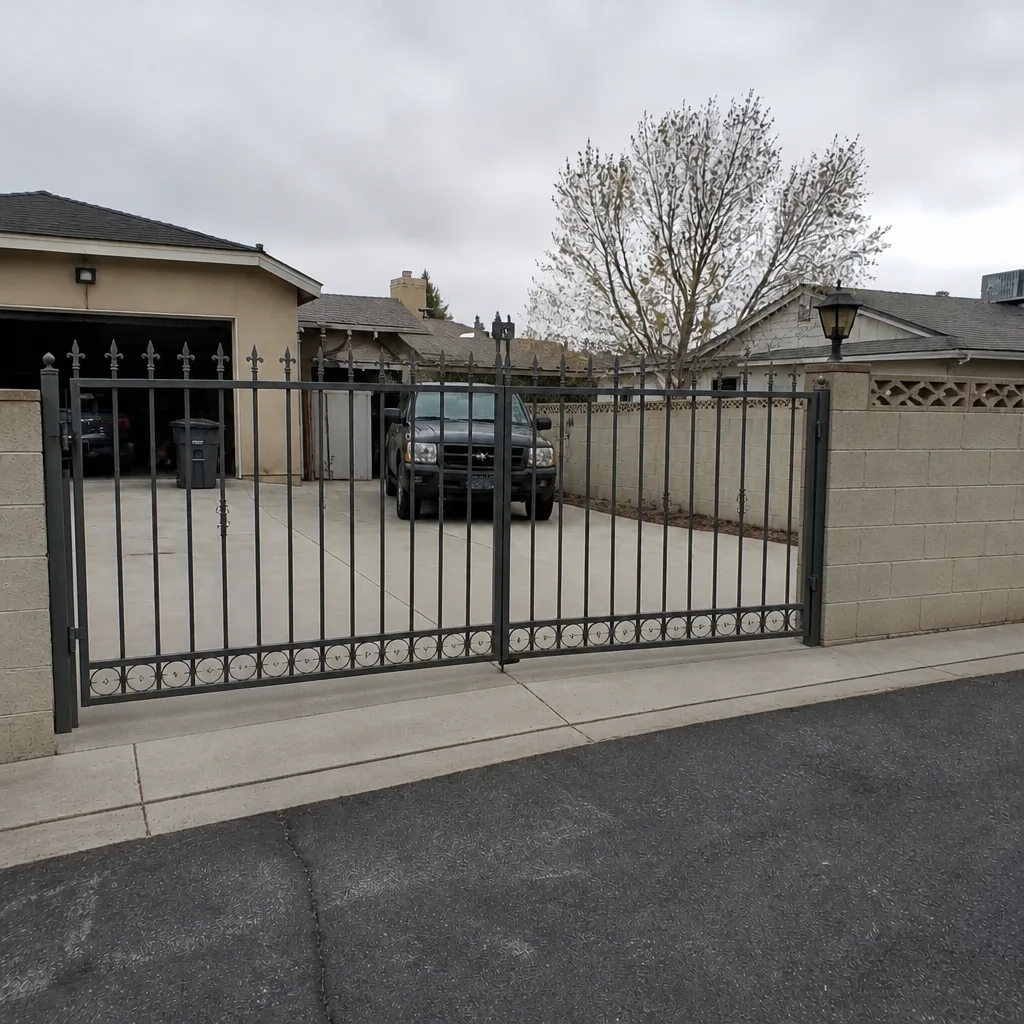
See the difference
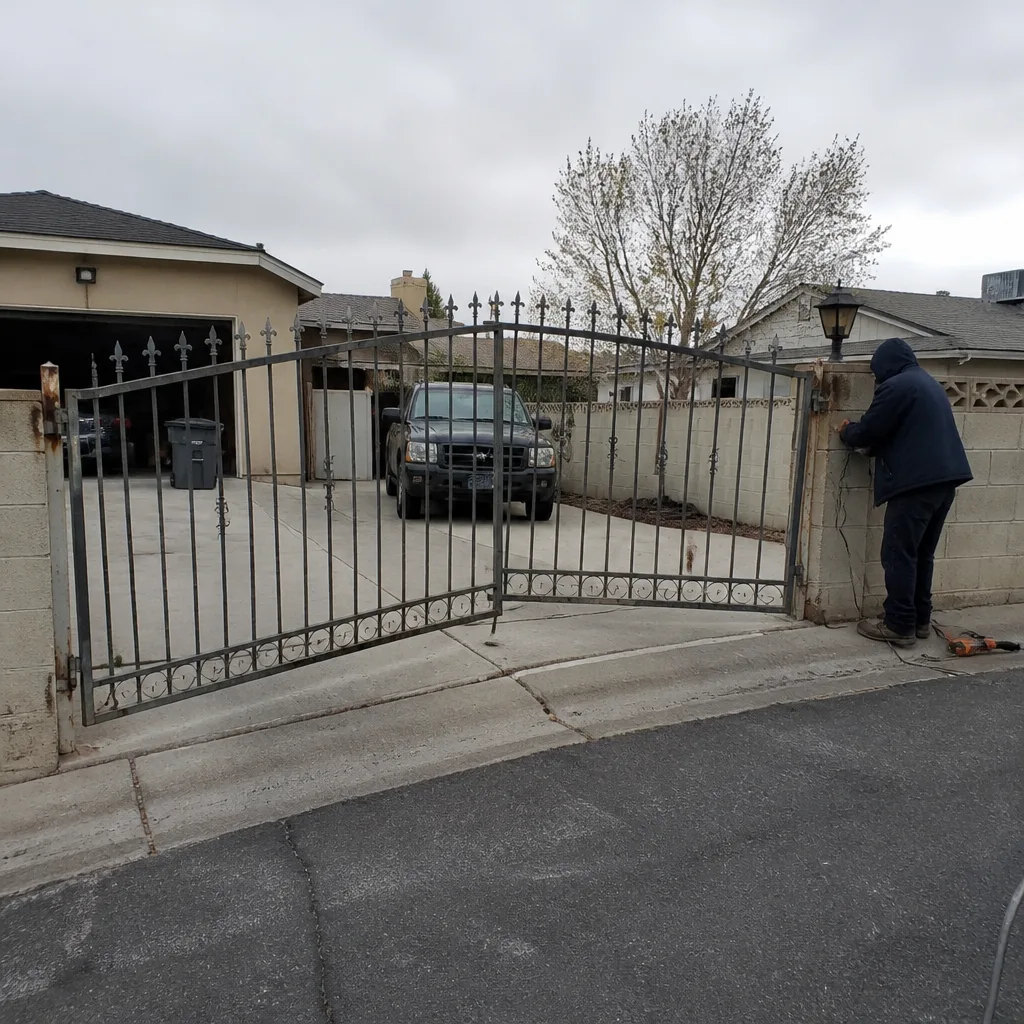 Before
 After
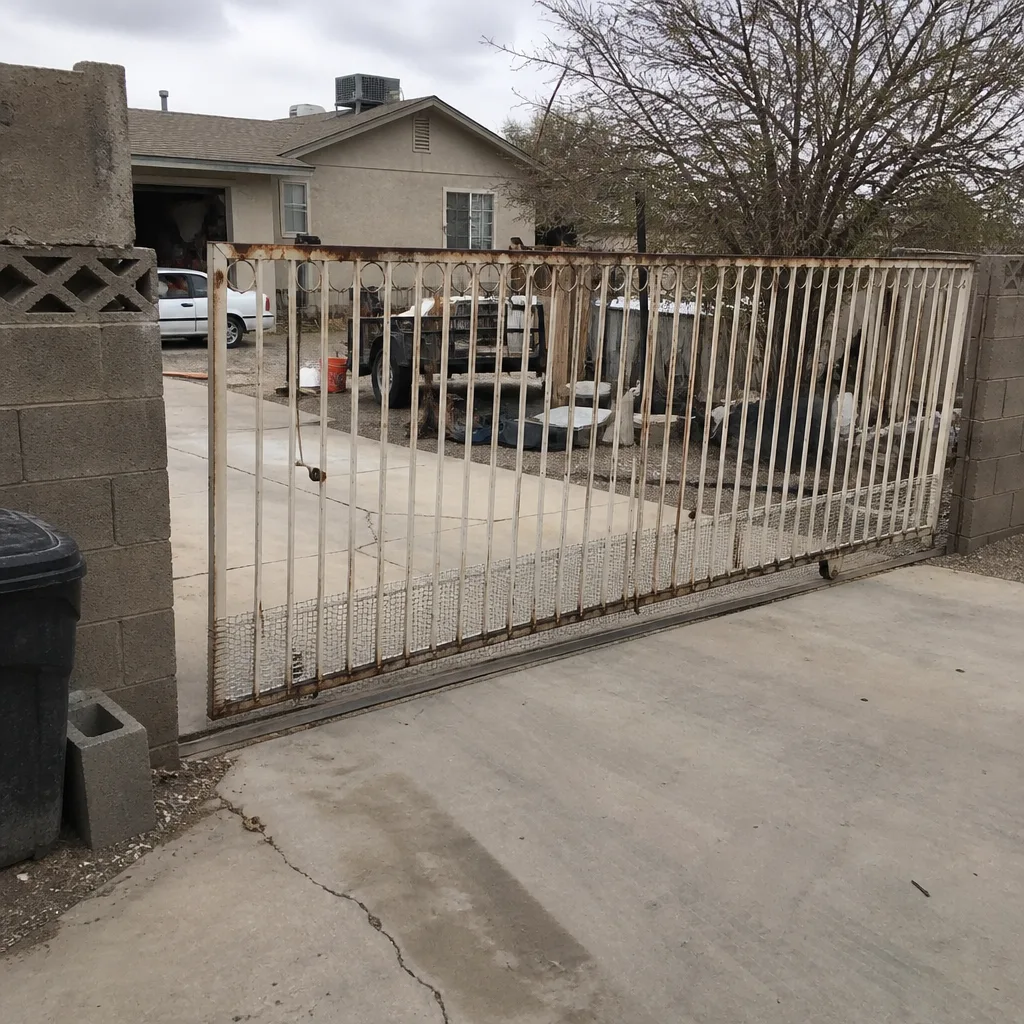 Before
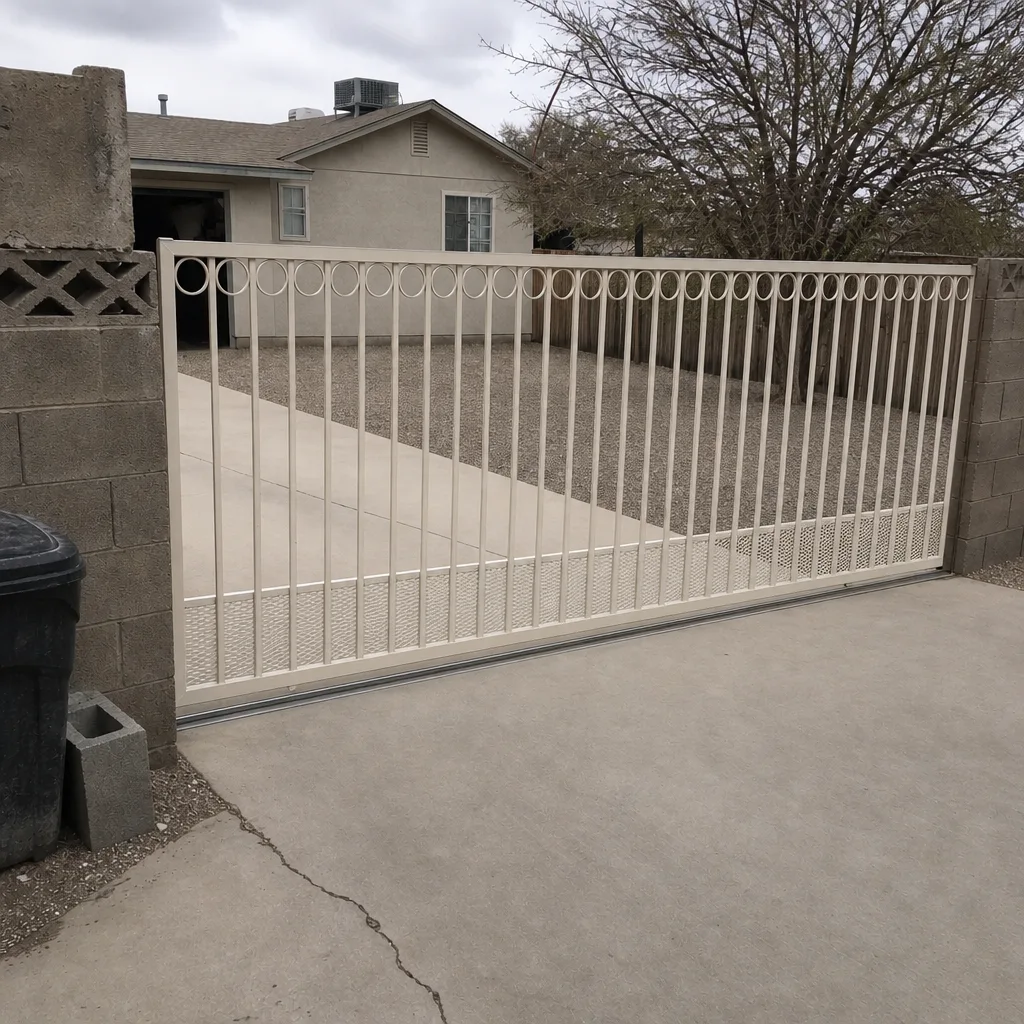 After
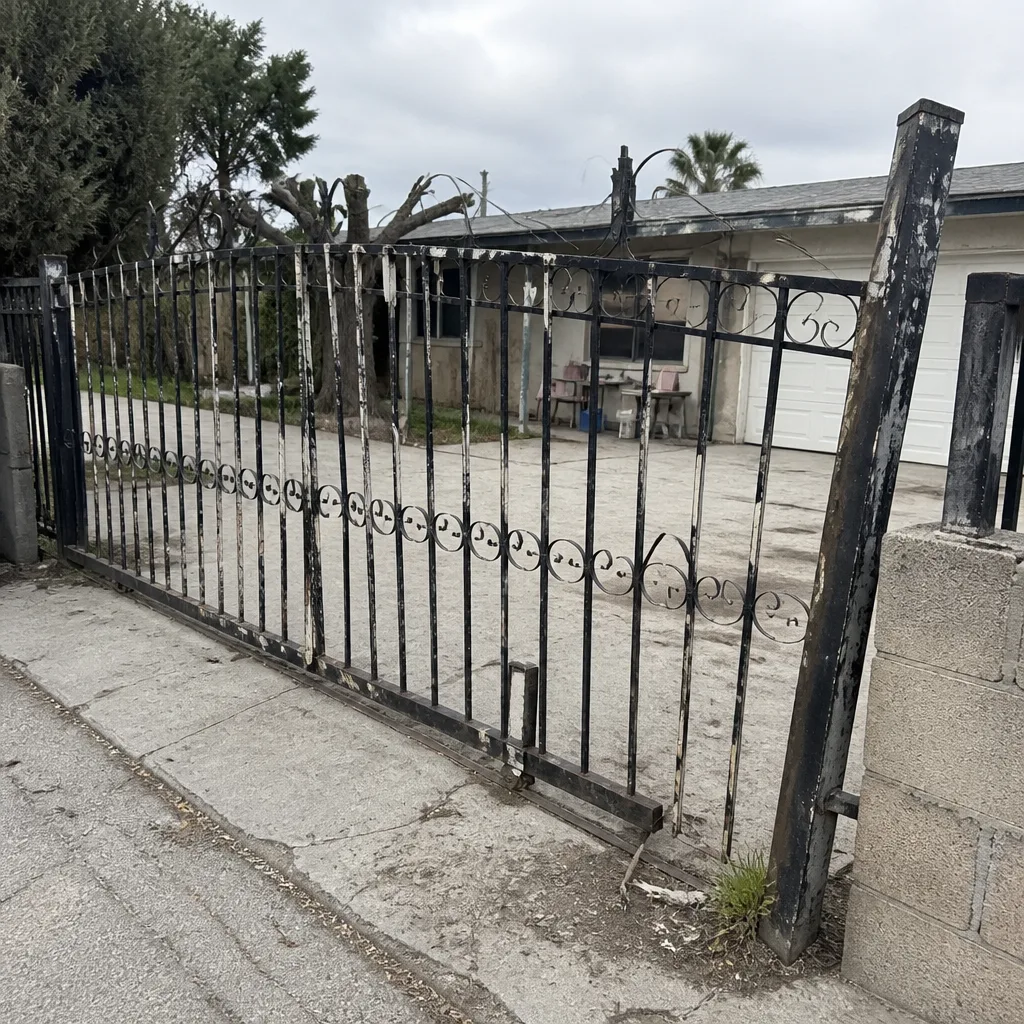 Before
 After
Common Mistakes to Avoid
Most of the expensive outcomes we see start with one of these mistakes, and they’re all avoidable.
- Ignoring the slow-down. A gate that hesitates is telling you a repair is coming. Waiting until it stops altogether turns a minor fix into a motor replacement, especially in Sunrise Manor’s heat.
- Over-lubricating in a dusty climate. Too much grease attracts sand and dust and turns a smooth hinge into a grinding one. Follow the manufacturer’s lubrication guidance rather than reaching for the can every month.
- Pushing through a safety fault. When the reversing sensors don’t work or the gate behaves erratically, don’t keep using it and don’t test it with a person or pet. Shut it off and call a professional.
- Assuming it’s just the remote. A reduced remote range can be the battery, but it can also be a receiver on its way out. Changing the battery and calling it fixed is a common miss.
- Hiring a generalist for an electric operator. Automated and access-control systems need a specialist who works across operator brands. A fence company or handyman may handle the mechanics but not the electronics.
- Assuming the gate is out of alignment when the operator is failing. A swing gate that drags in one direction isn’t necessarily misaligned – the operator arm may have shifted. Diagnose the symptom, not the assumption.
- Not keeping a record. Without a log of symptoms, recurring problems get re-investigated every time. A simple written record is worth keeping for any automated gate.
When to Call a Professional
Call a professional when you see any physical symptom you can’t explain, when a safety sensor fails, when the operator behaves erratically, or when the gate gets harder to move. Call sooner if the symptom is new, sudden, or accompanied by a burning smell or exposed wiring – that’s an electrical hazard and should be shut off at the breaker. For routine repair, an on-site look is the fastest way to confirm what’s actually wrong, since symptom-to-cause mapping narrows the field but only an inspection confirms it. Gate Repair Sunrise Manor offers free estimates in Sunrise Manor – call (844) 435-3018. We answer 24/7. Fast dispatch from 7am to 7pm, Sunday through Friday.
Frequently Asked Questions
The first warning sign is usually slower or hesitant operation – the gate waits a moment before it moves. That pause is often a motor drawing extra current against mechanical resistance, and it’s the earliest sign the system is working harder than it should. Call (844) 435-3018 for a free estimate if you notice it.
In most cases a slow gate can be repaired, and the fix depends on whether the cause is mechanical (worn hinges, rollers, or a binding track) or electrical (a weakening motor, capacitor, or power supply). Many slow gates are resolved with a mechanical repair rather than a full replacement. An inspection confirms which, and the estimate is free – call (844) 435-3018.
Reduced remote range usually means one of four things: a weak transmitter battery, a damaged or waterlogged receiver antenna, signal interference, or a receiver that’s failing. The battery is the first thing to rule out, and if that’s not it, the receiver side needs a look. Call (844) 435-3018 and we can diagnose it.
A safety problem is one where the gate could hurt someone or trap a vehicle – reversing sensors that don’t stop the gate, a slide gate coming off its track, erratic movement, exposed or scorched wiring. Those are hazards, not inconveniences. Stop using the gate and keep people clear until a trained professional has inspected it. Call (844) 435-3018 for an on-site assessment.
In almost every case, yes. Our technicians work across the major gate and operator brands, including FAAC, BFT, Linear, Viking, LiftMaster, Ghost Controls, DoorKing, Elite, and Mighty Mule. If you know the brand, mention it when you call. Call (844) 435-3018 for a free estimate.
Yes, and often sooner than you’d expect, because the heat and dust here dry out lubricants and work grit into moving parts faster than in milder places. The climate is one reason the warning signs deserve attention early in Sunrise Manor. Call (844) 435-3018 for a free estimate.
We answer 24/7. A call outside dispatch hours is booked into the next opening, Sunday through Friday, 7am to 7pm. You can reach us on (844) 435-3018.
Gate failure rarely arrives without a warning. Slow movement, grinding, partial travel, reduced remote range, and drift after stopping are all symptoms of a system working harder than it should, and most are cheaper to fix early than late. Sort your symptoms into mechanical and electrical where you can, log what you observe, and shut off the system immediately if a safety product is failing. Repair or replace, we’ll tell you which is worth it, based on your gate rather than on what’s easiest to sell. If you’re seeing any of the warning signs in this guide, call Gate Repair Sunrise Manor at (844) 435-3018. We answer 24/7. Fast dispatch from 7am to 7pm, Sunday through Friday. Estimates are free, the price is agreed in writing before any work begins, and our technicians have up to 14 years of experience. One call, any gate.
Written by the team at Gate Repair Sunrise Manor.