
Last updated November 15, 2026
 Wrought iron
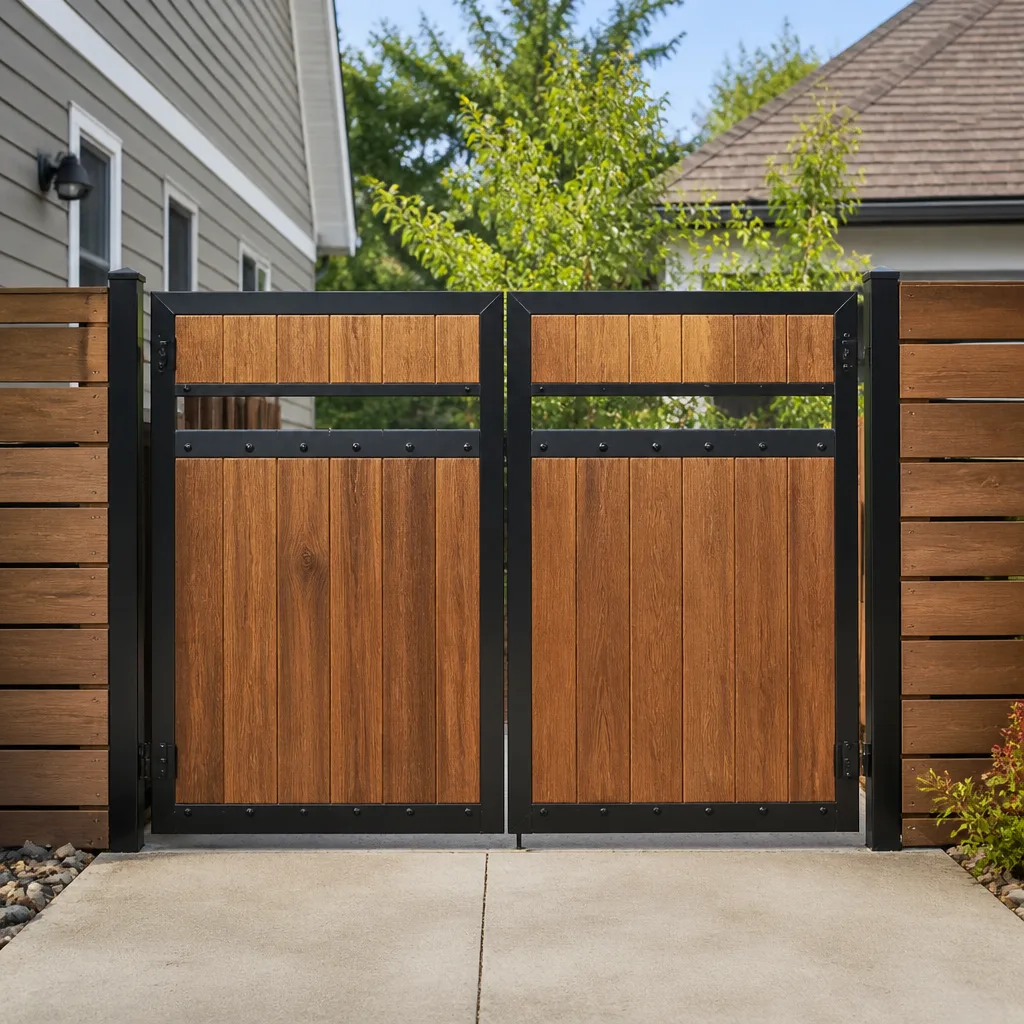 Wood & steel frame
 Farm & ranch
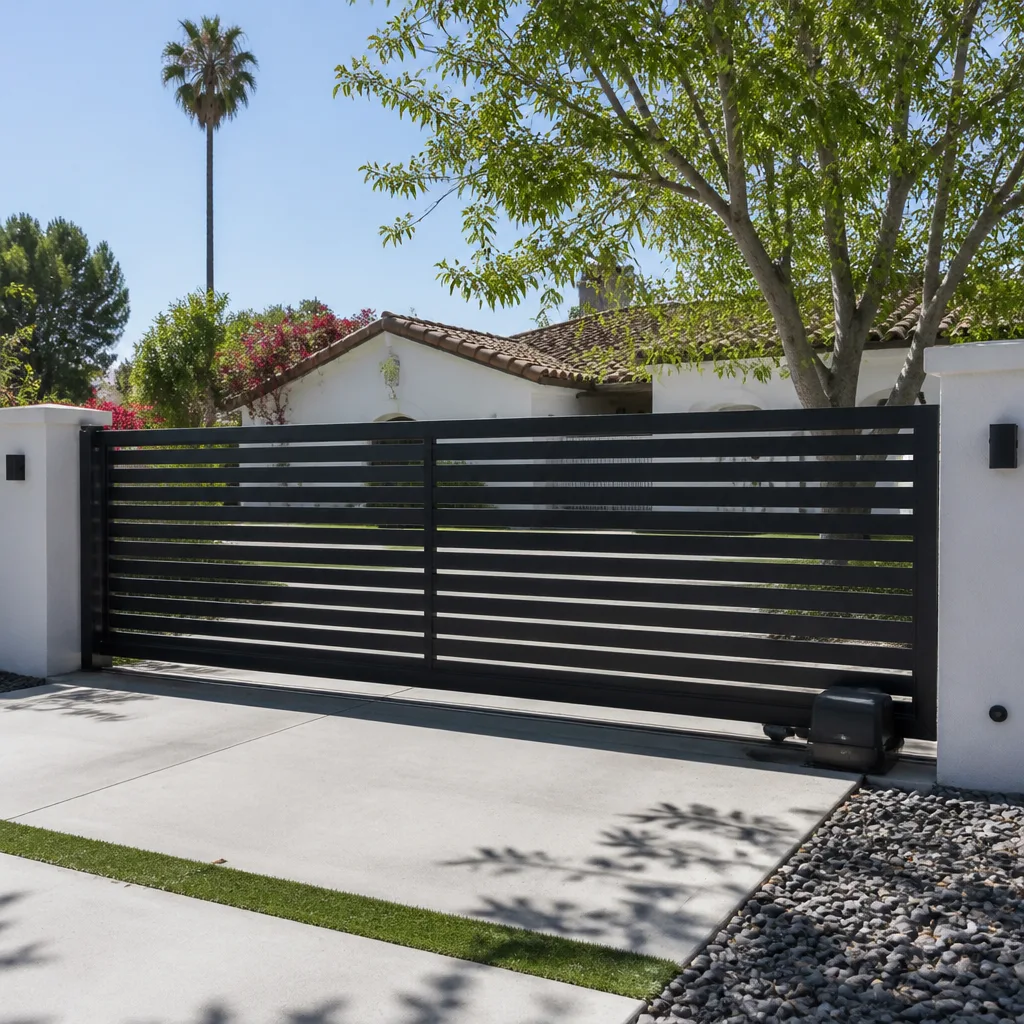 Sliding driveway gates
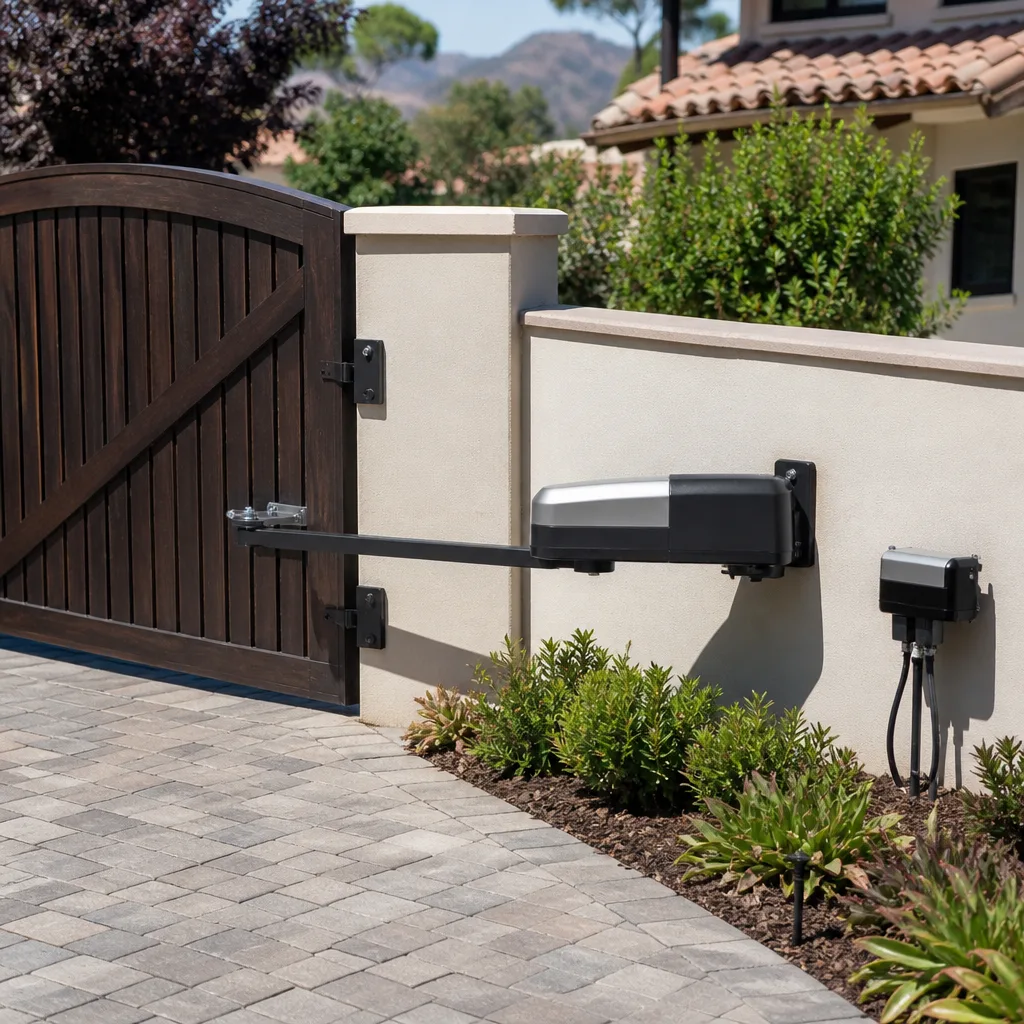 LiftMaster operators
Free on-site gate assessment - hinges, posts, and your LiftMaster or Nice gate operator checked before anything is quoted
The assessment is free and the quote is the invoice.
Get your free estimateGate Repair Maintenance Checklist for Sunrise Manor Homeowners
Most homeowners lube their gate hinges and call it done. The part that actually fails first in Nevada heat is the control board capacitor, and it shows no visible symptoms until the gate won’t open at all. Dust, triple-digit summers and hard water do things to a gate system that a hinge-to-hinge walk-around won’t catch. This guide is the checklist we’d hand a Sunrise Manor homeowner if we couldn’t get out to the property ourselves: a component-by-component protocol for manual and electric gates, with tolerances you can actually measure and a clear line between what’s safe to check yourself and what needs a technician.
Quick Answer
A gate maintenance checklist for Sunrise Manor should cover the control board and its capacitor, battery voltage on solar-assisted systems, hinge play, track gap, safety reversal sensors, and UV-damaged wiring. Walk the gate monthly, test the safety reverse every month, and pull the full component check twice a year, with extra dust inspections in spring and wiring inspections in summer.
Styles & brands we work with
- Wrought iron
- Wood & steel frame
- Farm & ranch
- Sliding driveway gates
- LiftMaster operators
Table of Contents
- Why Sunrise Manor Gates Fail Differently
- Manual Gate Checklist: What to Check and How Often
- Electric Gate Checklist: Control Board, Motor and Power
- Testing Safety Reversal and Obstruction Sensors
- Tolerances That Matter: Hinge Play, Track Gap, Battery Voltage
- The Sunrise Manor Maintenance Calendar
- Which Checklist Items Are DIY-Safe and Which Aren’t
- Working With Your Gate’s Brand
Why Sunrise Manor Gates Fail Differently
The failure order on a gate in Sunrise Manor is not the failure order on a gate in a mild climate. Heat is the main driver, and dust is the accelerator. Metal expands through a long summer, so hinge pins wear a little faster and slide-gate tracks shift out of true. Fine desert dust gets into operators, settles on control boards and clogs the tiny vents that let a motor shed heat. Wiring insulation that would last years in a cool garage gets brittle under constant UV exposure out here, and that’s where nuisance faults and intermittent shorting come from.
Hard water matters too. If your gate sits near a hose bib or landscape irrigation, mineral deposits work into pivot points and can bind a roller on a slide gate. Homeowners usually notice that as “the gate is getting stiff” and reach for lubricant, but stiff and gritty are different problems with different fixes.
The practical upshot: in Sunrise Manor, a gate checklist should weigh more heavily toward electrical and dust inspections than a generic maintenance list would. A manual gate mainly needs mechanical checks. An electric gate needs the mechanical checks plus a control-board and wiring routine the desert makes necessary. If you’d rather have a trained eye do the full walk-through, our gate repair in Sunrise Manor service starts with exactly that inspection.
Manual Gate Checklist: What to Check and How Often
A manual gate fails gradually, and almost every failure starts with a hinge or a latch. The checklist below is what to work through on a swing gate or slide gate that you open by hand. Do it monthly for the quick pass and twice a year for the full pass.
Monthly quick pass:
- Open and close the gate by hand and listen. A squeak is fine; a scrape or a grinding sound is not.
- Lift the gate slightly at the latch edge and watch the hinge. Any visible movement means hinge play is developing.
- Check the latch alignment. If you’re having to lift or push to get it to catch, the gate has dropped or shifted.
- Look at the ground where the gate swings or slides. Fresh grooves in dirt or gravel mean the gate is dragging.
Twice-yearly full pass:
- Check every hinge bolt and latch screw with a wrench. Loose fasteners are the single most common cause of a gate that “suddenly” won’t close.
- Inspect the post footing for cracks or movement where the post meets the ground.
- On a slide gate, look at the track for bends, debris and roller flat spots.
- Check the frame for rust at weld points, and clear any rust you find before it pits the metal.
- Lubricate hinges and the latch mechanism with a dry or silicone-based lubricant, not grease that will hold dust.
Sunrise Manor’s dust means you’ll want to sweep the slide track more often than the calendar suggests. After a windy stretch, a quick pass with a broom saves a roller.
Electric Gate Checklist: Control Board, Motor and Power
An electric gate adds a whole layer of things that fail silently. The operator cabinet, the control board, the battery and the wiring deserve their own routine, and this is where a Sunrise Manor electric gate tends to show problems first. For any system that won’t respond, our electric gate repair team handles the diagnostic side, but here’s what to keep an eye on.
What to check on the electrical side:
- Control board: Look for dust buildup and any sign of heat discoloration on the board itself. Do not touch the board or its capacitors; just note the condition for a technician.
- Capacitor: The start capacitor on the operator motor is the part that most often fails first in heat, and it gives no visible warning. A gate that starts slowly or hums before it moves is a classic sign.
- Battery (solar-assisted systems): Check the voltage with a meter against the range your operator’s manual specifies. A sagging battery shows up as a gate that works in the morning and stalls by afternoon sun.
- Wiring: Run your eyes along every exposed cable for cracked, sun-baked insulation or rodent damage. In summer, UV-exposed wire on an electric gate in Sunrise Manor is a common source of intermittent faults.
- Operator housing: Check that vents aren’t clogged with dust and that the housing seals are intact so dust stays out of the motor.
Electrical work on a gate operator involves line voltage and stored energy in the capacitors. Checking condition is fine; opening the cabinet to probe live components is not a homeowner job.
Testing Safety Reversal and Obstruction Sensors
This is the step most homeowners skip, and it’s the one that matters most. Safety reversal and obstruction sensors exist to stop the gate on a child, a pet or a vehicle. A sensor that has quietly stopped working is a liability you’re carrying without knowing it. Test these monthly.
How to test a swing gate’s safety reverse:
- With the gate open, start it closing.
- Pass a solid object through the gate’s path, or press the safety edge if there is one.
- The gate should stop and reverse within the travel distance your operator manual specifies. If it doesn’t reverse, stop using the gate and get it looked at.
How to test obstruction sensors (photo-eye and edge types):
- Locate the photo-eye pairs, usually mounted on the posts facing each other.
- Wipe the lenses clean of dust, which is a frequent false-trigger cause in Sunrise Manor.
- Break the beam with your hand while the gate is closing and confirm it reverses.
- Check that the sensor housings are firmly mounted; a knocked-loose photo-eye causes both missed safety and phantom reopenings.
If the reverse fails, don’t keep operating the gate hoping it works itself out. That’s a call-a-professional item, every time.
Tolerances That Matter: Hinge Play, Track Gap, Battery Voltage
Vague advice like “check for wear” doesn’t help anyone. Here are the specific thresholds to watch on a gate, framed as what a technician looks for so you know when a small issue has crossed into a real one.
- Hinge play: Lift the gate at the latch edge. Any perceptible vertical movement at the hinge, roughly more than a millimeter or so, means the hinge pin or bushing is wearing. A gate that has play will sag and misalign the latch over time, so address it early.
- Track gap on a slide gate: The rollers should sit snug against the track with no visible gap you could slide a coin into. A growing gap means a worn roller or a bent track. Debris in the channel on a Sunrise Manor property can throw this off in a single windy season.
- Battery voltage on solar-assisted systems (FAAC, BFT, Viking and others): Always check against the range in your specific operator’s manual. A battery that’s consistently reading below its specified resting voltage, or that drops fast under load in summer heat, is failing even if the gate still moves slowly.
- Safety reverse travel: The distance the gate travels after sensing an obstruction before it reverses is operator-specific. Look it up in the manual; if the gate overshoots that distance, the sensor or the board setting needs attention.
Exact numbers live in the manual for your specific operator, which is exactly why a brand-agnostic approach matters. We work on LiftMaster, FAAC, BFT, Linear, Viking, Ghost Controls, DoorKing, Elite and Mighty Mule systems, so the tolerances we check are the ones that apply to your equipment, not a favorite product line.
The Sunrise Manor Maintenance Calendar
A generic “every six months” schedule misses the seasonal pattern that actually wears on gates here. This is how we’d time the checklist items through the year in Sunrise Manor.
- Spring (dust season): Increase dust inspections. Sweep slide tracks and clear operator vents and photo-eye lenses every couple of weeks, more after a windy stretch. During spring, grit in pivots and rollers does more damage than at any other time of year.
- Summer (UV and heat season): Focus on the electrical system. Inspect all exposed wiring for sun-cracked insulation, check control-board cooling and vent clearance, and check battery resting voltage on any solar-assist operator. This is also the season to watch the capacitor, since heat is what pushes it toward failure.
- Fall: The full mechanical pass. Recheck hinge play, tighten fasteners, inspect the footing and the track, and clean and lubricate hinges and latches with a dust-friendly lubricant.
- Winter: Verify that safety reversal and obstruction sensors still function, and confirm the hardware you adjusted in fall has held through temperature swings.
Run your weekly or monthly quick pass all year. The seasonal heading simply tells you which part of the system deserves the deeper look at that time of year in Sunrise Manor. If you’d rather hand the whole calendar to one team, our gate repair service runs the checklist for you and quotes any work before it starts.
Which Checklist Items Are DIY-Safe and Which Aren’t
Knowing where the line is keeps you safe and keeps small problems from becoming big ones. Here’s the split we use, with the reasoning.
DIY-safe:
- Sweeping tracks and clearing debris. Nothing to touch but dirt.
- Wiping photo-eye and sensor lenses clean. No power handling.
- Visual inspection of wiring, hinges and the footing. Look, don’t touch live parts.
- Checking hinge play by hand and lubricating hinges with a dry or silicone-based lube. Mechanical, low-risk.
- Tightening accessible latch and hinge bolts. Basic tools, no electrical exposure.
Call a technician:
- Anything inside the operator cabinet. Line voltage and stored capacitor energy are a genuine hazard, and a control board is easy to damage with a slip.
- Capacitor replacement. This is the part most likely to fail in Sunrise Manor heat, and it’s also a part that holds charge after power is cut.
- Safety reversal sensor repair or adjustment beyond cleaning. If the reverse fails, that’s a safety issue for a trained tech, not a re-test at home.
- Heavy gate panels, slide gates off their track, and any structural post or footing repair. A large gate can crush.
- Battery replacement or wiring repair on a solar-assist system, because it involves load and polarity.
The pattern is simple: mechanical cleaning and inspection are yours; electrical and heavy-structural work are ours. A gate is a machine with stored energy, and treating that seriously is how everyone stays safe.
Working With Your Gate’s Brand
Your checklist looks different depending on what’s driving the gate. A LiftMaster swing operator, a Linear slide operator and a Viking solar-assist unit each specify their own battery voltage, reverse-travel distance and service intervals, and the manual for your unit is the reference those tolerances come from. That’s the argument for a brand-agnostic technician: a specialist who handles many platforms reads the right manual for your gate instead of forcing it into a single brand’s routine.
It also means when a repair question comes up, the recommendation is based on your system, not on what a technician happens to stock or prefer to sell. We work on FAAC, BFT, Linear and Viking among the nine brands we service, and the advice follows the gate in front of us. If a part is failing and a repair is the sensible path, that’s what we’ll tell you; if replacement makes more sense, we’ll say so and explain why.
For homeowners in Sunrise Manor, having one team that reads your brand’s spec, runs the checklist and handles repair or replacement is simpler than chasing a general handyman who treats a gate as a side job. Gates are all we work on, so the whole skill set comes to your property.
Common Mistakes to Avoid
- Lubing the gate and stopping there. Grease feels productive but catches dust, which grinds pivots faster in Sunrise Manor’s dry air. Use a dry or silicone-based lubricant and don’t skip the electrical checks.
- Ignoring a slow, humming operator. That hum is often a failing capacitor, the part that goes first in heat. Waiting until the gate won’t open at all turns a small repair into a bigger one.
- Skipping the safety reverse test. It’s the item most likely to be neglected and the one that carries the most risk. Test it monthly, not once a year.
- Assuming a solar battery is fine because the gate moves. A battery can be below spec and still limp the gate along. Check voltage against the manual’s range.
- Prying open the operator cabinet to “take a look.” Line voltage and stored capacitor energy make that a real hazard. Visual checks from outside are enough for a homeowner.
- Letting wiring go brittle in the summer sun. UV-cracked insulation on exposed cable is a frequent source of intermittent faults on Sunrise Manor electric gates. Inspect it in summer and flag any cracking.
- Using a generalist for a complex system. A gate is a machine, and an automated one with access control isn’t a handyman job. A gate-only specialist reads your system instead of guessing.
See the difference
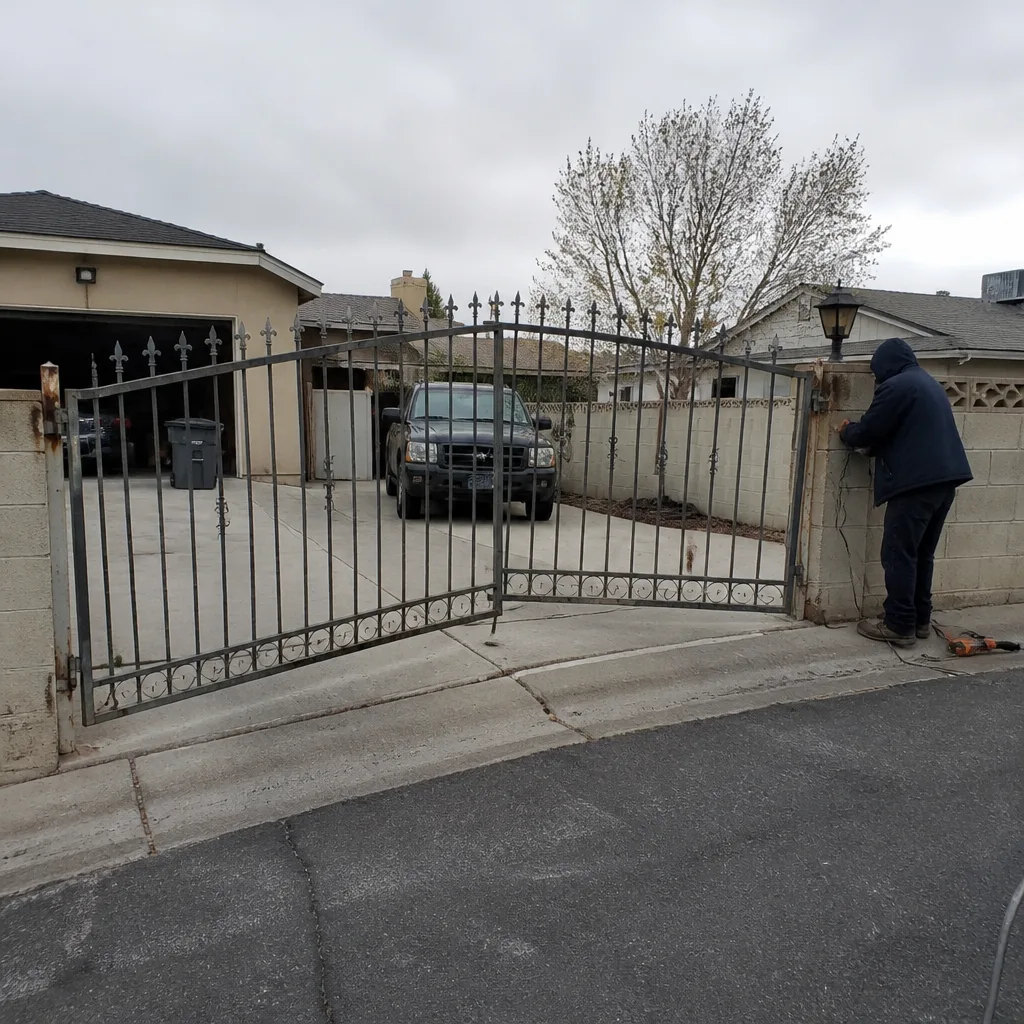 Before
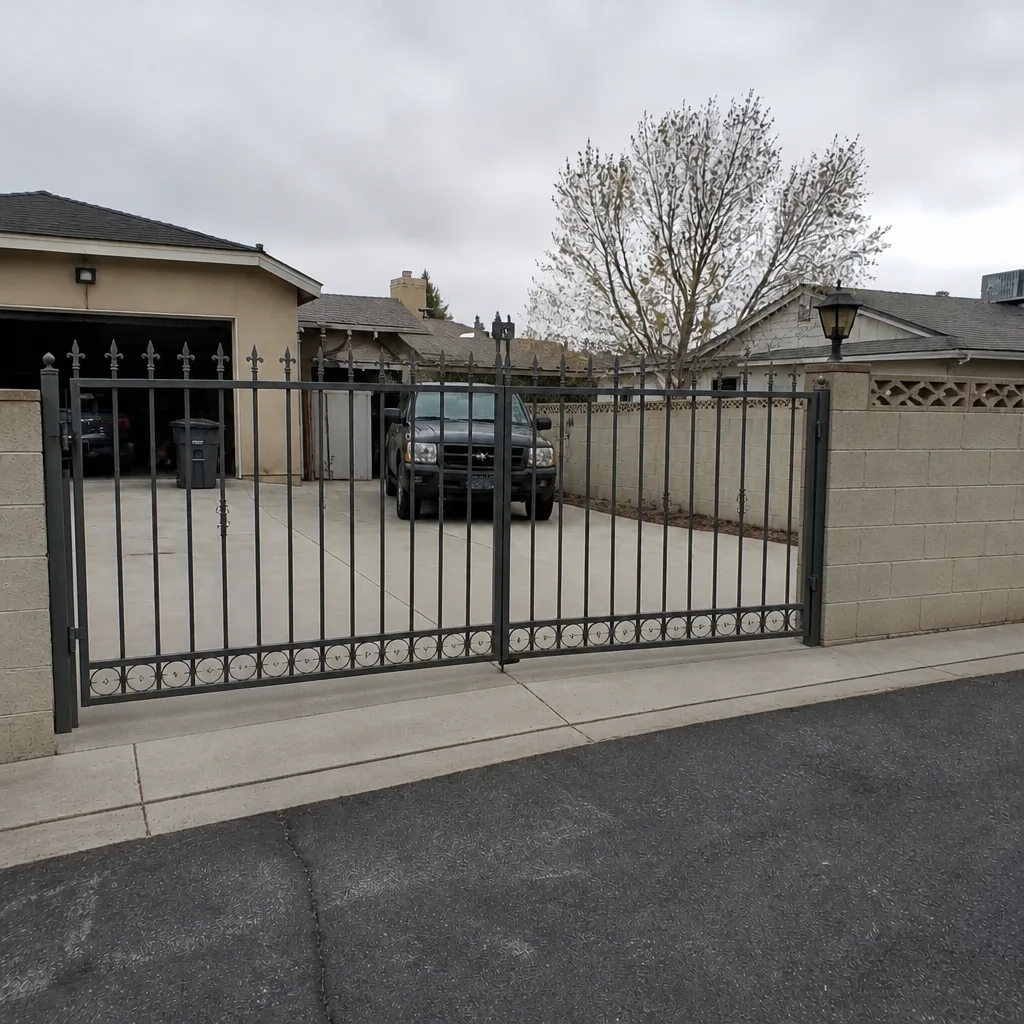 After
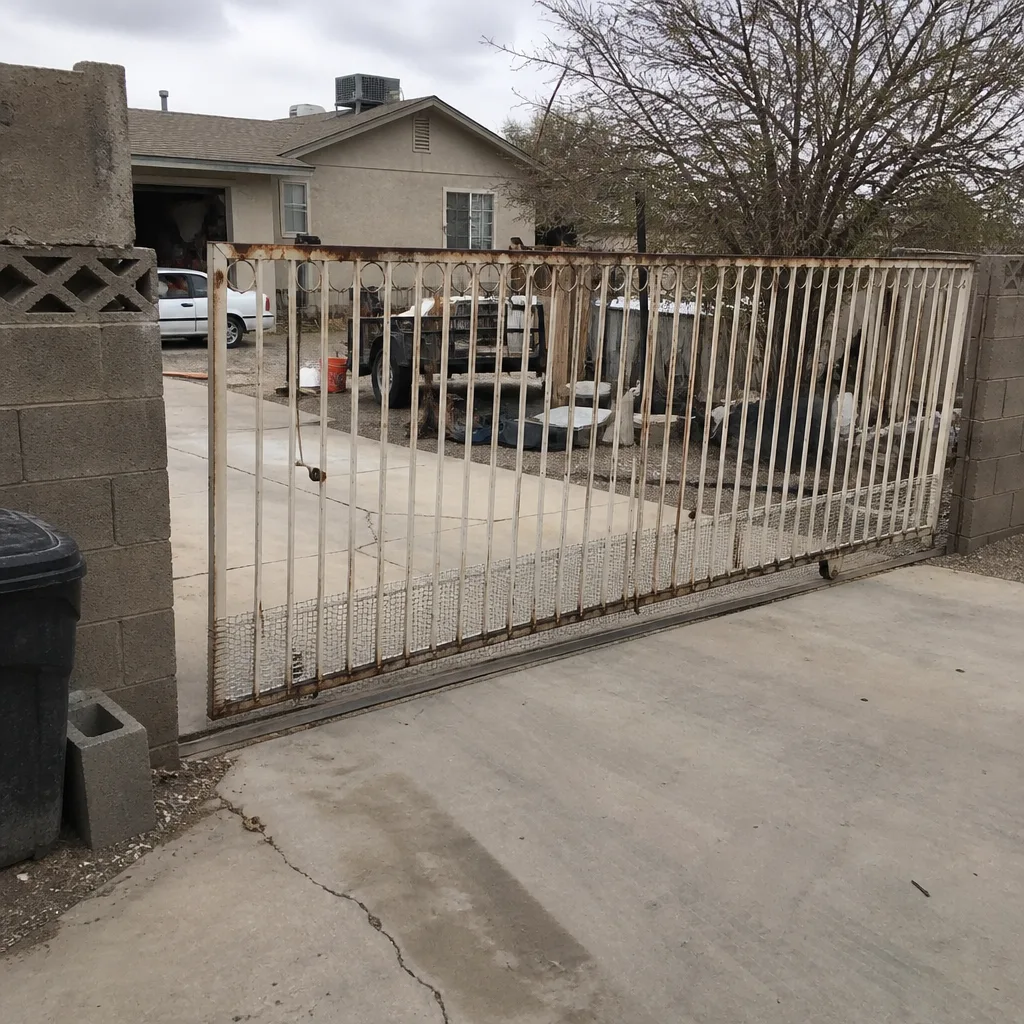 Before
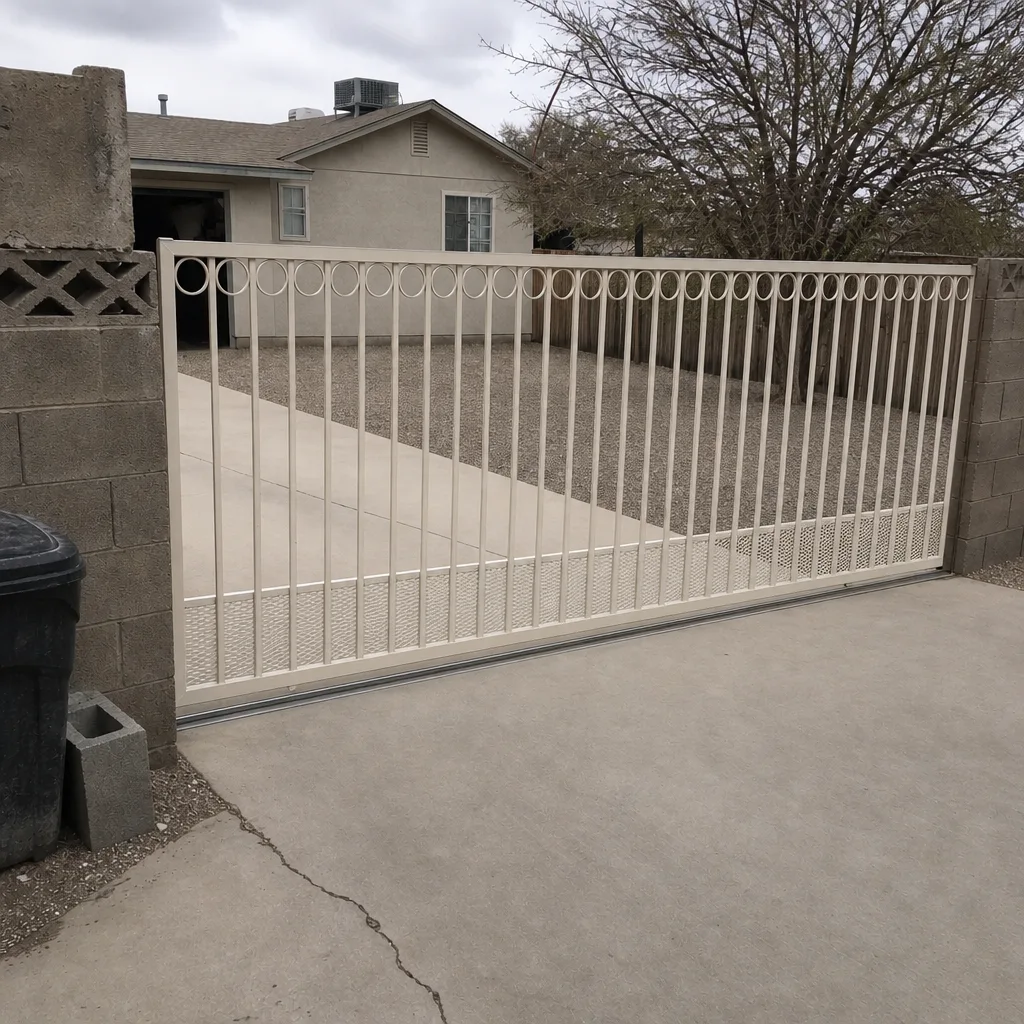 After
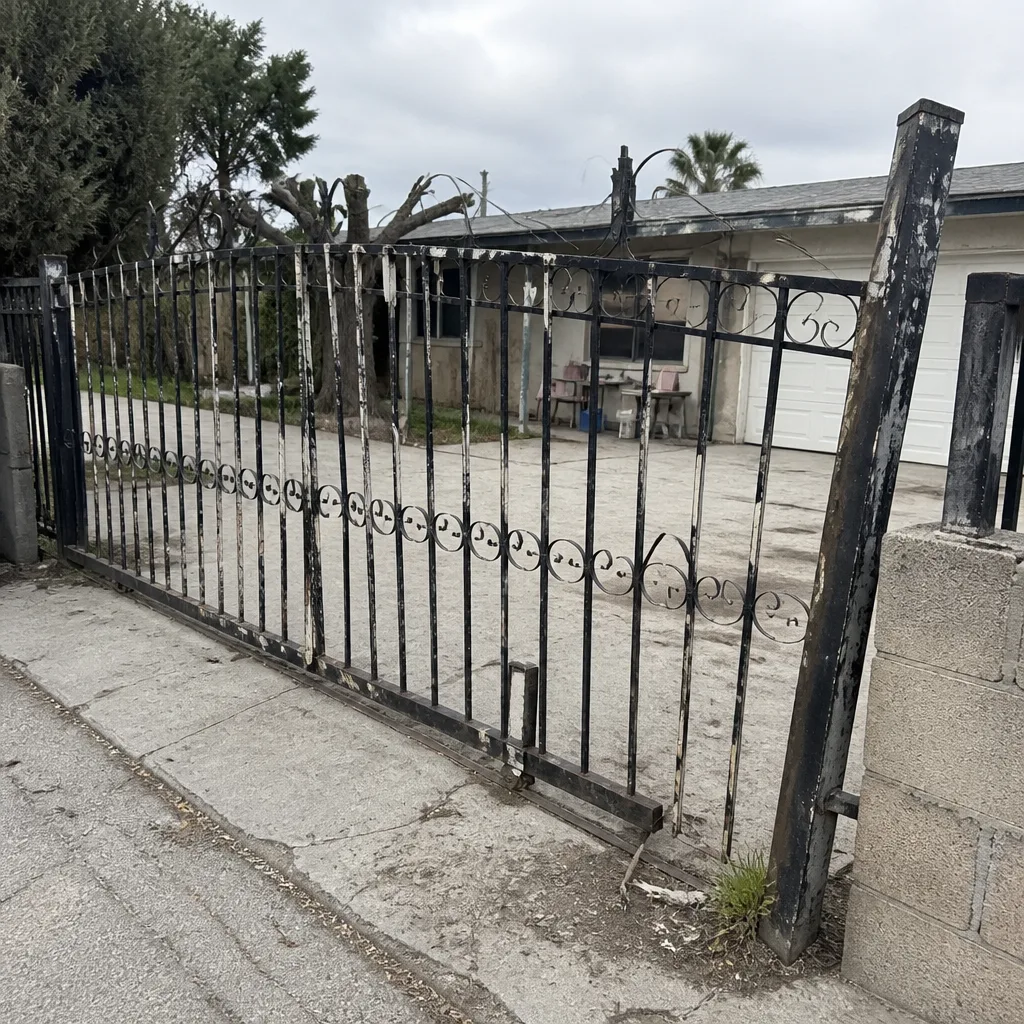 Before
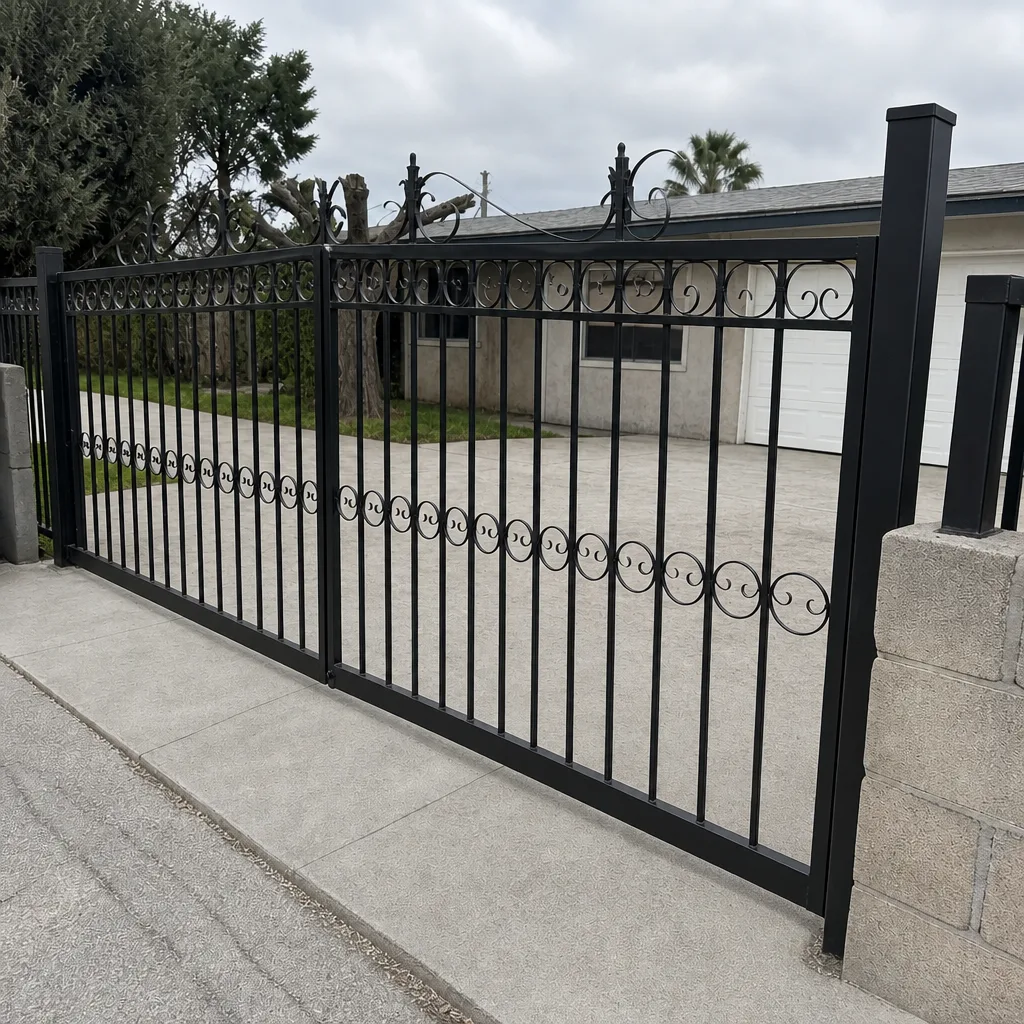 After
When to Call a Professional
Call a professional when the safety reverse fails, when the operator hums or starts slowly, when the gate has dropped enough to misalign the latch, when a slide gate jumps or comes off the track, or when you see sun-cracked wiring on the electrical side. Anything inside the operator cabinet, any heavy-panel or footing work, and any structural post issue belongs with a technician, not a homeowner with a wrench. If you’re unsure whether a checklist item qualifies, that uncertainty is itself a good reason to have it looked at. Gate Repair Sunrise Manor offers free estimates in Sunrise Manor: call (844) 435-3018. We answer 24/7, with fast dispatch from 7am to 7pm, Sunday through Friday.
Frequently Asked Questions
Run a quick walk-around monthly and the full component checklist twice a year, with dust inspections stepped up in spring and wiring inspections in summer. The seasonal rhythm here matters because dust and UV do more damage in specific months, so the deep checks are timed to when the desert is hardest on the system.
Heat is the main enemy of a capacitor, and Sunrise Manor summers push electronics toward failure faster than mechanical parts wear. A capacitor can fail with no visible sign and no warning until the gate hums or won’t open, which is exactly why checking the operator’s behavior each month catches it earlier than a visual inspection would.
Yes. Start the gate closing and pass a solid object through its path, or press the safety edge, and confirm the gate reverses. If it doesn’t reverse, stop using the gate and get a technician out, because a failed safety device is a liability and a risk to anyone in the gate’s path. Call (844) 435-3018 for an exact quote on getting it fixed; estimates are free.
There’s no single universal number; check the resting voltage range specified in your operator’s manual, because it differs by model and by brand. A battery that reads below its specified range, or that drops quickly under load in summer, should be treated as failing regardless of whether the gate still moves.
Likely yes. We service equipment from LiftMaster, FAAC, BFT, Linear, Viking, Ghost Controls, DoorKing, Elite and Mighty Mule, across manual and automated systems. Because we work on competing platforms, the checklist and any repair recommendation follow your system and its manual rather than a preferred product line.
We’re closed on Saturday. Call (844) 435-3018 and we’ll book you into the next opening, Sunday through Friday, 7am to 7pm. We answer 24/7, so a call outside dispatch hours is booked into the next opening rather than lost.
The Bottom Line
A gate maintenance checklist for Sunrise Manor comes down to matching the routine to what fails here first. That means watching the control board and capacitor, checking battery voltage on solar systems, measuring hinge play and track gap against real tolerances, and testing the safety reverse every month. Dust inspections belong in spring, wiring inspections in summer, and the mechanical pass in fall. Keep the mechanical cleaning and visual checks for yourself and hand anything electrical or heavy-structural to a technician. If you want the full protocol run by a gate-only specialist, call (844) 435-3018 for a free estimate. We answer 24/7. Fast dispatch, 7am-7pm.
Written by the team at Gate Repair Sunrise Manor.