
Last updated November 15, 2026
 Wrought iron
 Wood & steel frame
 Farm & ranch
 Sliding driveway gates
 LiftMaster operators
Free on-site gate assessment - hinges, posts, and your LiftMaster or Nice gate operator checked before anything is quoted
The assessment is free and the quote is the invoice.
Get your free estimateDIY vs Professional Gate Repair: The Sunrise Manor Homeowner’s Decision Guide
The most common mistake we see isn’t a homeowner who tried a repair and failed. It’s a homeowner who fixed the symptom and left the cause running. A gate that drags but still opens gets greased instead of diagnosed. A remote that works from ten feet instead of thirty gets new batteries instead of a receiver check. In Sunrise Manor, where block walls and wrought-iron gates frame most driveways, a gate under strain keeps working just long enough to make you think it’s fine, right up until the operator overheats or the hinge tears loose from the post. This guide draws the DIY line by task, not by confidence.
Quick Answer
Low-risk gate work you can do yourself includes remote reprogramming, sensor alignment, and routine lubrication. Tasks involving a tensioned counterbalance spring, operator wiring, or track and hinge realignment belong to a technician. When a gate is automated, the electrical and mechanical forces interact, and mistakes there can injure you or damage a working operator past repair.
Styles & brands we work with
- Wrought iron
- Wood & steel frame
- Farm & ranch
- Sliding driveway gates
- LiftMaster operators
Table of Contents
- Where the DIY line actually falls, task by task
- What’s genuinely safe to do yourself
- What belongs to a technician (and why)
- How DIY attempts fail on automated gates
- What a real DIY toolkit and knowledge base look like
- How DIY repairs affect operator warranty coverage
- When a quick fix hides a growing problem
- Repair or replace: how to decide
- Common mistakes to avoid
- When to call a professional
Where the DIY Line Actually Falls, Task by Task
Gate work splits into two categories, and the split has nothing to do with how hard a task looks. It has to do with stored energy. A gate counterbalance under tension holds force even when the gate is standing still and the power is off. That’s the part homeowners underestimate. The tasks around the gate are usually fair game. The tasks inside the mechanism are not.
Here’s how we sort it:
- Genuine DIY: reprogramming a remote or keypad code, replacing remote batteries, cleaning and lubricating hinges and rollers, clearing debris from a slide gate track, wiping photo-eye lenses, and visual inspection for loose bolts.
- DIY with care, for mechanical gates only: tightening a visibly loose handle or latch, touching up rust spots before they spread, and adjusting a manual gate’s drop rod if it drags.
- Technician territory: anything involving a tensioned spring or counterbalance, any wiring inside the operator housing, motor or capacitor replacement, limit switch adjustment, track realignment, and hinge or post repair on a gate that has shifted.
Sunrise Manor’s housing stock pushes a lot of gates past the DIY line without anyone noticing. Block-wall entries, heavy ornamental iron, and gates that face long afternoon sun all put steady stress on hinges and operators. When a gate’s mounting has started to move, no amount of adjustment at the gate face fixes it. The post has to be addressed. That’s a technician call every time.
One more sorting rule: if a task requires you to defeat a safety device to test it, it isn’t a DIY task. Disconnecting or bypassing photo-eyes, safety edges, or reversing sensors to “see if it works” removes the feature that keeps the gate from closing on a person. Test safety devices by walking through the beam path with the gate closing, never by unplugging them.
What’s Genuinely Safe to Do Yourself
Plenty of gate maintenance is well within reach for a careful homeowner, and doing it regularly prevents more breakdowns than any repair. We’d rather you handle these yourself and call us when something crosses the line than struggle with a task that carries real risk.
- Remote and keypad programming. Adding or removing a remote, changing a PIN, or clearing a lost remote’s code is a menu job. Your operator manual walks you through it. On DoorKing and Elite systems the process is slightly different from brand to brand, but the manual is accurate.
- Lubrication. Hinges, rollers, and the chain or screw drive take a light application of the lubricant your manual specifies. Stop there. Don’t spray lubricant into a spring assembly or inside the operator housing.
- Track cleaning. A slide gate that stutters often has grit, leaves, or gravel in the track. Sweeping the track clear is safe and often restores smooth travel.
- Photo-eye cleaning. Dust on the lens is the most common cause of a gate that refuses to close. A soft cloth does it.
- Visual inspection. Walk the gate monthly. Look for hinge wear, rust at the welds, a post that has moved, or a gate that no longer sits level when open.
What “watching a video” prepares you for is the shape of a task, not the feel of it. A video can’t tell you that the spring you’re looking at is still loaded, that the wiring you’re about to touch is live, or that the gate panel weighs far more than it appears to. Those judgments come from handling the equipment. If your only frame of reference is a screen, that’s the signal to stop.
What Belongs to a Technician (and Why)
We’re direct about this list because the alternative is someone getting hurt in a driveway in Sunrise Manor. These are the tasks where a mistake doesn’t just cost money.
- Counterbalance spring work. A spring under tension stores enough force to break a bone or worse, and there’s no gauge on the outside telling you how much is loaded. Springs are adjusted and replaced with the tension released first, using the right tools and technique. This is not a task to learn on your own gate.
- Operator wiring and control boards. Any work inside the operator enclosure, on the control board, or on the power feed puts you in contact with line voltage. It also damages sensitive electronics quickly if a wire lands wrong.
- Track and hinge realignment. A gate that has dropped or pulled away from its post needs the mounting assessed, not just the track nudged. Realignment done on a moving foundation fails again within weeks.
- Limit switch adjustment on some operators. Some systems make this a menu setting. Others require physical adjustment at the motor, and getting it wrong means the gate over-travels and damages itself.
We work on automated systems from Viking, Ghost Controls, DoorKing, Elite, and several other major brands, and the mechanical logic is consistent across all of them: the gate is a balance, and the operator only supplies the push. When the balance is off, the operator works harder until it fails. That’s why we diagnose the whole gate, not just the symptom you called about. Our technicians have up to 14 years of experience reading exactly that kind of interaction between gate and operator.
How DIY Attempts Fail on Automated Gates
We’ve been called out to plenty of gates where a homeowner’s repair made things worse, and the pattern is consistent. The failure modes below are what we see most, roughly in order.
- Forcing a gate the operator is fighting. When a gate drags, pushing it harder or increasing the operator’s force setting stresses the motor and gearbox. The gate moves, the operator quietly wears out.
- Reversing the wrong wire. Wiring a replacement remote receiver or safety device backward can short a control board. What would’ve been a small repair becomes an operator replacement.
- Over-lubricating. Too much grease on a track or chain attracts grit and accelerates wear. More isn’t better.
- Disabling safety devices to get the gate moving. This is the most dangerous one. A gate that closes without working safety edges or photo-eyes is a gate that will hit something, or someone.
- Adjusting a limit switch by trial and error. Each wrong attempt sends the gate further past its stop, and the damage compounds.
If you’re not sure which category a job falls into, ask before you start. That’s what the phone is for, and there’s no charge for the question.
What a Real DIY Toolkit and Knowledge Base Look Like
The gap between a confident homeowner and a competent one is usually tools and reference material, not talent. Here’s an honest inventory.
Tools that make DIY gate maintenance legitimate:
- A proper set of Allen keys and socket wrenches in the sizes your gate hardware uses
- A soft-bristle brush and a shop vacuum for track and hinge cleaning
- The lubricant specified in your operator manual (not a general-purpose spray)
- A level and a tape measure for checking alignment and travel
- A multimeter, if and only if you understand what you’re testing and the power is off
What you need to actually know: your operator’s make and model, whether it’s a swing or slide gate, where the manual is, and what the safety devices on your unit are called. If you can’t find the manual, look up the model number on the manufacturer’s site before you touch anything. Most manufacturers publish full documentation.
What a video won’t give you is the judgment to know when you’re out of your depth. In Sunrise Manor, the gates that fail most often are on exposed driveways where the sun and dry heat work on hinges and posts year after year. A homeowner who’s watched a video on track cleaning can handle that. A homeowner who’s watched a video on spring adjustment should call us instead, and we’d rather tell you that on the phone than after an injury.
How DIY Repairs Affect Operator Warranty Coverage
Most automated gate operators carry a manufacturer warranty, and most of those warranties exclude damage caused by improper installation, unauthorized repair, or modification. The fine print varies by brand, so read your own documentation, but the pattern is consistent: if a technician later traces a failure to a repair that wasn’t done to spec, the warranty claim gets denied.
Where homeowners get caught is the invisible part. A DIY wiring repair that seems to work can leave a control board running on marginal voltage. The board fails months later, and by then the homeowner has forgotten the wiring job. The manufacturer’s technician traces the fault, and the repair falls outside coverage. That’s a real risk on operators from brands like Ghost Controls and Viking, where the electronics are tightly integrated and sensitive to user error.
For a gate that’s still under manufacturer warranty, the safest path is to let a technician do anything inside the operator housing. Keep the manual and the warranty documentation together, and note the date of any service. It’s a small habit that saves arguments later. If you’re unsure whether your gate is still covered, our team can walk you through what’s typically covered and what isn’t before you decide to try a repair yourself.
When a Quick Fix Hides a Growing Problem
A gate that works after a quick fix isn’t necessarily fixed. It’s sometimes a gate whose failure has just moved further down the road, and the cost along with it. Here’s how to tell the difference between a resolved problem and a masked one.
A problem is resolved if: the gate moves smoothly through its full travel, the sound is consistent, the safety devices test correctly, and the fix held under normal use for several days.
A problem is being masked if:
- You’ve adjusted the operator’s force setting to keep the gate moving, rather than fixing what made it drag
- The gate works in the morning and stutters in the afternoon heat
- You’ve re-greased the same hinge or track more than once in a season
- A sensor or safety device has been turned off because it kept tripping
- You’ve reset the operator’s control board and the fault came back
Each of those is a progressive failure in disguise. A hinge that’s loosening will eventually tear the mounting plate. A spring that’s losing tension will eventually snap, and it can do that while someone is standing next to it. A force setting cranked up to compensate for a dragging gate will eventually burn out the motor. Catching these things while they’re small is where the savings live.
Repair or Replace: How to Decide
Once a gate is genuinely struggling, the question becomes whether to fix it or replace it. In our experience, most gate problems are repairable, and replacement is the right answer in a smaller set of cases. The decision comes down to a few practical questions.
- Is the gate structure sound? If the posts, framing, and hinge points are solid, almost any mechanical or electrical problem can be repaired.
- Is the operator still supported? If your operator is a current model from a brand like DoorKing or Elite, parts and service are straightforward. Older units can still be repaired, but parts availability sometimes favors replacement.
- How often has it failed? A gate that needs the same repair twice in two years is telling you something about the underlying cause. That’s worth a proper diagnosis before the third call.
- What’s the gate doing for you? A gate serving as primary security for a property has a different threshold than a decorative one.
We tell homeowners plainly which way we think they should go, because a repair that doesn’t hold is worse for everyone than an honest recommendation to replace. Our single focus on gates means we’re not trying to sell you a fence or a general handyman package alongside it. One call, any gate.
Common Mistakes to Avoid
- Assuming the operator is the problem. Nine times out of ten, an operator that’s struggling is reacting to a gate that’s dragging. Fix the gate first, then assess the operator.
- Spraying lubricant into the spring assembly. A gate counterbalance spring is under tension, and lubricant in the wrong place can attract grit and hide a developing failure. Springs get handled with tension released, by a technician.
- Disabling a safety device to test the gate. Photo-eyes and safety edges exist to stop the gate from closing on something. Unplugging them to see if the gate works removes the protection and risks serious injury.
- Ignoring the post. In Sunrise Manor, block-wall entries and exposed iron gates put steady strain on posts. A post that’s moved a fraction of an inch will defeat any hinge or track adjustment. The mounting has to be addressed first.
- Cranking up the operator force setting. Turning up the force makes the gate move, but it pushes the wear into the motor and gearbox. You’ve traded a gate adjustment for an operator replacement.
- Using the wrong replacement parts. An aftermarket receiver or sensor that isn’t compatible with your operator can damage the control board. Match the part to the make and model, every time.
- Waiting for a stuck gate to free itself. A gate that’s stopped moving is usually a gate with a mechanical problem that will get worse. Calling early keeps the repair small.
When to Call a Professional
Call us when a task crosses the safety line, and call us when you’re not sure. That includes anything involving a tensioned spring or counterbalance, any wiring inside the operator, a gate that has moved on its posts, a safety device that keeps tripping, or an operator that’s done the same thing twice. Those are the situations where a proper diagnosis costs less than the next attempt. For mechanical and automated gate problems across Sunrise Manor, a professional look at the whole system is the fastest way to a gate that stays fixed. Gate Repair Sunrise Manor offers free estimates in Sunrise Manor, and we can help you decide between repair and replacement honestly. Call (844) 435-3018 to get started. We answer 24/7. Fast dispatch from 7am to 7pm, Sunday through Friday.
If you’re outside Sunrise Manor, you can still reach the same team through Gate Repair Sunrise Manor, and our Sunrise Manor page covers the full range of services available.
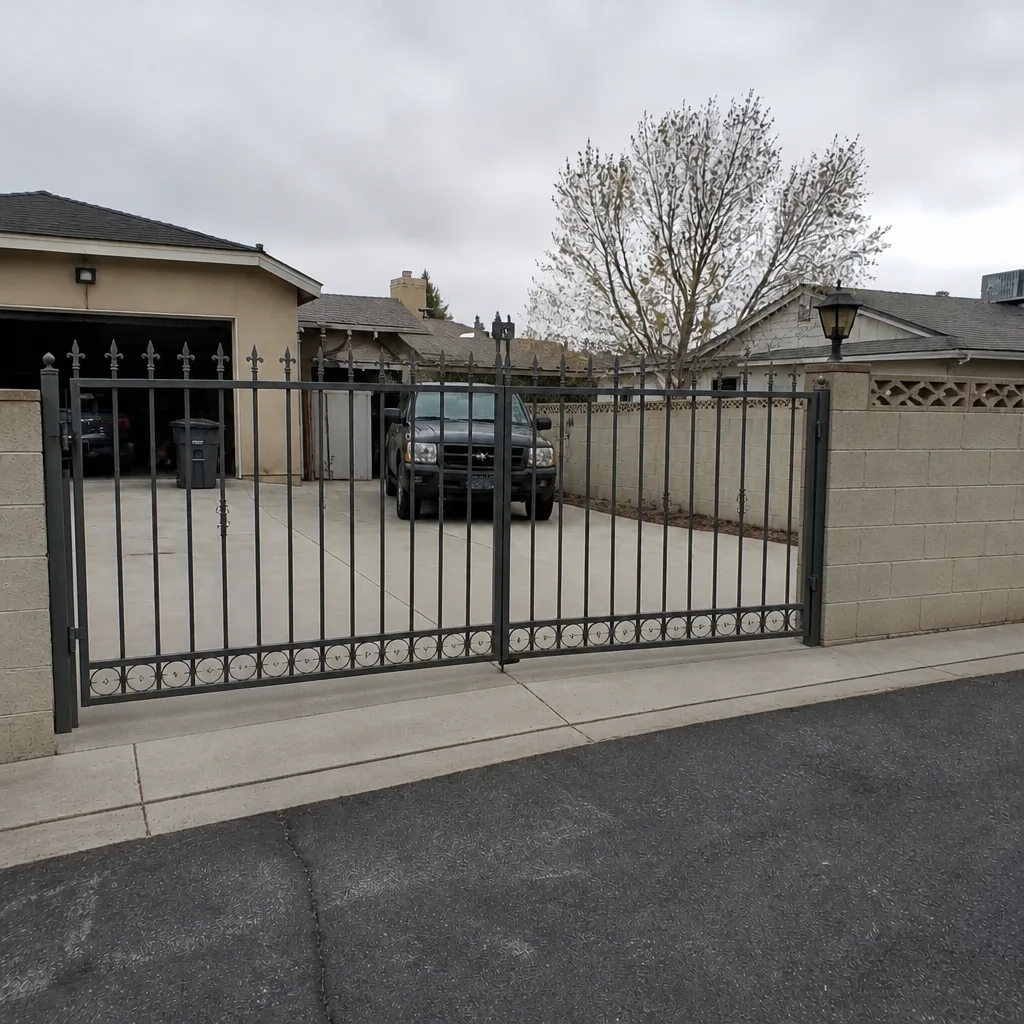
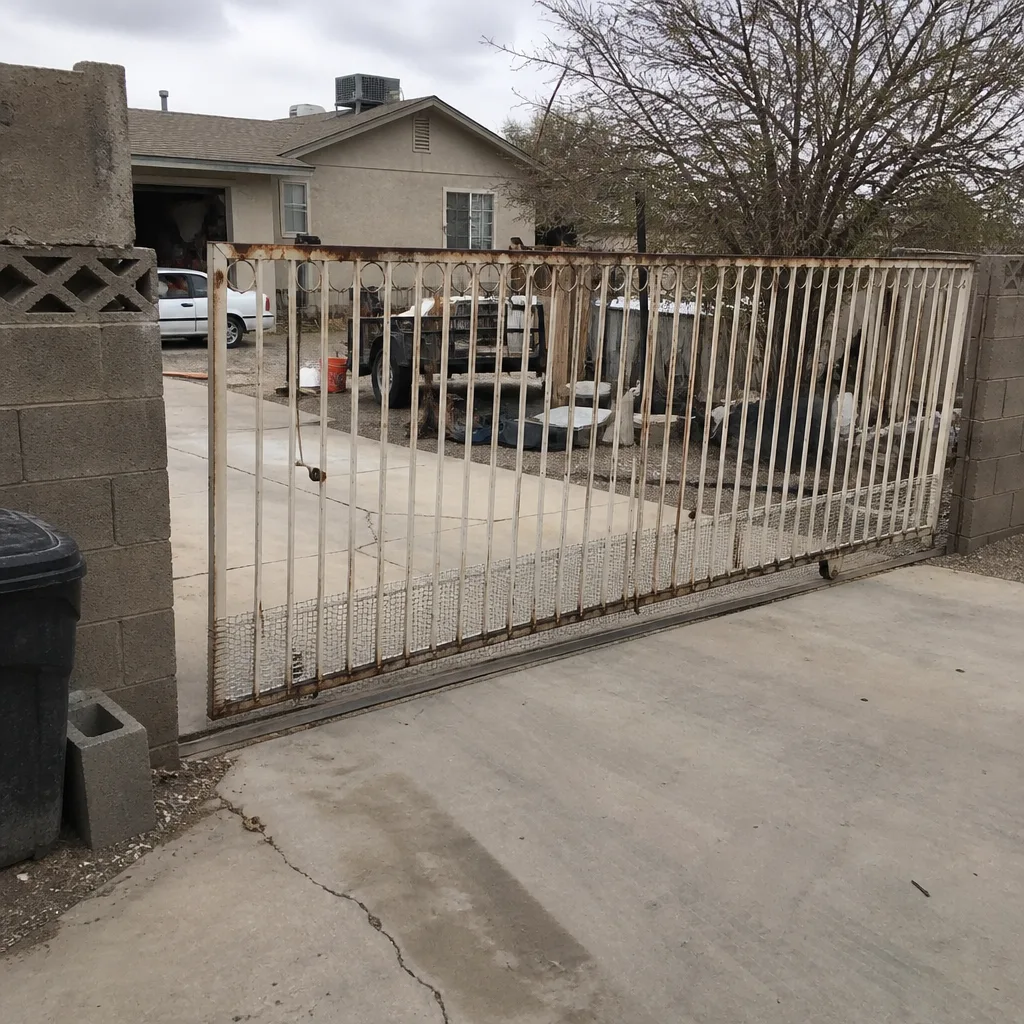
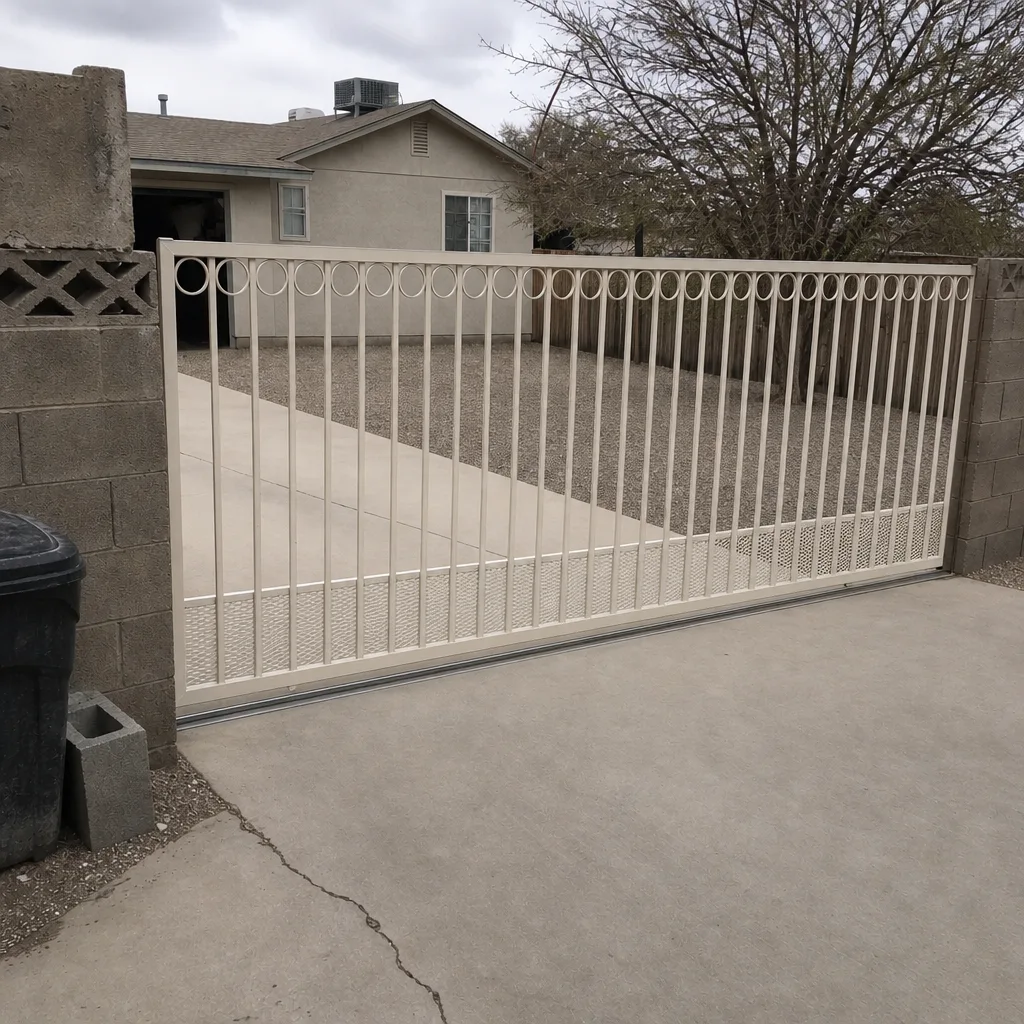
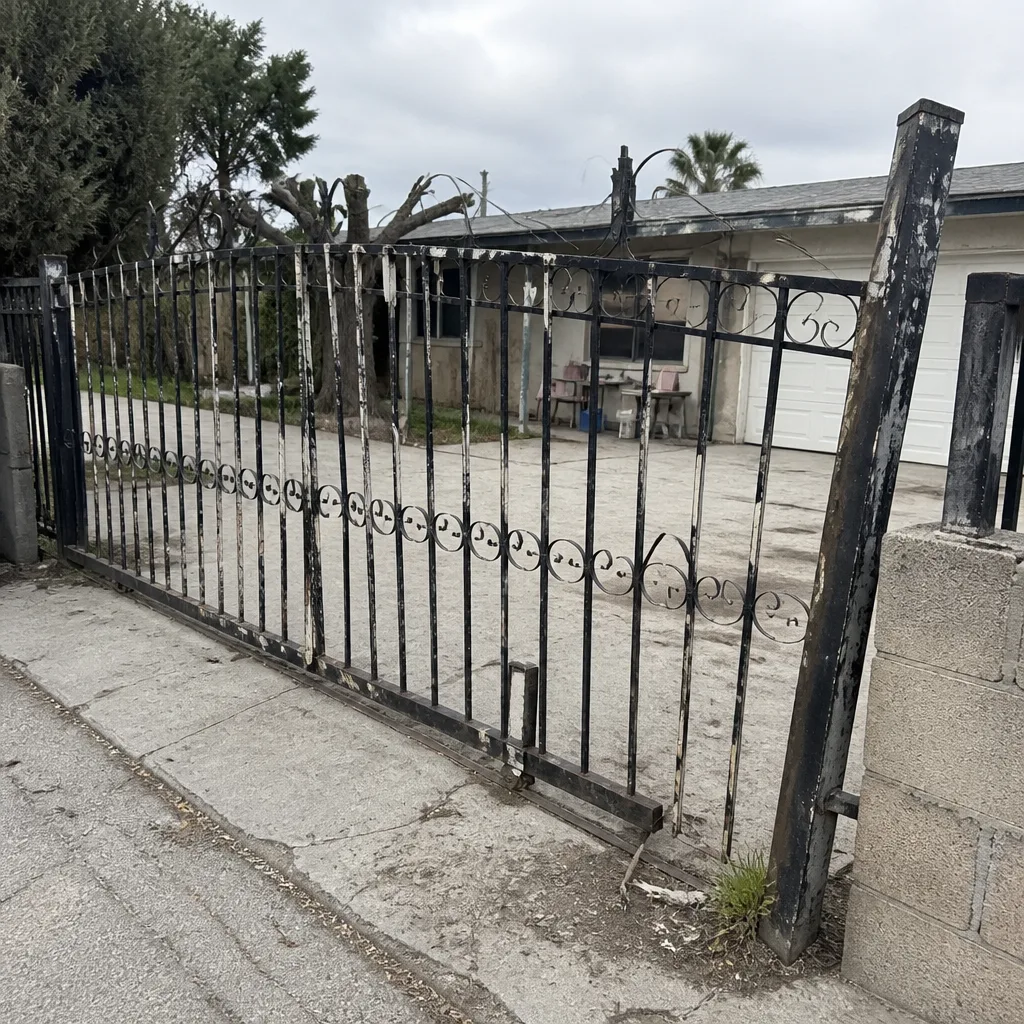
See the difference
 Before
 After
 Before
 After
 Before
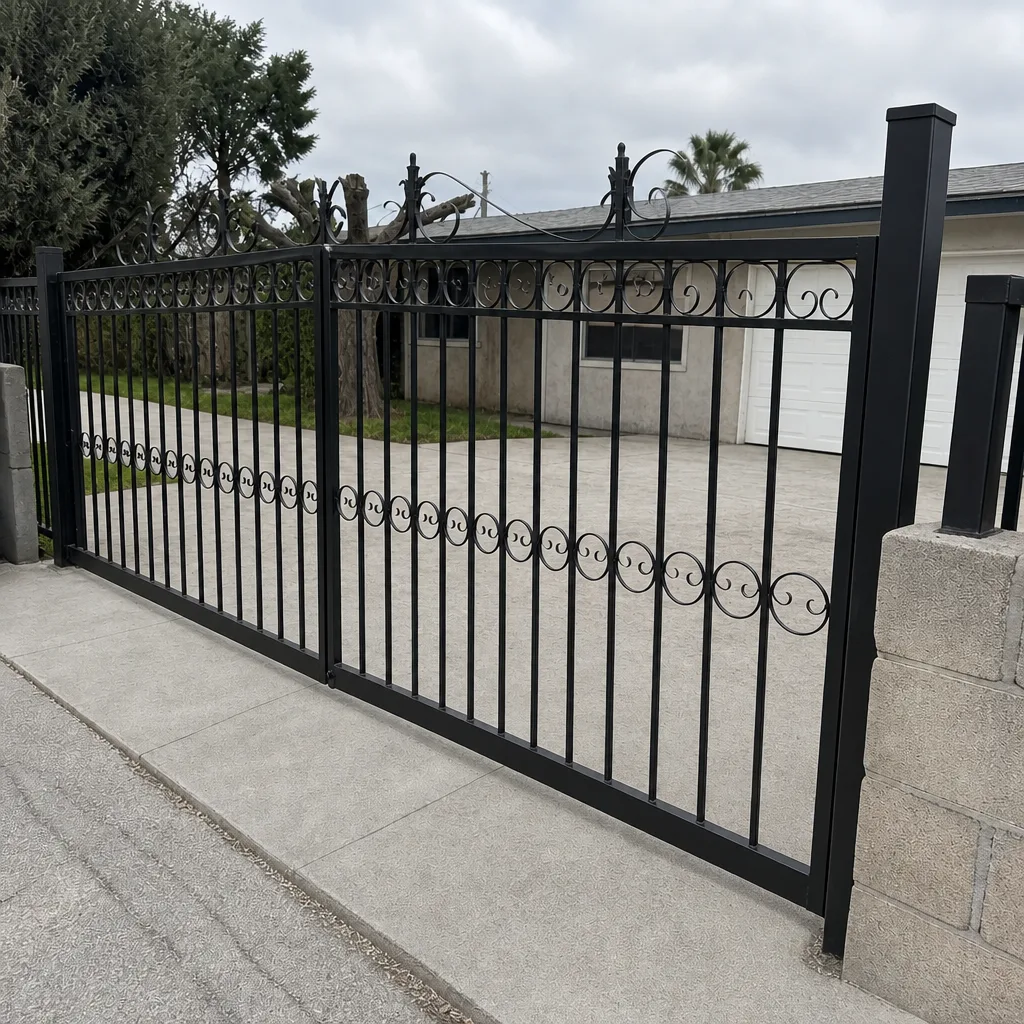 After
Frequently Asked Questions
No. A counterbalance spring under tension stores enough force to cause serious injury, and there’s no external indicator of how much force is loaded. Spring adjustment and replacement should always be handled by a technician who can release tension safely first. Call (844) 435-3018 for an exact quote; estimates are free.
Remote reprogramming, keypad code changes, lubrication of hinges and rollers, track cleaning, photo-eye cleaning, and visual inspection are all safe to do yourself. Anything inside the operator housing or involving the spring assembly belongs to a technician. If you’re unsure which category a task falls into, call and ask.
It can. Most manufacturer warranties exclude damage from improper or unauthorized repair or modification, so a DIY wiring repair that later causes a control board failure may not be covered. The safest approach is to keep anything inside the operator housing to a technician while the gate is under warranty. Call us to walk through what’s typically covered.
Usually not. Increasing the operator’s force setting makes the gate move, but it stresses the motor and gearbox and can mask a mechanical problem that’s getting worse. The fix is to address what made the gate drag in the first place. A technician can diagnose that quickly.
If the posts and framing are sound, most gate problems are repairable. Replacement becomes the better answer when the structure has failed, the operator is no longer supported, or the same problem keeps coming back. Call (844) 435-3018 and we’ll tell you honestly which way we’d go.
Yes. We work on electric and automated gate systems from brands including Viking, Ghost Controls, DoorKing, Elite, LiftMaster, FAAC, BFT, Linear, and Mighty Mule. Our technicians have up to 14 years of experience diagnosing operator and access-control faults. Call (844) 435-3018 for a free estimate.
The Bottom Line
The DIY question isn’t about how handy you are. It’s about which tasks sit next to stored energy and live power. Remote programming, lubrication, and sensor cleaning are yours to handle, and they’ll prevent plenty of breakdowns. Spring adjustment, operator wiring, track realignment on a shifted post, and any task that involves defeating a safety device belong to a technician. When a quick fix keeps the gate moving but the underlying problem keeps coming back, that’s the signal to get a proper diagnosis before the repair gets expensive. In Sunrise Manor, the gates that last are the ones where small problems get caught early.
Whether you’re working on a manual gate or an automated system, we’re here to help you decide. For gate repair of any kind, our team is ready. Automated problems often need a specialist look, and electric gate repair is where we spend most of our time. If you’d rather talk it through first, call (844) 435-3018 for a free estimate. We answer 24/7. Fast dispatch from 7am to 7pm, Sunday through Friday.
Written by the team at Gate Repair Sunrise Manor.