
Last updated November 15, 2026
 Wrought iron
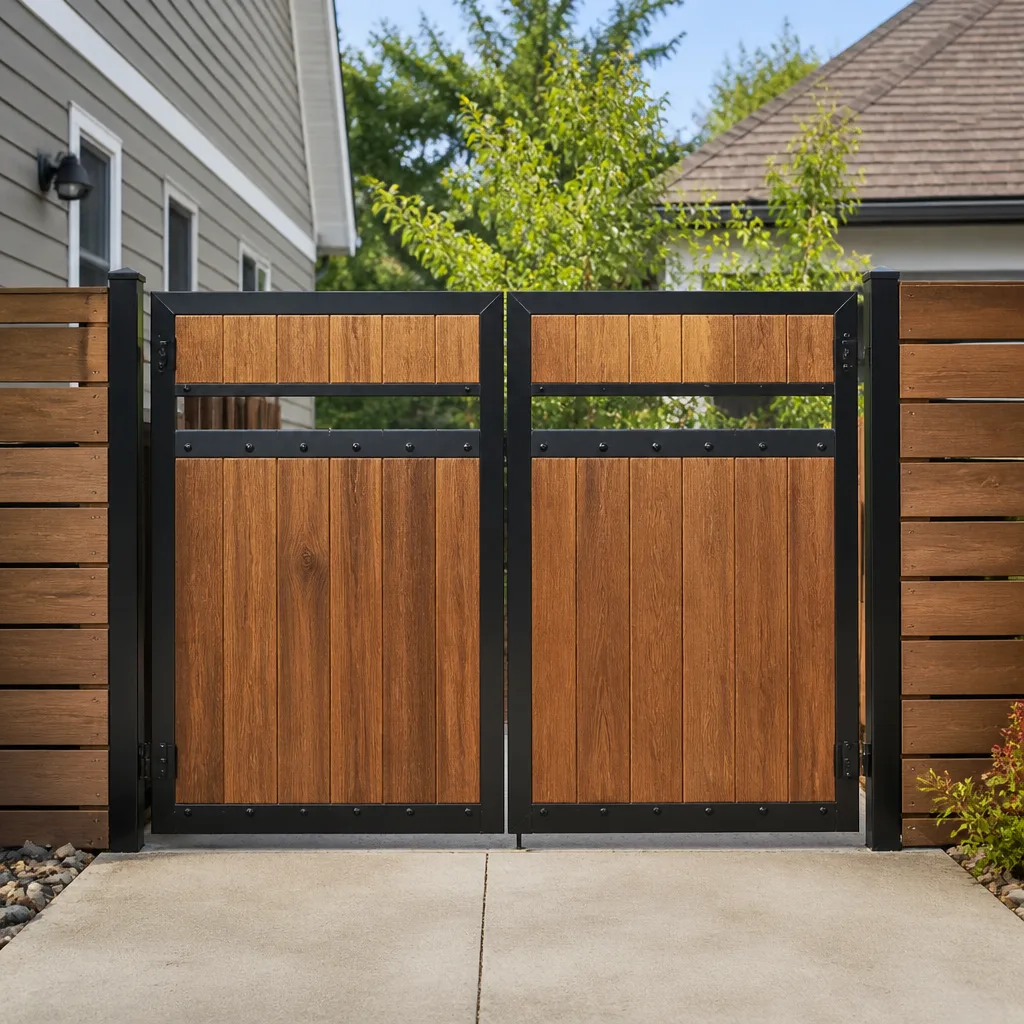 Wood & steel frame
 Farm & ranch
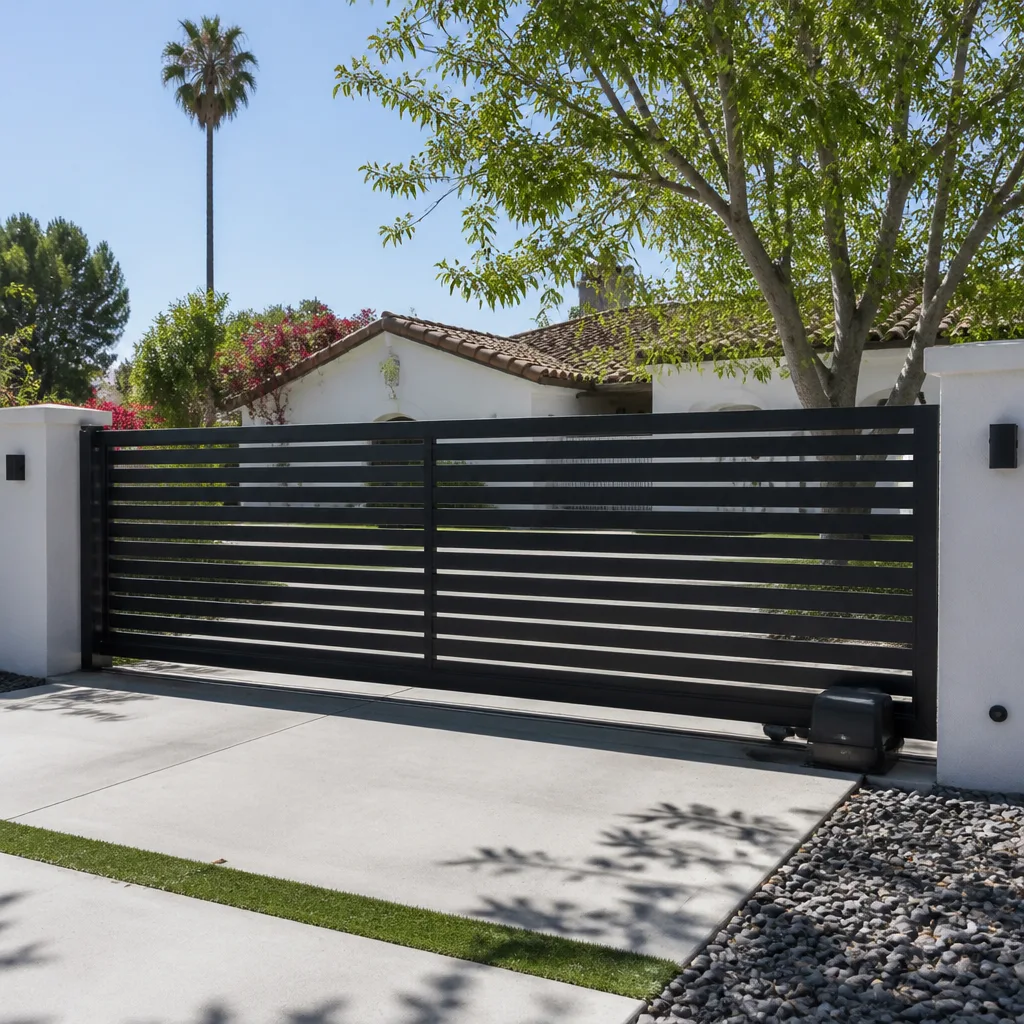 Sliding driveway gates
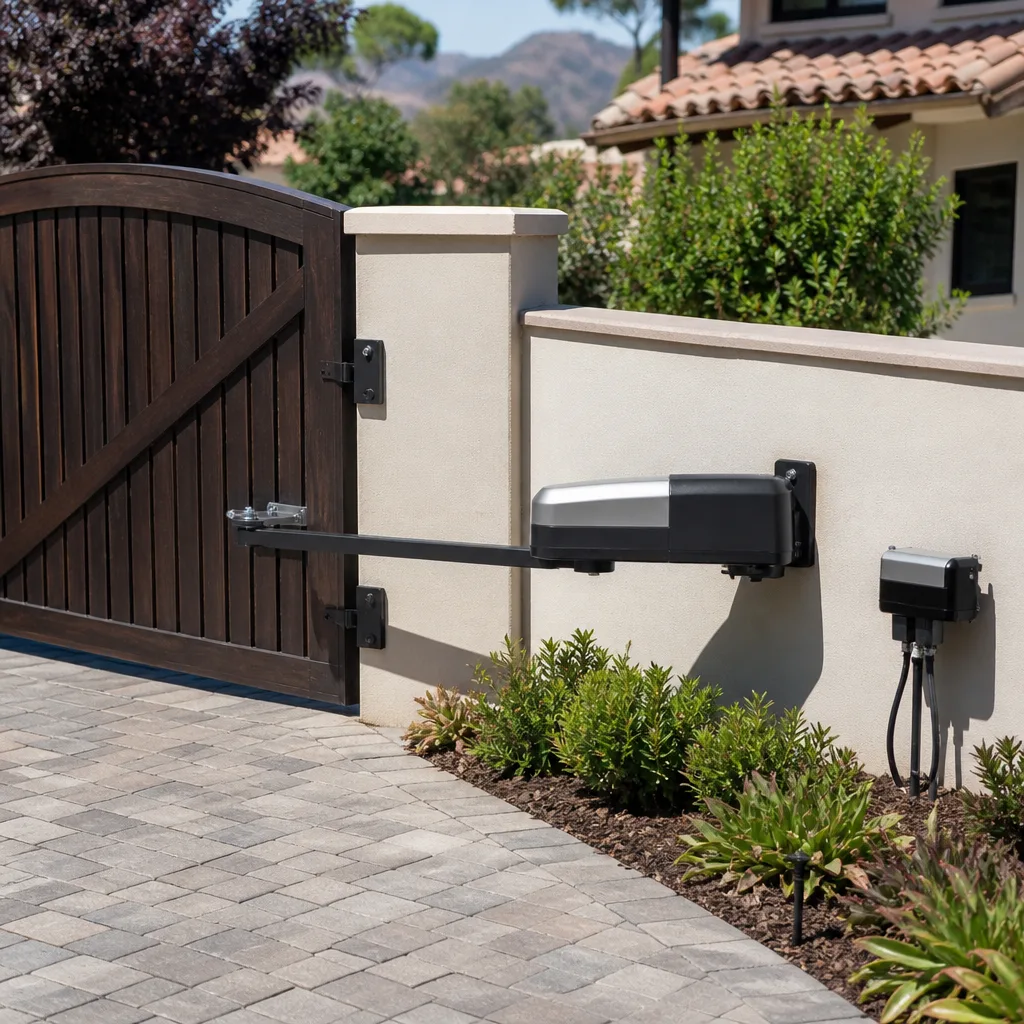 LiftMaster operators
Free on-site gate assessment - hinges, posts, and your LiftMaster or Nice gate operator checked before anything is quoted
The assessment is free and the quote is the invoice.
Get your free estimateSeasonal Gate Repair Care for Sunrise Manor: Year-Round Homeowner’s Guide
Most homes in Sunrise Manor don’t lose a gate to one dramatic failure. They lose it to a slow accumulation of heat, dust, and water that nobody was watching for. The monsoon season pushes more debris and moisture into gate tracks in about six weeks than the other ten months combined, yet most homeowners don’t look closely at their system until something stops working in October. This guide reorganizes gate care around the two weather patterns that actually shape a Sunrise Manor gate – the dry heat of late spring and the storm window of summer – instead of the generic four-season checklist that gets copied across the internet. You’ll learn what to check before the heat arrives, how to prepare for monsoon runoff, what to inspect after the rain stops, and why the mild stretch from November through February is when the real repair and replacement work pays off most. The schedule here is built for this valley, not for a climate three states away.
Quick Answer
Gate care in Sunrise Manor runs on two critical windows rather than four equal seasons: a pre-summer protection pass in April and May to guard wiring, motors, and solar panels against sustained 100°F-plus heat, and a monsoon readiness pass in June for drainage and debris clearance. September is the best time to assess structural damage from the wet season, and November through February is the smartest window for major repairs, installations, paint, and coating work while temperatures are kind. Annual UV exposure is what quietly kills plastic and rubber parts here, which is why replacement timelines in Nevada run shorter than in milder states.
Styles & brands we work with
- Wrought iron
- Wood & steel frame
- Farm & ranch
- Sliding driveway gates
- LiftMaster operators
Table of Contents
- Why Sunrise Manor’s Climate Doesn’t Split Into Four Equal Seasons
- Pre-Summer Protection: April and May Tasks
- Monsoon Readiness: The June Checklist
- Post-Monsoon Assessment: What September Reveals
- The Mild Window: Why November Through February Is Prime Repair Time
- How UV Degradation Compounds Year Over Year
- Electric Gate Systems: Seasonal Care That Saves the Control Board
- Manual Gate Care Through the Year
Why Sunrise Manor’s Climate Doesn’t Split Into Four Equal Seasons
Sunrise Manor sits in the Mojave, where the calendar year divides into two intense stretches and a long, forgiving middle. That shape has consequences for any gate on the property. From roughly May through September, surface temperatures on dark metal gate frames and operator housings climb far higher than the air temperature, and the materials inside – wire insulation, rubber seals, plastic control enclosures – take the hit first. Then the summer storm pattern arrives. When the sky opens over Sunrise Manor, water runs hard and fast, carrying grit and plant debris into the lowest point of any track or swing path. That water leaves as quickly as it came, but the debris stays.
Between those two extremes sit the months that most homeowners ignore entirely. November, December, January, and February bring mild afternoons, cooler mornings, and dry days that are comfortable to work in. Those are the weeks when a gate problem is cheapest to solve, because you can take the system apart, let it sit, paint it, and set it right without fighting heat or rain.
This is why we frame the year as two critical windows with a repair season bookend on each end:
- Pre-summer window (April-May): protect heat-sensitive components before the sustained heat.
- Monsoon window (June-early September): manage water, debris, and drainage.
- Post-monsoon assessment (September-October): find what the wet season moved or loosened.
- Mild repair window (November-February): the best time for structural work, replacement, and finishes.
Understanding that shape is the core of a seasonal schedule that actually fits Sunrise Manor. The rest of this guide walks through each window in order.
Pre-Summer Protection: April and May Tasks
April and May are your last chance to protect heat-sensitive parts before the sustained heat settles in. The goal is simple: find and fix the small weaknesses that heat will turn into failures. In our experience, most of the damage from a Nevada summer was already set up in spring, and the heat just finished the job.
Wiring insulation is the first thing to inspect. Cracked or sun-baked insulation on the low-voltage run to the operator can short once the cable jacket softens and sags in the heat. Trace the exposed run and look for anywhere the jacket has gone chalky or split. If you see it, that’s a job for a technician before June.
The operator motor and control housing need the same attention. Dust that has collected on a motor housing acts like a blanket and traps heat. Clear the vents and cooling slots so the housing can breathe, and check that the enclosure door still seats and seals. On systems with a solar panel feeding the operator, clean the panel surface and check the mounting brackets for looseness, because a panel that rattles in the wind won’t charge efficiently through the hottest months.
Numbered pre-summer checklist:
- Inspect low-voltage wiring insulation for cracks, chalking, and sagging.
- Clear dust from motor housing and cooling vents.
- Check the control enclosure seal and door fit.
- Clean the solar panel (if present) and tighten mounting hardware.
- Lubricate hinges, rollers, and the operator’s drive points as the manufacturer specifies.
- Test the full open-close cycle and note any change in speed or sound.
Do this in April or May while the mornings are still mild, and you’ll head into the heat with a system that isn’t already stressed. If something on the list looks beyond a visual check, our electric gate repair technicians can diagnose it before summer does any real damage.
Monsoon Readiness: The June Checklist
June is when you prepare the gate for the storm window that sends water, grit, and plant debris through every exposed mechanism on the property. The work in June is about water management and clearance. Water will find the lowest point on your gate no matter what you do; the job is to make sure that low point doesn’t become a trap for debris and corrosion.
Start with drainage. Look at where water pools around the gate posts and along the track or swing path. If water sits against a post base after a storm, that standing moisture works on the footing and the hardware. Regrade what you reasonably can, and clear any obstruction that keeps water from running off. Then clear the mechanisms themselves:
- Blow out track channels and the lowest point of the gate path before the first storm.
- Remove plant debris that will be washed into the track – leaves, seed pods, twigs.
- Inspect the control board enclosure for cracks, loose gaskets, or a door that no longer seals.
- Check that mounting hardware on the operator and the gate frame is tight.
- Confirm limit switches and safety edges move freely and haven’t seized with grit.
The control board is the part most often overlooked. A cracked enclosure seam lets in a thin film of water that doesn’t look like much on a dry day but will cause intermittent faults once the storms arrive. Inspect the gasket around the enclosure and the cable entry points, and if the housing looks compromised, address it in June rather than after the first fault.
Sunrise Manor storm windows move quickly, so a gate that’s ready in June is a gate that holds up through July and August. If you find water intrusion you can’t trace, a diagnostic visit is worth it before the damage spreads.
Post-Monsoon Assessment: What September Reveals
September is when the gate tells you what the wet season actually did. The heat has eased, the storms are largely through, and the system’s true condition is visible for the first time in months. This is the best window to find the structural issues while there’s time to fix them before winter.
Walk the gate slowly and look for specific things:
- Post movement: have a post shifted in the soil? Push against each one and watch for rock or lean at the base.
- Track or rail condition: is a track bowed, set low, or holding water after the last storm?
- Frame and panel warping: has moisture changed the gate’s true?
- Hardware corrosion: hinges, rollers, and latches should be examined for rust or loosening.
- Operator behavior: any new hesitation, grinding, or failure to fully open or close.
Post-monsoon is also the time to clear out whatever the wet season deposited – silt in the track, debris behind the operator, gravel against the gate posts. What you find now gives you a repair list you can address steadily through the mild months rather than panicking mid-season.
We’ve seen plenty of Sunrise Manor gates where the structural damage was evident in September and got postponed until a gate failed outright in December. The repair cost and disruption are almost always worse when you wait. September is the time to know, and the mild season is the time to act on it.
The Mild Window: Why November Through February Is Prime Repair Time
If you take one point from this guide, take this: November through February is the best window in Sunrise Manor for major gate work. The mild temperatures mean technicians can work comfortably, the risk of heat-stressing components during an installation is low, and finishes like paint and protective coatings cure properly instead of flashing off under the summer sun.
What belongs in this window:
- Major repairs. Structural fixes, post replacement, track realignment, and hinge or roller overhauls all go smoother when there’s time and mild weather.
- New gate installation. A new gate can be set, fitted, and tested without the installation fighting the heat. A measure-and-quote visit in the cooler months also gives you time to make decisions properly.
- Operator replacement or upgrade. Removing and installing a motor or control system is easier when the housing isn’t overheated and the software can be tested in a full cycle without heat concerns.
- Paint and coating work. Finish work done when the temperature is mild bonds and cures as it should, giving you better protection against the next summer.
- Full inspection and adjustment. Anything you spotted in the September assessment gets handled in comfort.
The mild window isn’t about speed. It’s about doing the work right. When you plan a gate installation or a major repair for November through February, the work is measured, ordered, and scheduled, which is exactly what a job of that size needs.
How UV Degradation Compounds Year Over Year
Nevada’s sunshine is the quiet force behind most of the parts that fail on a gate here. It’s not one bad summer that breaks a component – it’s the cumulative exposure. Each year of full sun takes a measurable toll on plastic and rubber, and the parts that fail first are predictable:
- Plastic control enclosures and covers, which chalk and crack over time.
- Rubber gaskets and seals, which harden and lose their ability to keep water out.
- Wire insulation and cable jackets, which go brittle and vulnerable.
- Plastic rollers and mechanical components exposed to direct sun.
- Paint and exterior coatings on metal frames.
Because the degradation is gradual, the failure is usually abrupt. A gasket that has been hardening for several summers cracks during a storm and lets water into the control board. A brittle wire jacket finally splits in the heat and shorts. The replacement timelines on these components in Nevada typically run shorter than in milder climates because the annual UV dose is larger. When you assess a system, look at the exposure rather than the age label – a rubber seal with five summers on it in full sun can be more worn than a similar part with ten mild years.
This is where a coating or enclosure replacement in the mild season pays off. You’re not just fixing the current year; you’re slowing the next several years of the same decline.
Electric Gate Systems: Seasonal Care That Saves the Control Board
Automated gates carry the most seasonal risk because they have the most sensitive parts. The control board, the operator motor, and the low-voltage wiring are all affected by heat, water, and dust in different ways. Our focus on electric gate repair has taught us the failure patterns are almost always seasonal.
In the pre-summer months, the concern is heat. Clear motor housing vents, check wiring insulation, and confirm the enclosure seals are intact. In the monsoon window, the concern is water: cracks in the enclosure, loose gaskets, and water reaching the board are the leading cause of electrical faults. In winter, the concern is wear: test the operator through the full cycle and clean and lubricate where the manufacturer specifies.
The brand matters less than the season. We work on LiftMaster, FAAC, BFT, and Linear systems, among others, and the seasonal pattern holds across all of them. The control board doesn’t care about the badge on the housing. What it cares about is a dry enclosure, a clean vent, and a stable low-voltage supply.
If your operator is behaving oddly after a storm or after a heat wave, that’s usually a signal worth a diagnostic. The parts on an electric gate are heavy and the energy that moves them is real. A trained technician understands the wiring and the power and should handle the diagnostics. That’s a safety point, not a convenience one. If the operator is fighting you or the board is faulting repeatedly, call (844) 435-3018 for a free estimate.
Manual Gate Care Through the Year
Manual gates have a simpler seasonal cycle, but it’s still worth keeping one. Without an operator or wiring to manage, the manual gate’s seasonal care focuses on movement, structure, and finish. In Sunrise Manor, heat and dust are the main seasonal forces on a manual gate.
Pre-summer, the priorities are hinges and latches. Heat makes metal expand and contract; hardware that was snug in spring can loosen by July. Lubricate hinges as the hardware manufacturer specifies, check latch alignment, and examine the gate’s swing path. Monsoon readiness is drainage and debris: clear the base of the gate and the low point of the path so water moves off. Post-monsoon, check the posts and frame for movement and secure hardware. Winter is for paint and refinishing, and for any structural work you identified in September.
One note for any homeowner with an existing gate: because we work on the gate as a system, our gate repair scope covers both the manual structure and the electric mechanics where present. The seasonal checks above are the same for both, but the electric side has more to inspect.
For anyone new to the area, the pattern to internalize is that gate care in Sunrise Manor is really a November problem if you don’t do the spring and summer work. The mild months are for the work that protects everything else. Our Sunrise Manor guide covers how the local geography shapes these tasks.
Common Mistakes to Avoid
- Assuming four equal seasons. Sunrise Manor has two intense stretches and a long mild middle. Planning as if spring, summer, fall, and winter carry equal gate risk leads you to skip the April-May protection pass.
- Waiting until something breaks in October. By then the monsoon damage is done and the operator has sat in water for weeks. Checking in September catches most of it.
- Ignoring control board enclosure seals. A cracked gasket is invisible until water reaches the board. Look at the seal during the June pass and after every big storm.
- Clearing debris only from the track. The operator housing, cable entry points, and the control enclosure also collect debris and moisture. A clean track with a clogged enclosure is still a fault waiting to happen.
- Scheduling big work for July. A new installation or major repair in the height of summer is harder on components and on finishes. The mild months give better results.
- Assuming a part with a short label age is fine. UV exposure in Nevada is what ages plastic and rubber. A seal with a few full-sun summers can be more worn than a similar one with a long mild history.
- Running the operator repeatedly after a suspected fault. If the gate is grinding, hesitating, or tripping, stop and have it looked at. Repeated operation can turn a small repair into a control board or motor replacement.
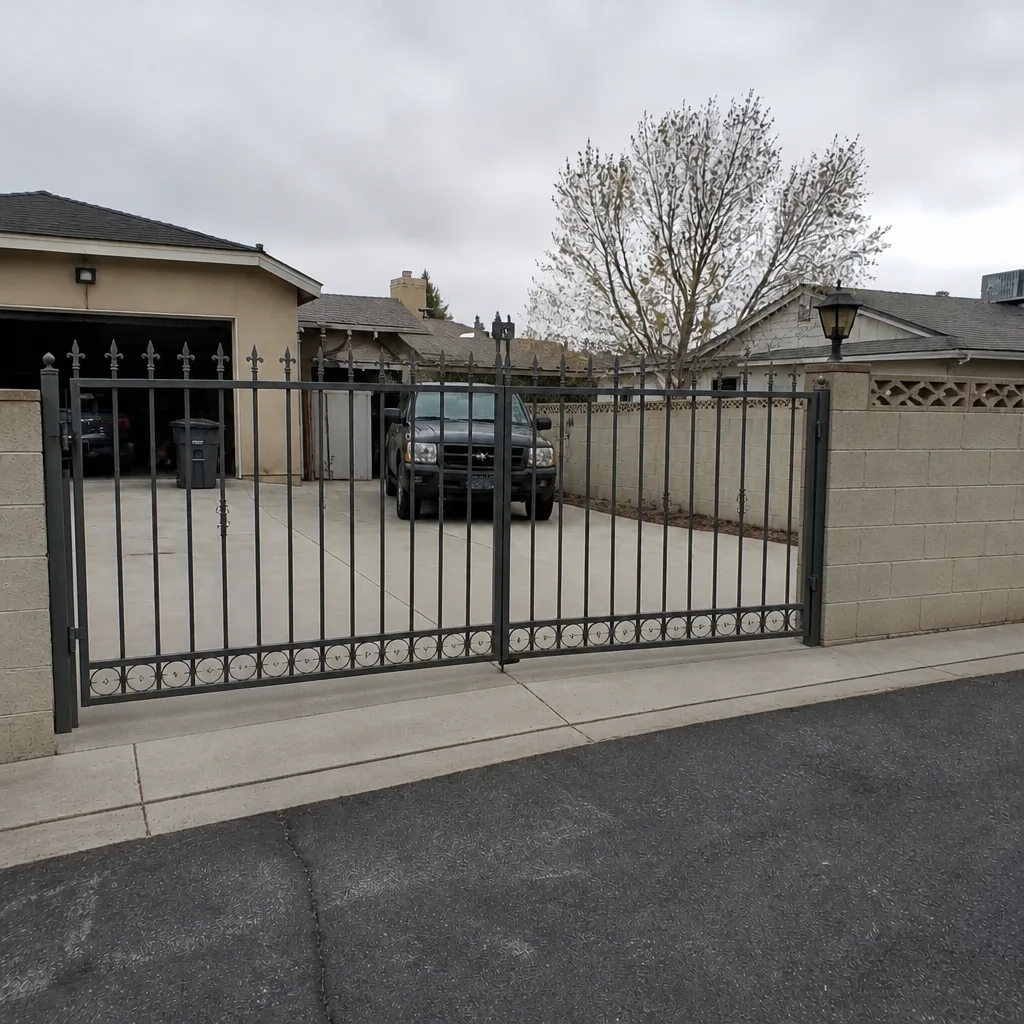
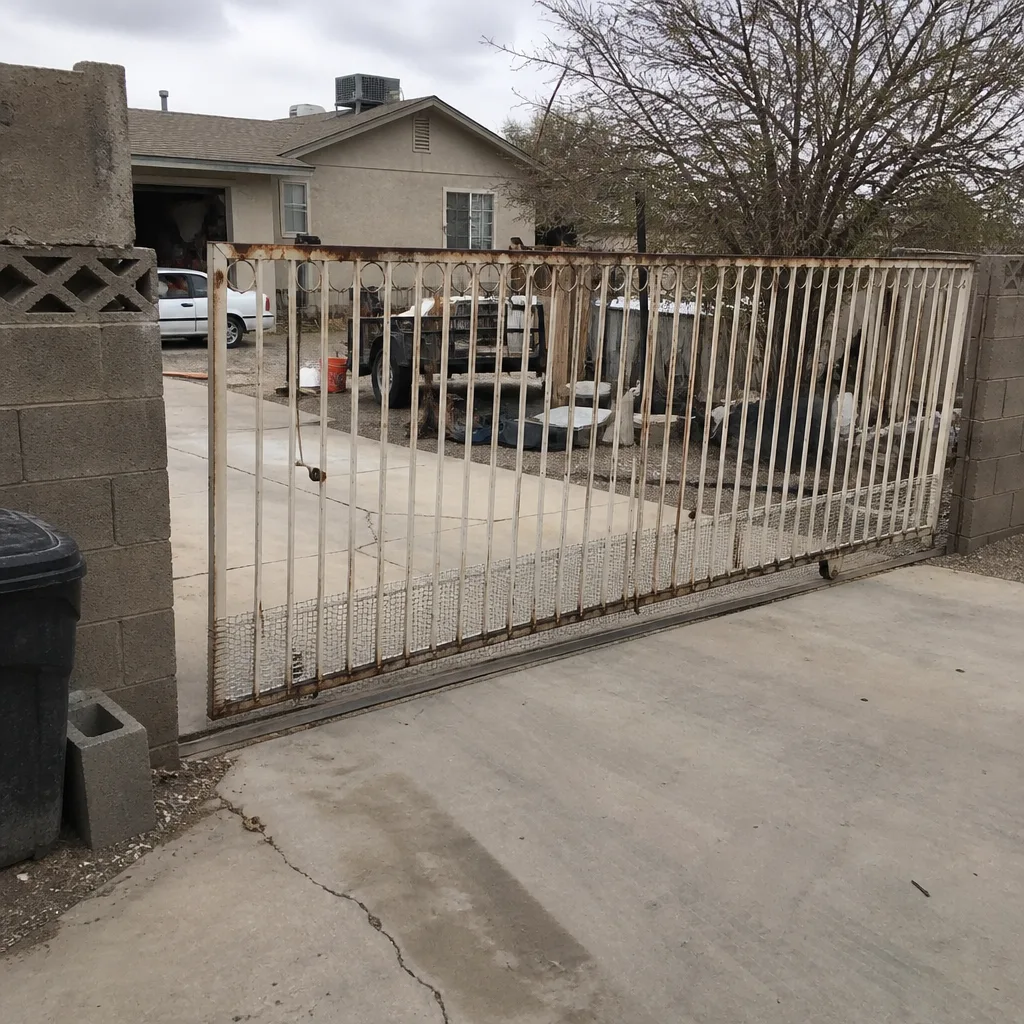
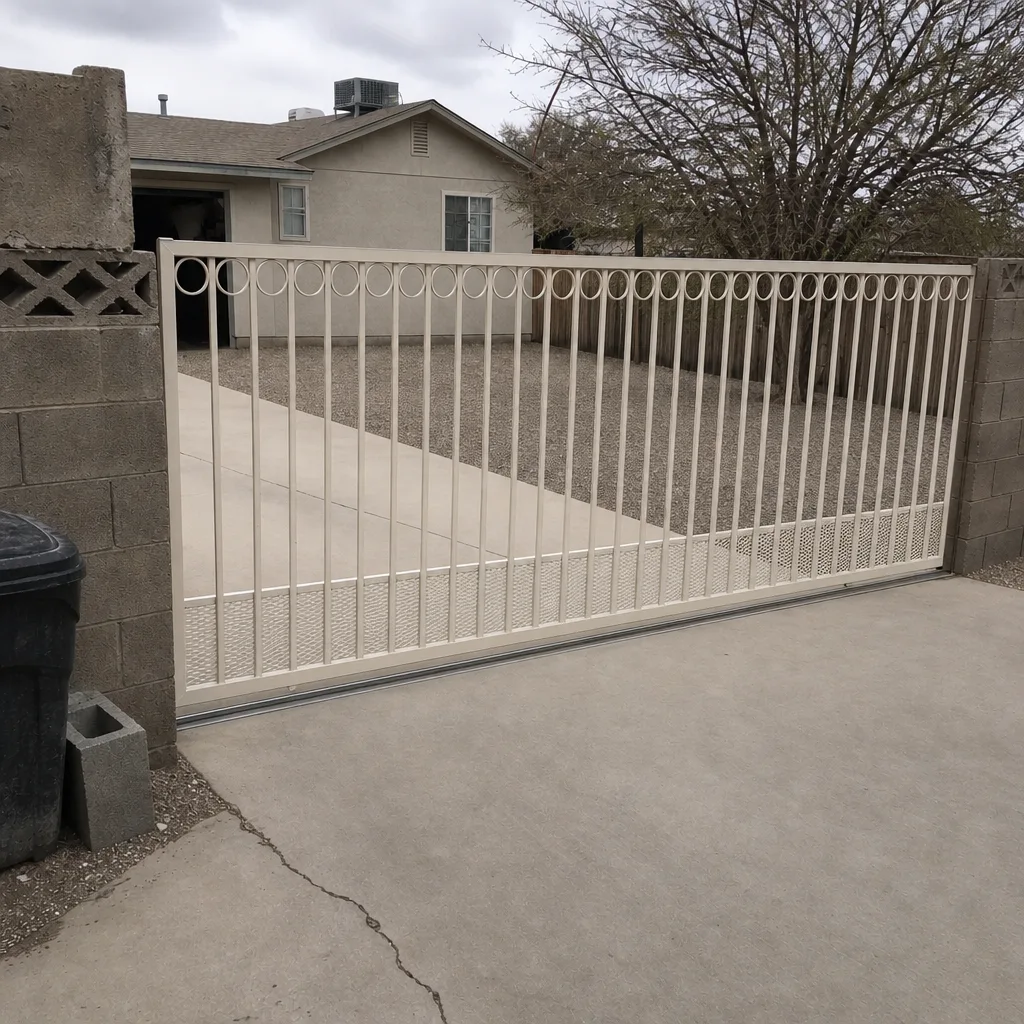
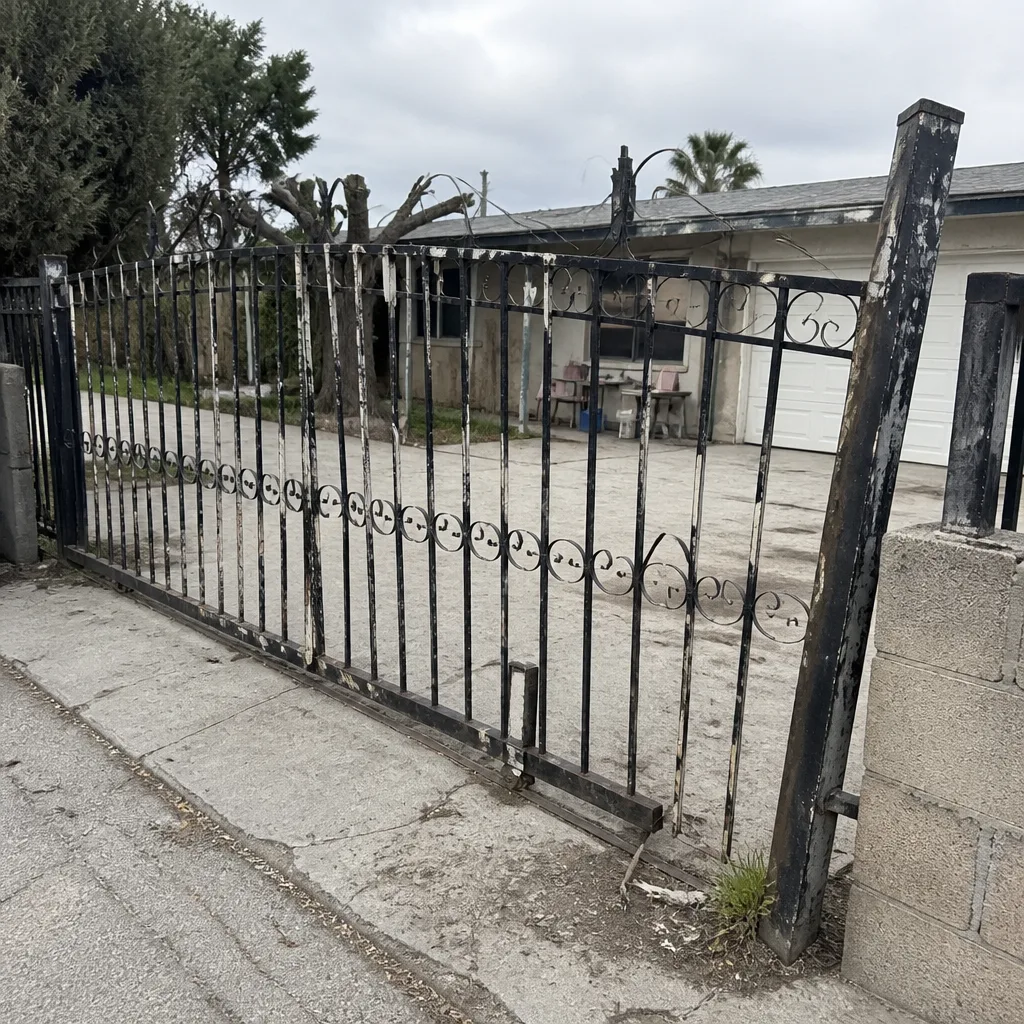
See the difference
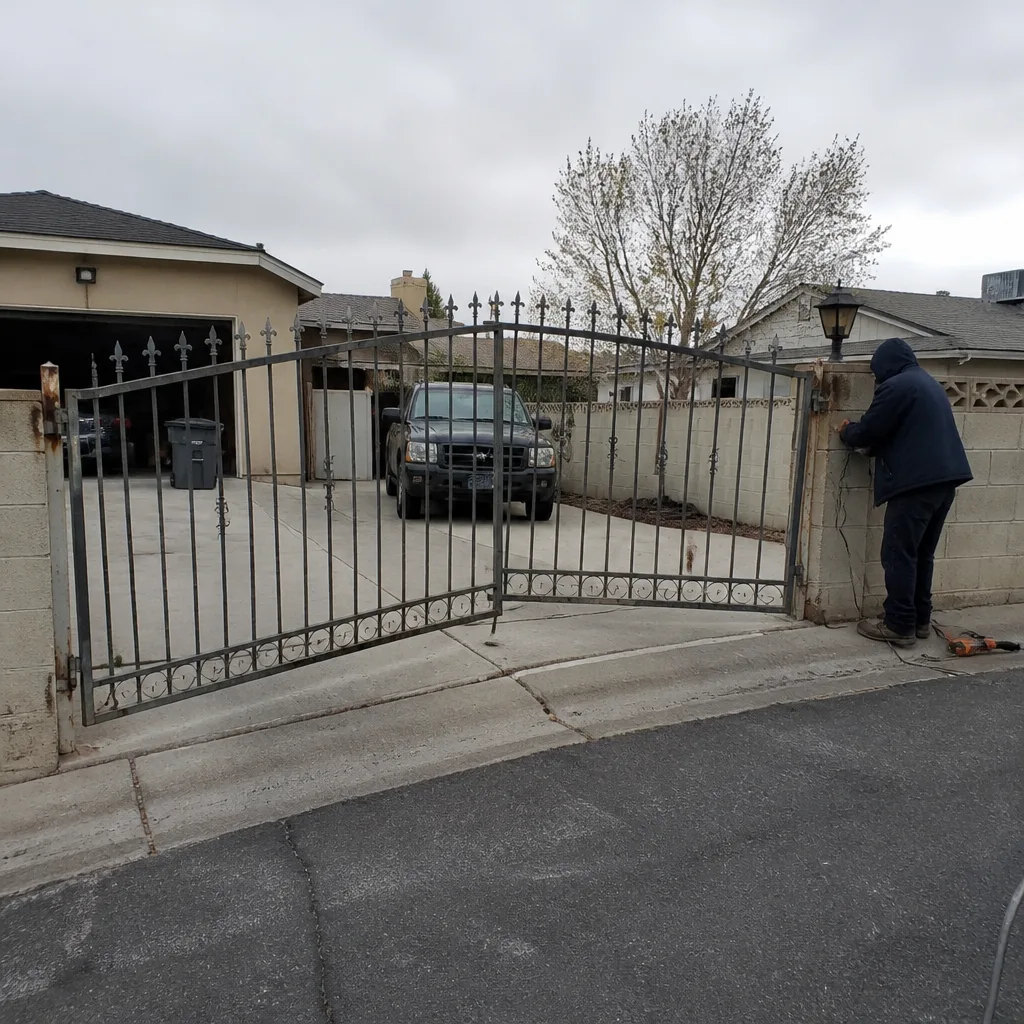 Before
 After
 Before
 After
 Before
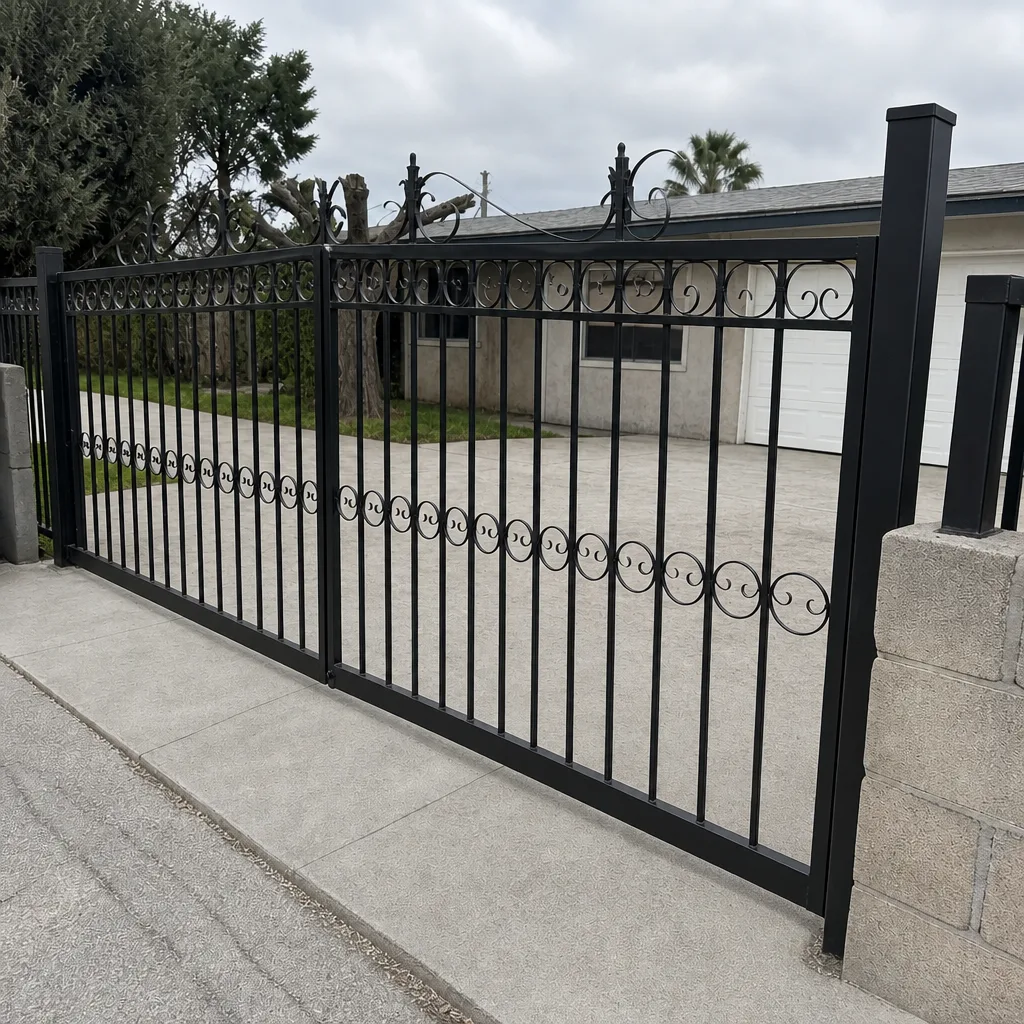 After
When to Call a Professional
Some seasonal tasks are within reach of a careful homeowner – clearing debris, checking seals, and walking the gate after a storm. Others need a professional. Call a trained technician if your gate has a suspected wiring or control board fault, if the posts or footing show movement, if the operator grinds or hesitates, if an electric gate is behaving inconsistently after a storm, or if you’re considering a major repair or a new installation. The electric side carries real energy and heavy gates can crush if a mechanism has failed.
Gate Repair Sunrise Manor offers free estimates in Sunrise Manor. Call (844) 435-3018. We answer 24/7. Fast dispatch from 7am to 7pm, Sunday through Friday.
Frequently Asked Questions
The single most valuable task is the pre-summer wiring and motor check in April or May. Heat is the main thing that turns small weaknesses in wiring insulation, motor cooling, and enclosure seals into failures. Getting those in order before sustained 100°F-plus temperatures arrive protects the components that are hardest and most expensive to replace later.
November through February is the best window. Mild temperatures make a new gate easier to measure, set, fit, and test, and finishes like paint cure properly in the cooler air. Installation is a measured, ordered, and scheduled job, so book a free measure and a written price in the cooler months rather than waiting for a mid-summer emergency.
Monsoon rain pushes debris and moisture into tracks, swing paths, and control enclosures in a matter of weeks. The debris stays after the water drains, which is why a September assessment matters. What you find then – movement at post bases, silt in the track, a compromised enclosure seal – is the repair list for the mild months.
Yes, the electric side has more to inspect. Control boards, operator motors, low-voltage wiring, and enclosure gaskets are all sensitive to heat and water in a way that manual gates aren’t. The protection passes are the same idea, but they add enclosure inspection and wiring checks that a manual gate doesn’t need. Our electric gate repair scope covers those checks for any of the major brands we work on.
Run the gate through a full open-close cycle once a month and note any change in speed or sound. Then do a proper walk-around at the start of the pre-summer window and again after the monsoon. A monthly test plus two seasonal inspections catches most developing problems well before they become breakdowns.
You can handle debris clearing, seal checks, and the visual walk-around. Wiring, control board, post footing, and operator diagnostics need a trained technician. If you spot heat damage on wiring or a suspect control board enclosure in the pre-summer pass, that’s the point to call rather than open. Call (844) 435-3018 for a free estimate if you’re not sure what you’re looking at.
The Bottom Line
Sunrise Manor doesn’t run on four equal seasons, and gate care here shouldn’t pretend it does. Protect wiring, motors, and solar panels in April and May before the sustained heat. Prepare drainage and clear debris in June before the monsoon. Assess structural damage in September when the wet season’s effects are visible. Then use the mild stretch from November through February for the major repairs, installations, and finishes that shape the next year. That schedule, plus attention to the UV exposure that gradually ages plastic and rubber, is the difference between a gate that lasts and one that fails in the height of summer. Call (844) 435-3018 for a free estimate when the schedule shows it’s time for a professional look.
Written by the team at Gate Repair Sunrise Manor.