
Last updated November 15, 2026
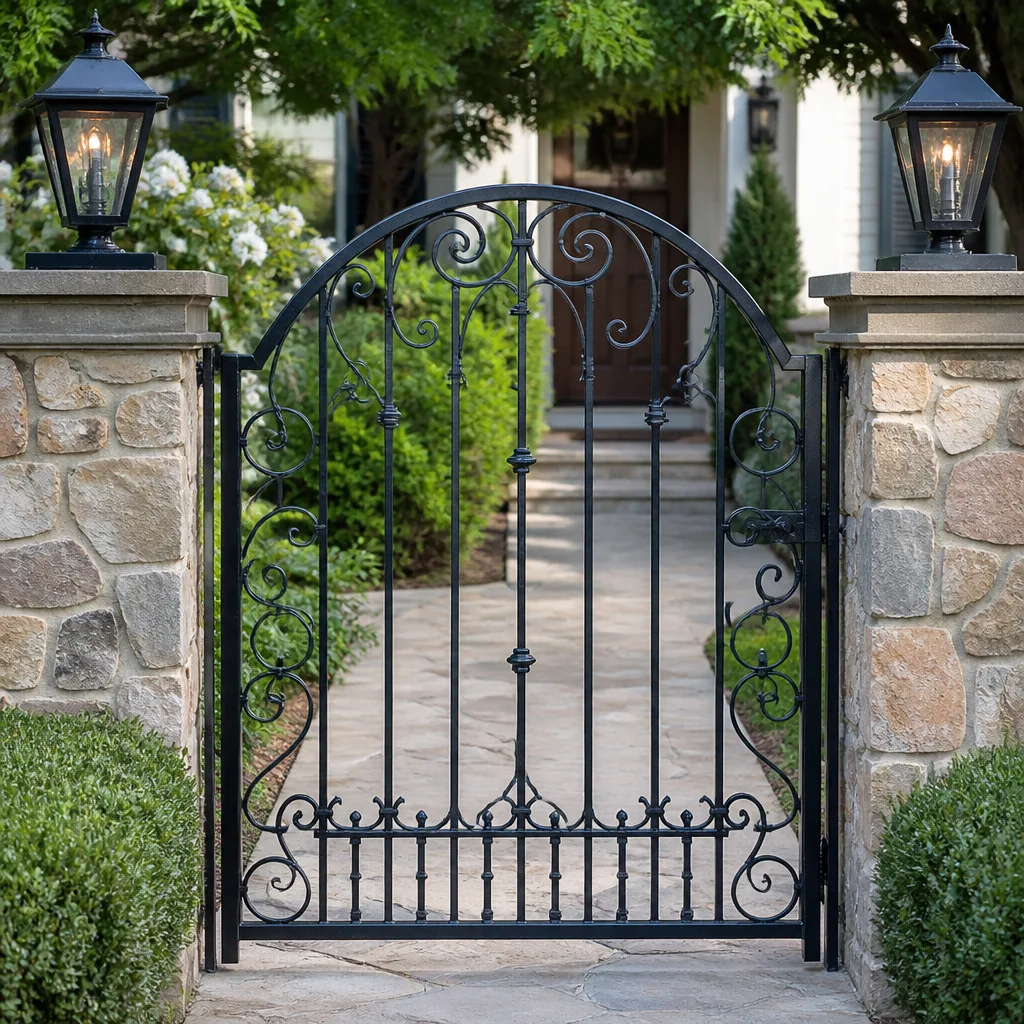 Wrought iron
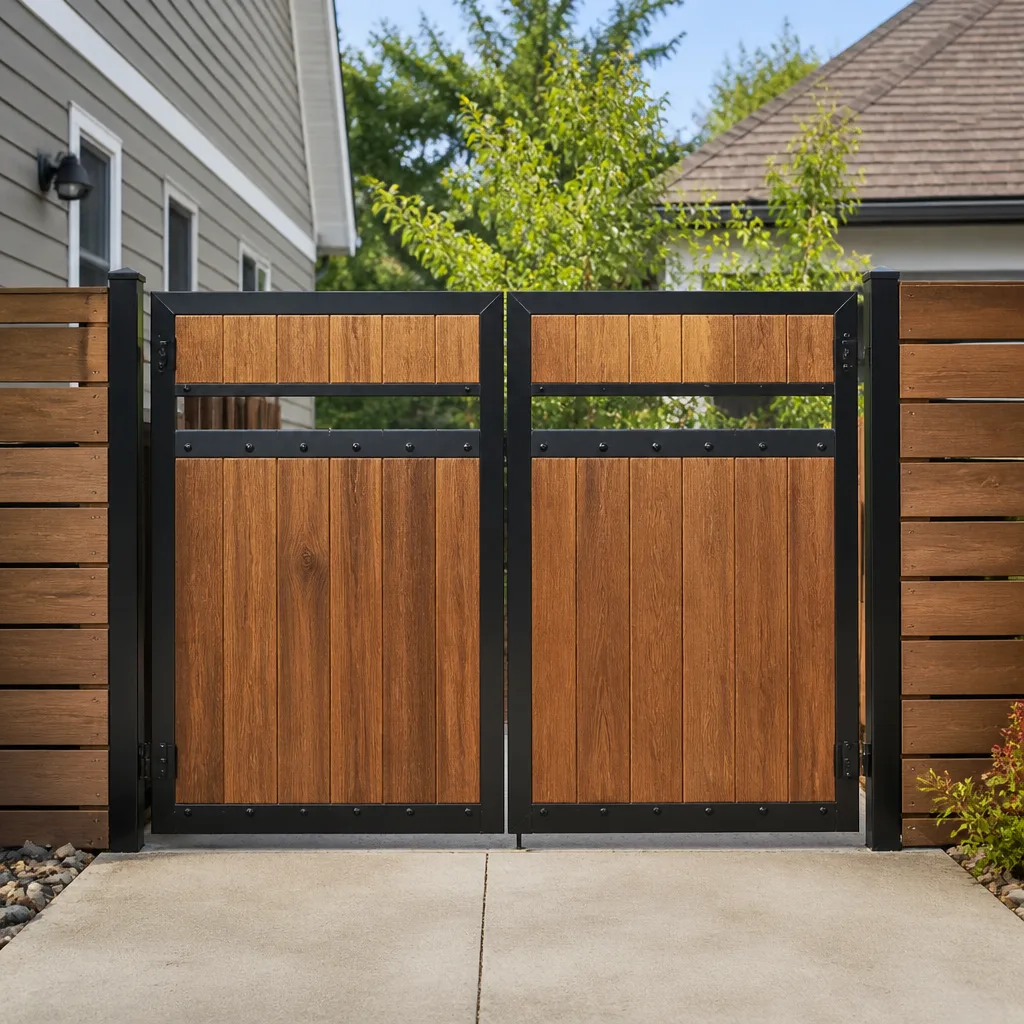 Wood & steel frame
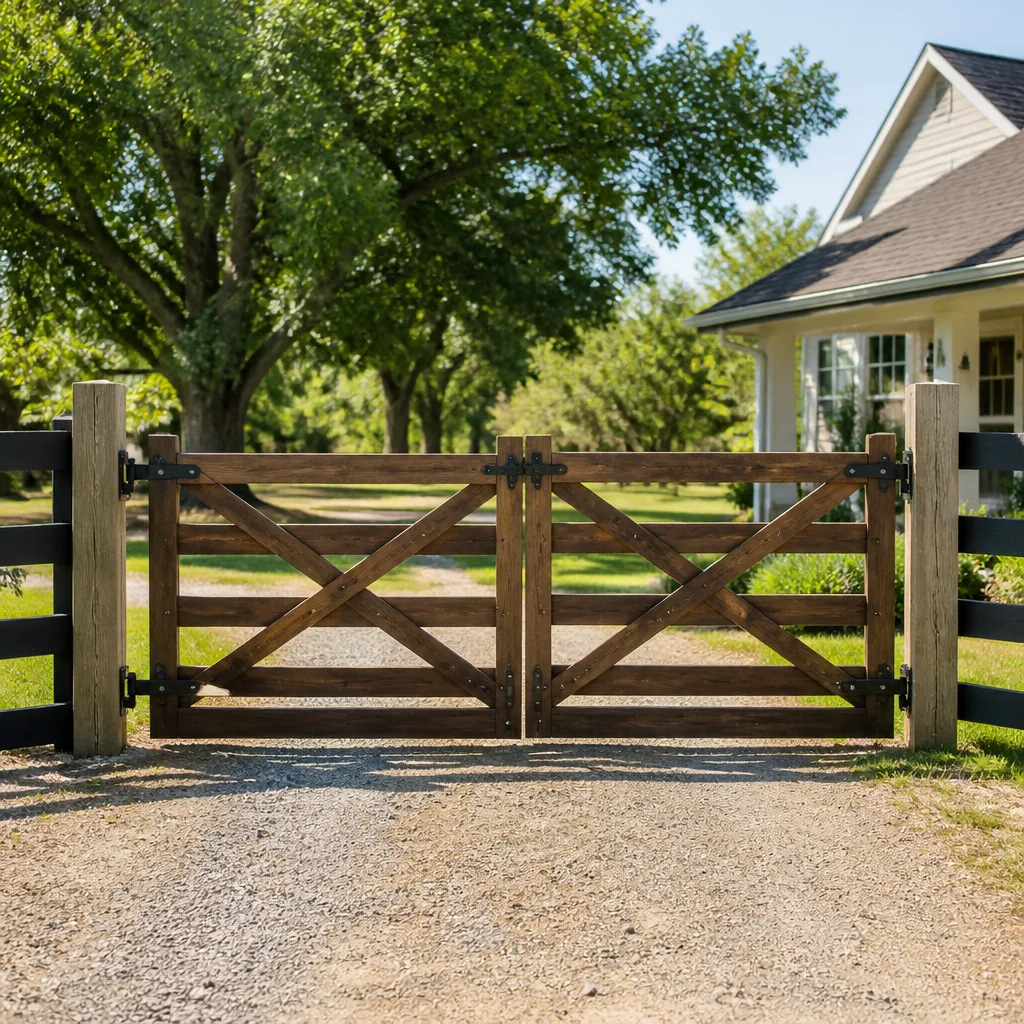 Farm & ranch
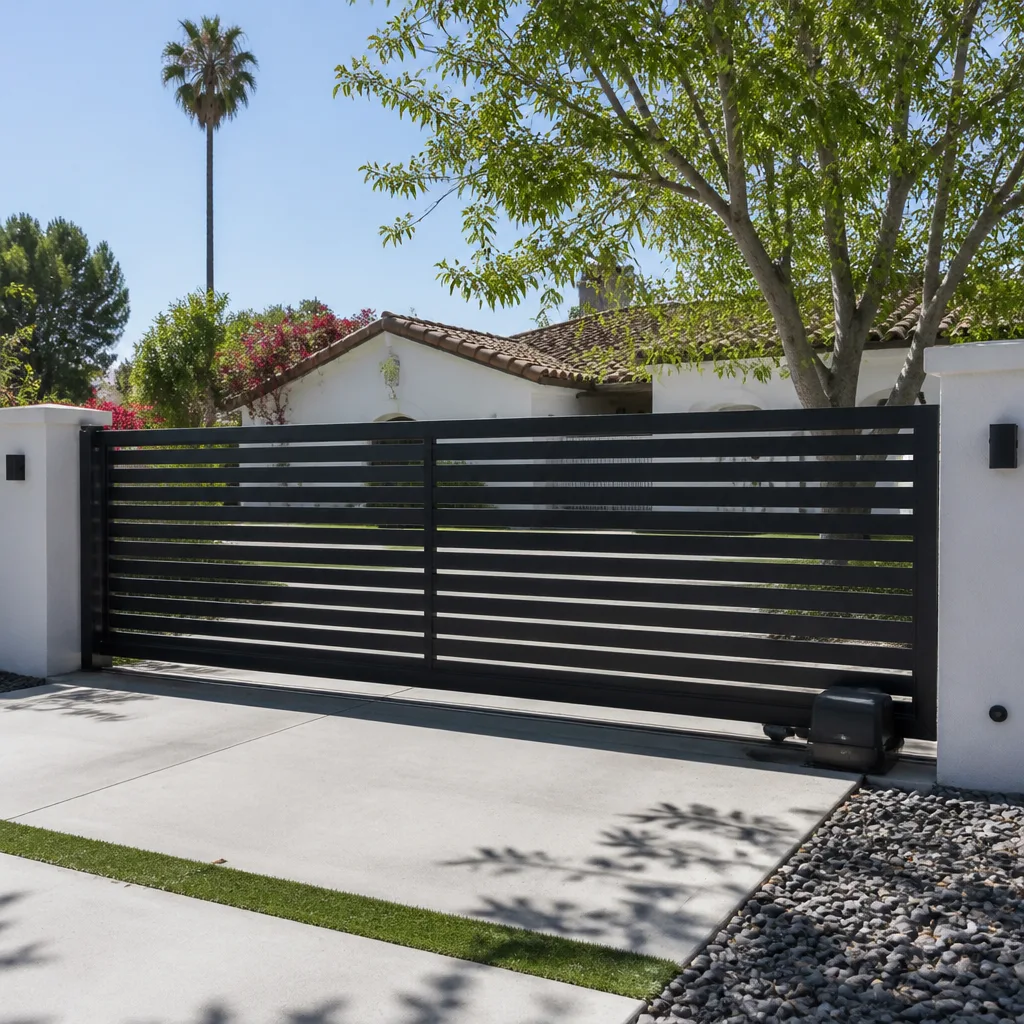 Sliding driveway gates
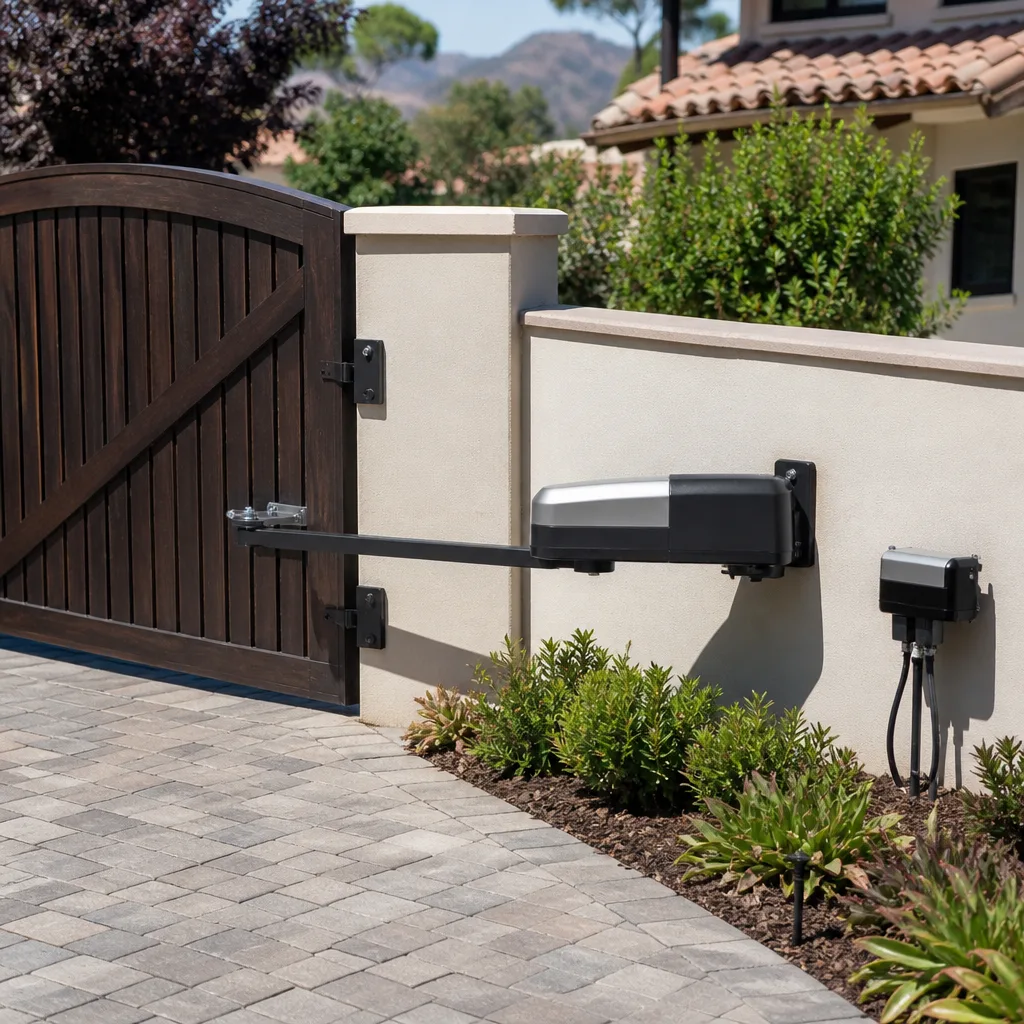 LiftMaster operators
Free on-site gate assessment - hinges, posts, and your LiftMaster or Nice gate operator checked before anything is quoted
The assessment is free and the quote is the invoice.
Get your free estimateThe Complete Guide to Gate Repair in Sunrise Manor
A gate that opens slowly usually isn’t a motor problem. More often it’s a hinge that’s lost its grease, a track packed with grit, or a small rise in the ground that forces the gate to drag. The motor keeps pushing, works hotter every cycle, and eventually the board or the drive gear gives out. The homeowner sees a dead operator and pays for electronics when the real culprit was mechanical. We’re a gate-only specialist working across Sunrise Manor, and this guide maps the repair landscape so you can stop paying for misdiagnoses: how to identify your gate type, the failure points our desert climate creates, what repair actually covers versus replacement, and how to document a problem before a technician ever arrives.
Quick Answer
Gate repair in Sunrise Manor covers the mechanical parts (hinges, tracks, rollers, latches, frames) and the electrical parts (operators, control boards, safety edges, access control) that move and secure your gate. Most failures start as small mechanical wear or heat and dust damage, not a dead motor. Knowing which gate type you own and documenting the symptoms before you call is the fastest way to a correct diagnosis and a fair repair estimate.
Styles & brands we work with
- Wrought iron
- Wood & steel frame
- Farm & ranch
- Sliding driveway gates
- LiftMaster operators
Table of Contents
- How Do You Identify Your Gate Type Before Calling Anyone?
- The Five Failure Points Sunrise Manor’s Climate Creates
- Repair vs. Replacement: A Component-Level Breakdown
- Why Single-Trade Contractors Misdiagnose Gate Problems
- How to Document Your Gate Problem Before the Technician Arrives
- What It Means to Work on Your Brand
- What Routine Gate Care Actually Involves
- What Affects the Cost of Gate Repair in Sunrise Manor?
How Do You Identify Your Gate Type Before Calling Anyone?
The repair approach changes completely depending on what kind of gate you have. A swing gate and a slide gate share almost no parts, and a cantilever gate isn’t even anchored the same way. Before you call anyone, walk outside and answer three questions: which way does the gate move, what does it hang from or ride on, and where does the operator sit. That short inspection tells a technician more than a ten-minute phone description.
Here’s how the four main residential types break down:
- Swing gate: The gate pivots on hinges, opening inward or outward like a door. It uses arm or articulated operators, and its failure points are hinges, posts, and the arms that push the leaf.
- Slide gate: The gate rolls sideways along a track on the ground or hangs from an overhead rail. Operators drive it with a rack-and-pinion gear. Track debris and roller wear are the usual problems.
- Overhead (tilt) gate: A single panel that lifts and tilts back. Common on commercial driveways. The counterbalance springs and lifting arms do most of the work.
- Cantilever gate: A slide gate with no track on the ground. It’s supported by a counterbalanced frame that rolls on rollers mounted to the post. Because it floats over the driveway, ground-level sand can’t jam it, but the roller carriage and counterweight frame become the wear points.
In Sunrise Manor, where many driveways are wide and lots run deep, slide and cantilever gates show up often on properties with long frontages. A quick look at whether the gate touches the ground while it moves tells you which one you have. That single detail steers the entire repair conversation.
The Five Failure Points Sunrise Manor’s Climate Creates
Sunrise Manor’s heat and wind-driven dust wear on gate systems differently than a mild climate would. We see the same five failure points come up again and again on both manual and automated gates, and each one tends to show up before a motor ever dies. Catching them early is most of the battle.
- UV-degraded wiring insulation. Sun exposure breaks down the plastic jacket on low-voltage control wires and loop wiring. Cracked insulation lets moisture and grit reach the conductors, causing intermittent faults that are hard to trace. If your gate works some days and not others, sun-baked wiring is a prime suspect.
- Sand infiltration in track systems. Windblown sand and grit settle into ground tracks and roller carriages. Every cycle grinds that grit against metal. A track that’s never cleared wears out rollers fast and makes the operator strain on every pass.
- Thermal expansion misalignment. Metal frames and posts expand in the afternoon heat and contract overnight. Over time that movement can shift gate alignment, throw off latch contact, and nudge safety sensors out of line so a gate reverses for no obvious reason.
- Corroded control boards. Control boards live in operator housings that collect heat and dust. Corrosion and heat stress on the board cause erratic behavior, false stops, and remote or keypad failures. A board that looks fine can still be the fault.
- Hinge fatigue. Constant dry heat and daily cycling wear out hinge pins and bushings. A tired hinge drags, the operator overworks to compensate, and eventually the motor takes the blame for a mechanical problem.
If you’re seeing any of these on your system, our electric gate repair covers the automated side of exactly these failures. The mechanical ones get handled by our gate repair service. Same technicians, same diagnostic approach.
Repair vs. Replacement: A Component-Level Breakdown
Most gate problems we see are repairable at the component level. The gate itself is often sound for years, and the failure sits in a handful of wear parts or a single electrical component. Replacing a whole gate because a hinge or a board failed wastes money. Here’s how the decision usually breaks down.
Usually repairable:
- Hinges, bushings, and hinge pins
- Rollers and roller carriages on slide gates
- Ground tracks and track sections
- Latches, catches, and stops
- Safety edges and photo-eye sensors
- Control boards and receivers
- Remote controls and keypads
- Operator arms, drive gears, and limit switches
Signs replacement may be worth it:
- Frame or post damage that has bent the gate out of square
- Rust or corrosion that has eaten through structural members
- An operator that’s failed repeatedly on top of a poorly matched gate weight
- A gate that’s undersized for its opening or was never built for automation
The honest answer on repair-or-replace is the one we lead with: we’ll tell you which is worth it. You can call (844) 435-3018 to walk through your options. We answer 24/7, and any price is agreed in the written estimate before work starts.
Why Single-Trade Contractors Misdiagnose Gate Problems
A gate problem crosses two disciplines at once, and that’s exactly where single-trade contractors get it wrong. An electrician is trained for the electrical side. A welder or fence installer is trained for the steel. But a gate that won’t close might be a worn hinge causing a misalignment that trips a safety sensor. Neither specialist sees the whole picture, so the homeowner pays for one fix, then another, and the gate still misbehaves.
The common misdiagnosis patterns:
- The electrician replaces the board, but the real cause was a dragging track overloading the operator. The new board fails the same way.
- The welder straightens the frame, but a worn safety edge keeps reversing the gate regardless. The mechanical fix doesn’t touch the electrical fault.
- The fence company patches a hinge, but the gate weight and operator are mismatched, so the operator burns out again within a season.
Our single-trade focus is why we handle the whole system. Every call goes to someone whose entire skill set is gate-specific, so a mechanical cause and an electrical symptom get evaluated together. That’s the difference between fixing the gate and chasing the problem from one trade to the next.
How to Document Your Gate Problem Before the Technician Arrives
Good documentation shortens the diagnostic visit and can save you money on the repair. A technician who knows what to look for before arriving gets to the fault faster. Here’s what to gather in the hours before a visit.
- Note the failure mode. Does the gate not move at all, move partway, open but not close, or reverse unexpectedly? Each points to a different subsystem.
- Check power and the simplest controls. Confirm the operator has power and try a second remote or the keypad. This rules out a dead battery or a bad remote fast.
- Look at the safety sensors. Check that the photo-eyes are aligned and clear of dust, spider webs, or debris. Many “won’t close” calls trace back to a misaligned or dirty sensor.
- Inspect the mechanical path. With the gate off, look for debris in the track, a hinge that’s clearly dragging, or a gate that sits crooked in the opening.
- Photograph the operator and any labels. A clear photo of the operator housing, brand name, and model plate helps the technician identify the system and its parts before the visit.
- Write a one-line timeline. When did the problem start, and did anything change just before (a storm, a power outage, a new remote)?
Bring those notes to the call. Whether you’re in Sunrise Manor and dealing with a cantilever gate stuck half-open or a swing gate that won’t latch, a clear description cuts down on guesswork.
What It Means to Work on Your Brand
Gate operators aren’t interchangeable, and each brand has its own control logic, parts sourcing, and quirks. That’s why our technicians are trained across competing manufacturer platforms rather than a single product line. We work on LiftMaster, FAAC, BFT, Linear, Viking, Ghost Controls, DoorKing, Elite, and Mighty Mule, and we approach each one on its own terms.
That breadth matters for two reasons. First, if your system is a Viking residential operator or a DoorKing access-control unit, the technician already knows the platform. Second, our brand-agnostic approach means recommendations come from your actual system, not from a product we’d prefer to sell you. A Ghost Controls unit and an Elite unit can share symptoms and have entirely different causes.
If you’ve been told your gate brand can’t be serviced locally, that’s worth a second opinion. We work on the equipment you already own. A free estimate is the place to start: call (844) 435-3018 for the exact scope and price on your system.
What Routine Gate Care Actually Involves
Gate care isn’t complicated, but it’s easy to skip, and skipped care is where most of the failures we see begin. Routine care is a one-time visit priced per job after the technician looks at the gate. There’s no plan or contract involved, just the work your gate actually needs at the time.
What a care visit covers on a typical system:
- Clearing and inspecting the track or roller path
- Checking and lubricating hinges, bushings, and moving joints
- Testing the safety edges and photo-eye sensors
- Inspecting low-voltage wiring for sun damage and cracked insulation
- Checking that the operator housing is clean and the board is free of dust buildup
- Testing the limits, stops, and latch contact
On a Sunrise Manor gate, timing the visit to catch the seasonal heat is worth it. Metal that moves through big temperature swings needs its alignment checked, and wiring that’s baked all summer needs a look before it fails. Catching wear early is how you avoid paying for a motor that died because a hinge was dragging.
What Affects the Cost of Gate Repair in Sunrise Manor?
Gate repair is priced per job by a written estimate, and there’s a free estimate before any work starts. The price depends on what failed, not on a flat rate. A worn hinge on a swing gate is a different job than a failed control board on an automated slide gate, and the estimate reflects that.
Here’s what moves the price most:
- Which gate type you have. Cantilever and overhead systems often take longer to access and adjust than a simple swing gate.
- Whether the fault is mechanical, electrical, or both. Cross-discipline problems take more diagnostic time.
- Parts needed. A roller or hinge pin costs far less than a control board or a matched operator.
- Access and gate size. A wide driveway gate on a commercial property is heavier and slower to work around than a residential gate.
- Whether replacement parts match the existing system. Older or discontinued components sometimes need a compatible alternative.
Because the price is set per job, the number you approve in the written estimate is the number you pay. The estimate is free, and it’s agreed before any work begins. Call (844) 435-3018 to get a clear price for your gate. We answer 24/7.
Common Mistakes to Avoid
- Replacing the motor first. The motor is frequently the victim, not the cause. A dragging hinge or track forces it to overwork until it fails, so a new motor on an unfixed mechanical fault will fail too.
- Bypassing the safety sensors to get the gate to close. It seems like a quick fix, but defeating a safety edge or photo-eye removes the protection that stops the gate on a person, pet, or vehicle. Leave the sensors functional.
- Ignoring sun-damaged wiring. Cracked insulation on low-voltage wiring causes intermittent faults that hide and re-appear. In our heat, it’s easy to overlook because the gate may still work most days.
- Hiring a general handyman for an automated gate. A handyman can often adjust a manual gate, but an automated system crosses mechanical and electrical ground. A specialist sees both, so you don’t pay twice for one problem.
- Skipping track and hinge care in the dust. Windblown sand packs into tracks and joints. A gate that’s never cleared grinds away its own parts and overloads the operator over time.
- Not documenting the symptoms before the call. A vague “it doesn’t work” description costs diagnostic time. A short note on the failure mode, controls, and when it changed gets the technician to the fault faster.
- Assuming a whole gate needs replacing because one part failed. Most gate failures are component-level. Replacing a whole gate for a worn hinge or board is a bigger bill than the problem requires.
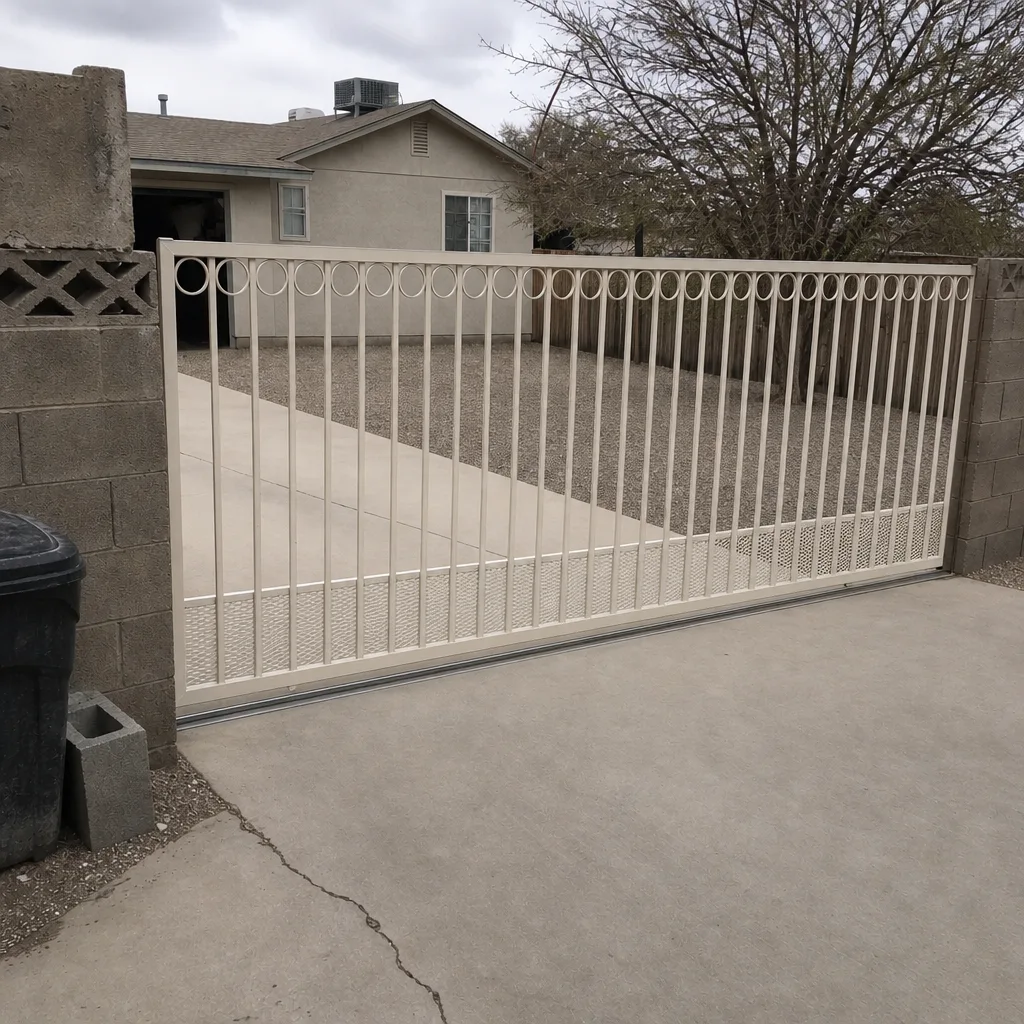
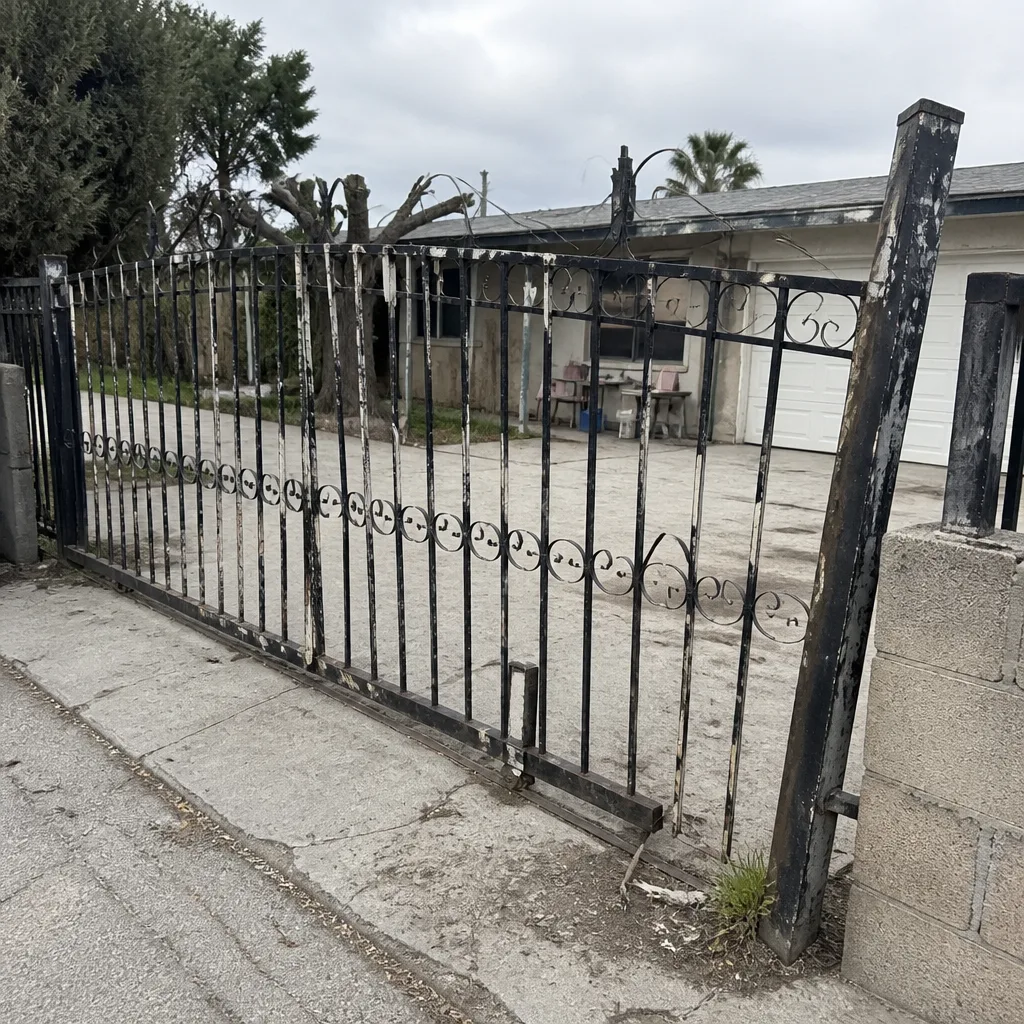
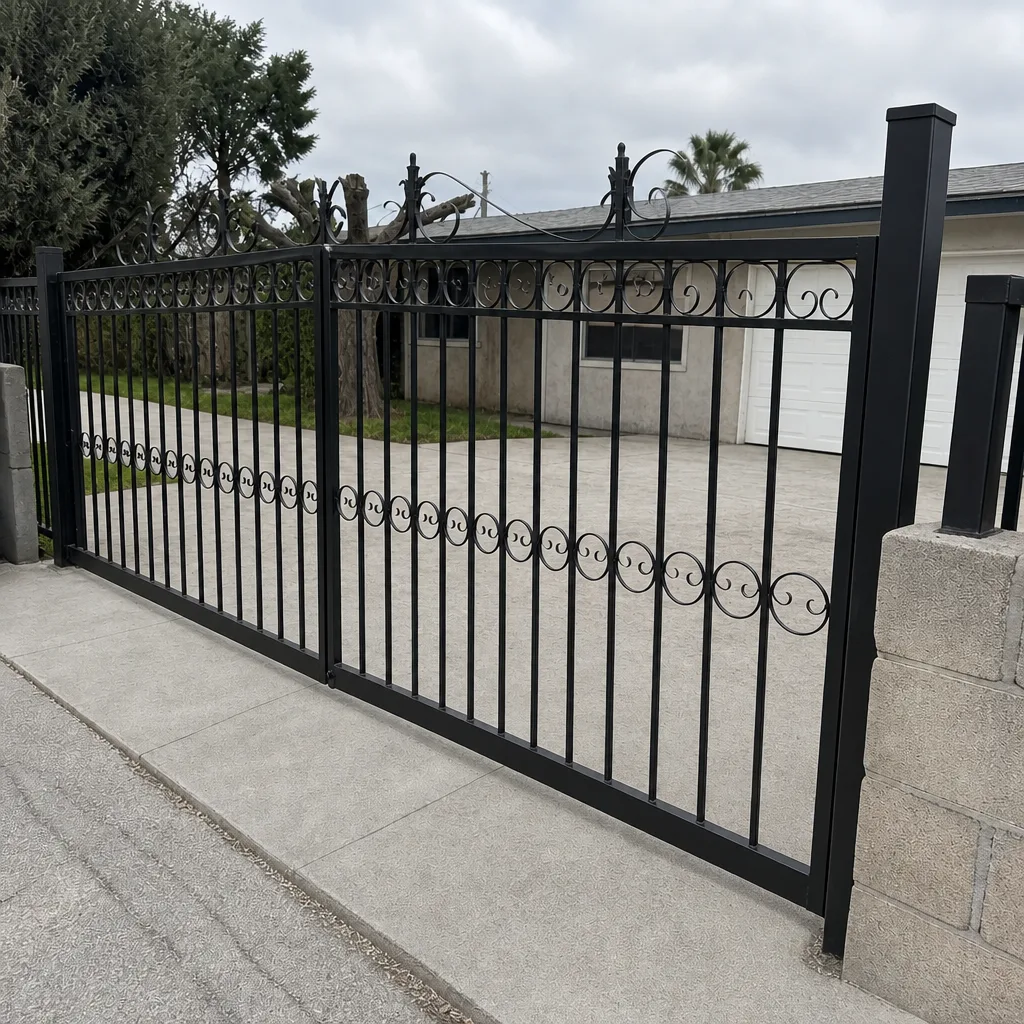
See the difference
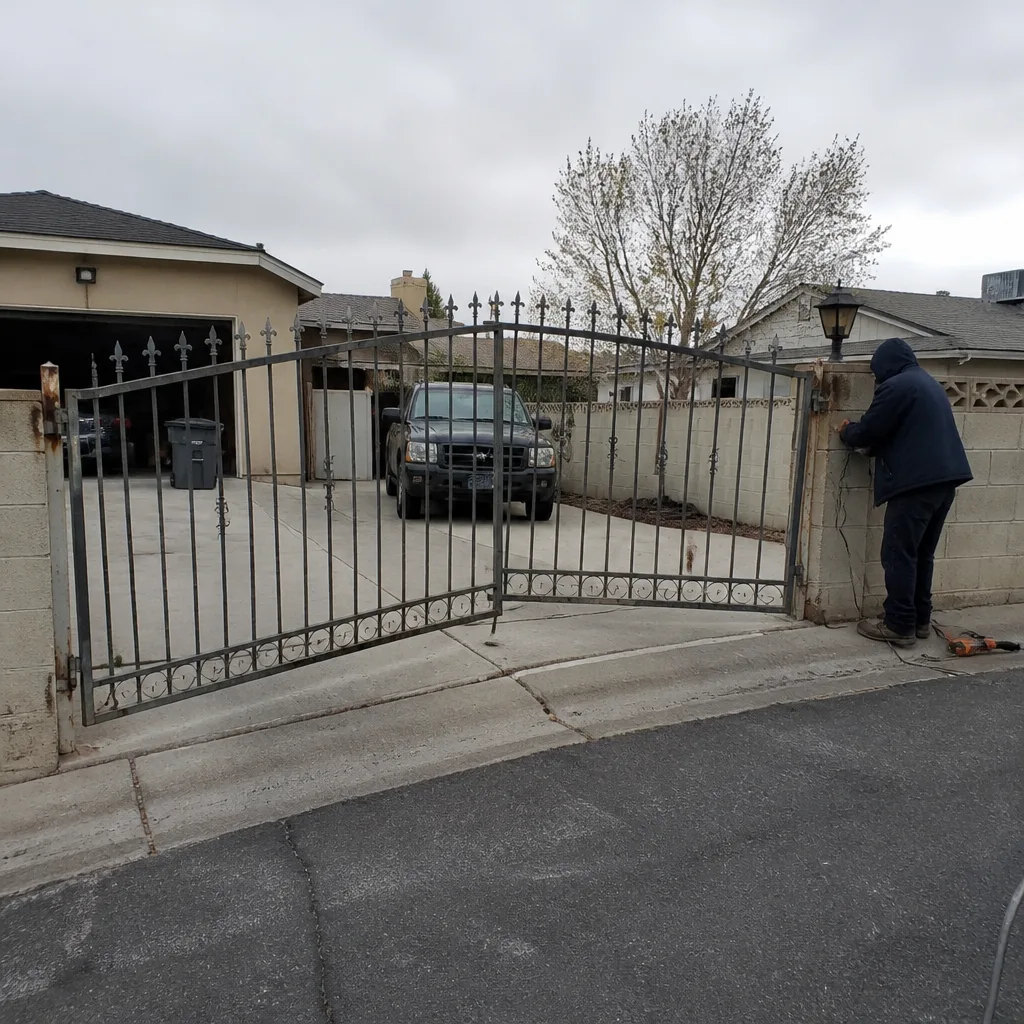 Before
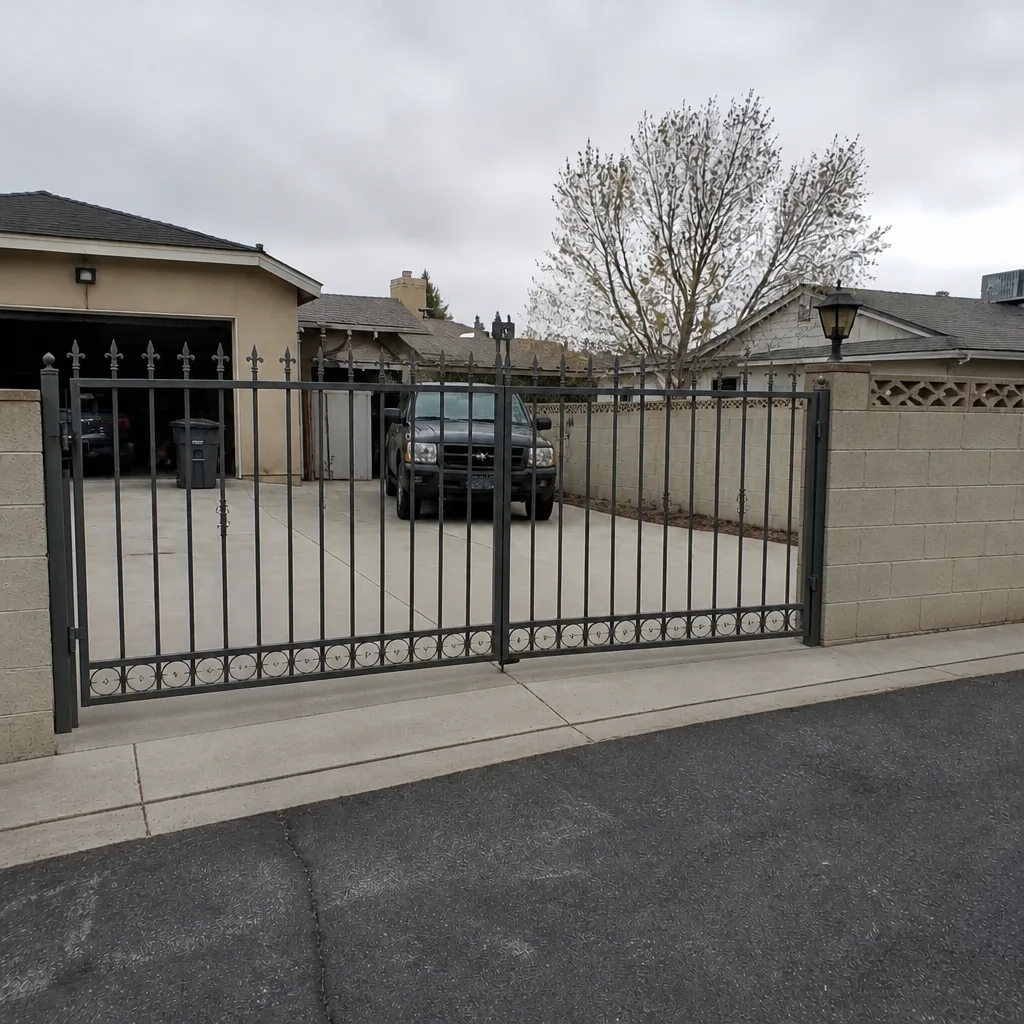 After
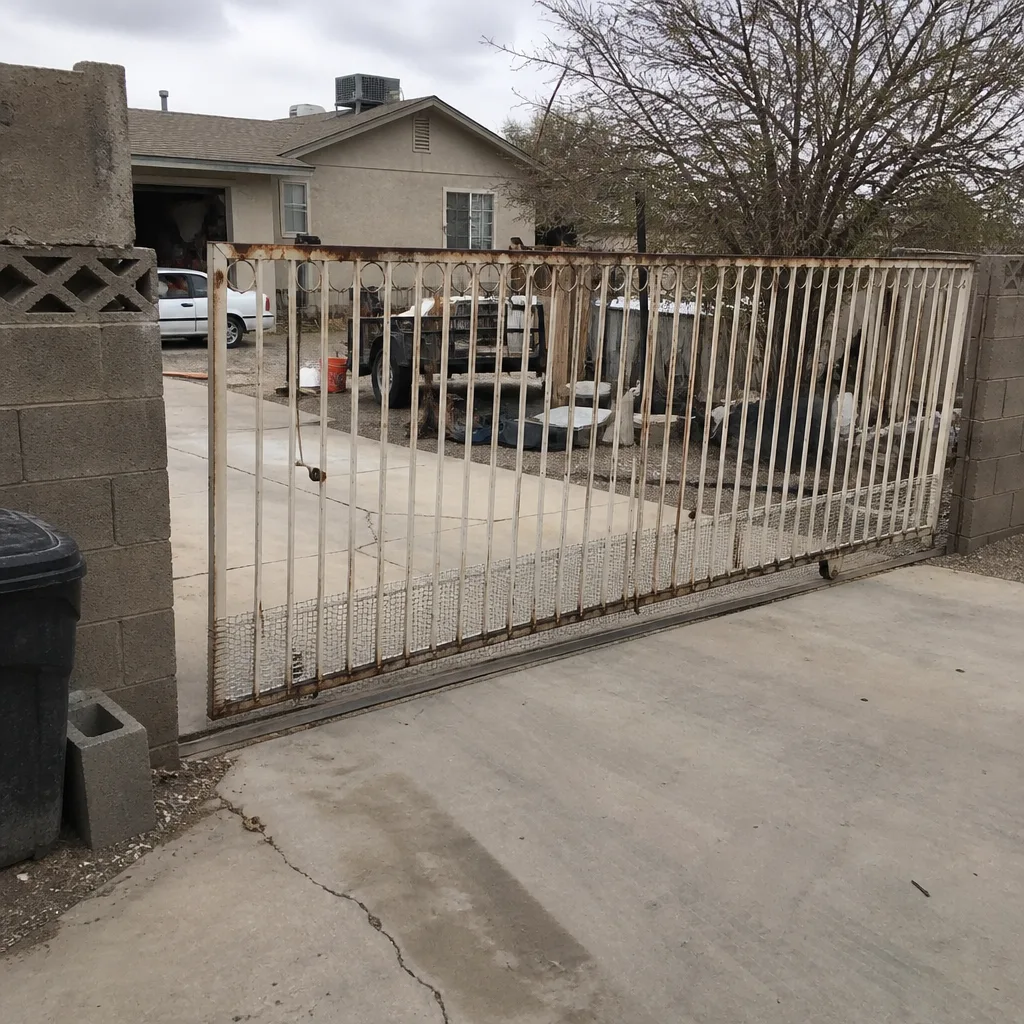 Before
 After
 Before
 After
When to Call a Professional
Call a technician when the problem is in a component that can hurt someone if it’s handled wrong: a gate that won’t stop or reverse, an operator housing with damaged wiring, a frame that’s come out of square, or a cantilever roller carriage that’s dropped. Electrical work inside an operator housing, and the forces behind a heavy gate panel, are jobs for a trained professional, not a weekend project. It’s also worth calling when the gate is intermittent, because intermittent problems usually trace back to a fault you can’t see. Gate Repair Sunrise Manor offers free estimates in Sunrise Manor. Call (844) 435-3018. We answer 24/7, with fast dispatch from 7am to 7pm, Sunday through Friday.
Frequently Asked Questions
Gate repair in Sunrise Manor is priced per job by a written estimate, and the estimate is free. The price depends on your gate type, whether the fault is mechanical or electrical, and the parts involved. A hinge or roller is at the low end; a control board or matched operator is higher. Call (844) 435-3018 for an exact quote, and the estimate is agreed before any work starts.
Yes, same-day service is often possible for gate repairs, and fast dispatch runs from 7am to 7pm, Sunday through Friday. We answer 24/7, and a call outside dispatch hours is booked into the next opening. Call (844) 435-3018 to get on the schedule.
Gate repair covers the mechanical and electrical parts that move and secure your gate: hinges, tracks, rollers, latches, safety edges, control boards, remotes, and operators. Most failures are component-level and don’t require a new gate. If replacement is worth it, we’ll tell you. Call (844) 435-3018 for a free estimate.
We work on nine major gate and operator brands, including DoorKing, Elite, Viking, and Ghost Controls, along with LiftMaster, FAAC, BFT, Linear, and Mighty Mule. Our technicians are trained across competing platforms, so recommendations come from your system. Call (844) 435-3018 and tell us what you have.
A gate that opens but won’t close is usually a safety-sensor or control problem rather than a dead motor. A misaligned or dirty photo-eye, a worn safety edge, or a control board fault are common causes. It’s worth a professional look because safety sensors are what protect people and vehicles. Call (844) 435-3018 for a diagnosis.
Most gate failures are repairable at the component level. If the frame is bent, rusted through, or the operator is repeatedly failing on a mismatched gate, replacement may make sense. Otherwise, a hinge, roller, sensor, or board fix is usually the honest call. Call (844) 435-3018 for a free estimate and a straight answer.
The Bottom Line
Most gate failures in Sunrise Manor start small and mechanical, then show up as an electrical fault after the operator has overworked itself. The gate type you own, the way our heat and dust wear on wiring, tracks, and hinges, and the difference between a component fix and a full replacement are the decisions that separate a right repair from a repeated one. Single-trade contractors miss the connection between the two halves of a gate system; a gate-only specialist does not. Document the symptoms, know your gate, and get an honest estimate. That’s the whole guide in one paragraph.
For a free estimate on your gate, Gate Repair Sunrise Manor is one call away. Reach us at (844) 435-3018. We answer 24/7, and fast dispatch from 7am to 7pm, Sunday through Friday, will get a technician to your gate. For more on the areas we cover, see our page on Sunrise Manor.
Written by the team at Gate Repair Sunrise Manor.